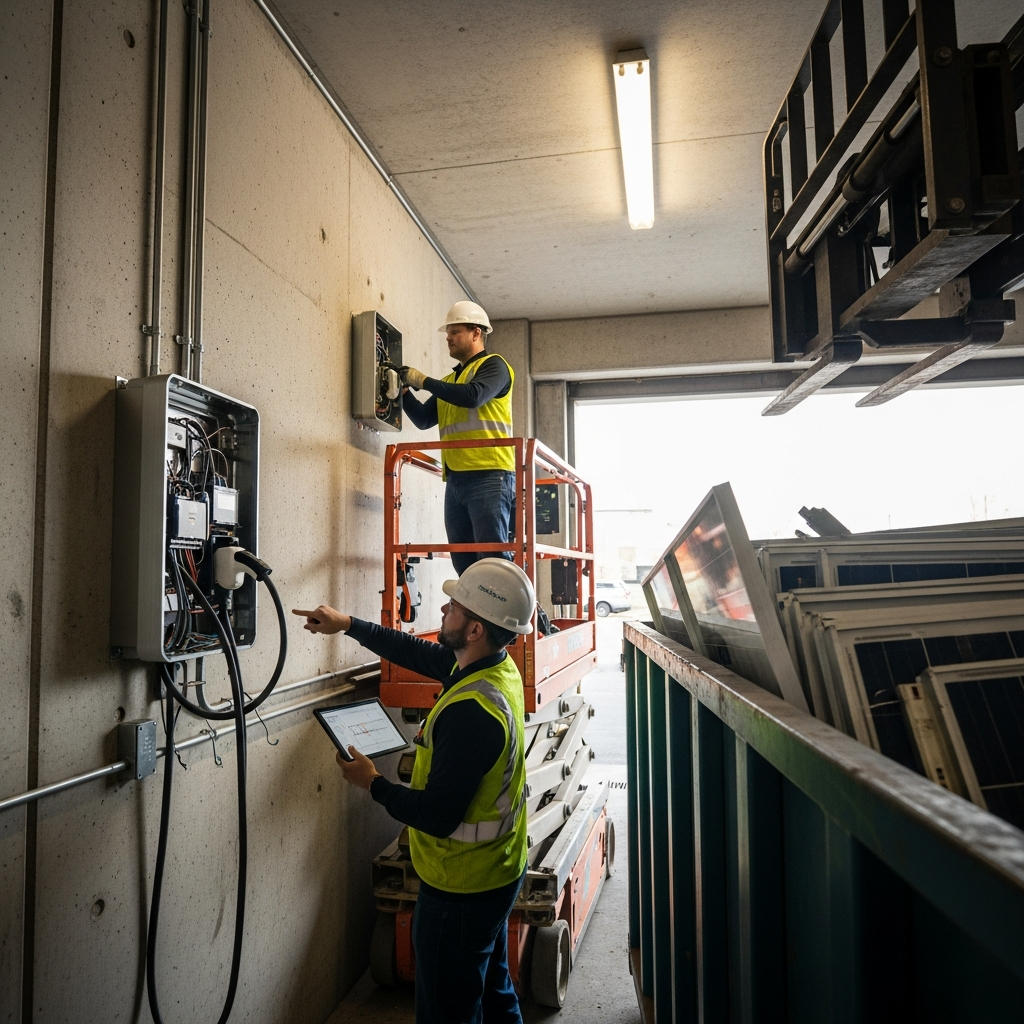
A solar success story is turning into a waste problem: Australia is now on track to generate a massive wave of discarded solar panels by 2030.
That matters far beyond rooftops. For commercial properties, warehouses, schools, office parks, and industrial facilities, the next phase of solar is not just about installation — it is about lifecycle planning. Panels do not last forever, and aging systems can create real issues: reduced output, damaged components, disposal challenges, and unexpected replacement costs.
Business owners and property managers should pay attention now. If a commercial solar system was installed years ago, it may be closer to decline than expected, especially in harsh heat, storms, and high-UV environments like Florida. End-of-life equipment is not just an environmental concern. It can affect roof integrity, electrical performance, expansion planning, and jobsite safety during upgrades or removals.
This is where commercial electrical strategy becomes critical. Solar projects should include long-term maintenance plans, equipment assessments, and a safe path for future replacement. Waiting until panels fail can turn a smart energy investment into a costly operations problem.
The big lesson is simple: clean energy is only truly smart when businesses plan for what happens at the end, not just the beginning.
steelcityelectricfl.com/commercial-electrical-panel-installation-upgrades-blog