
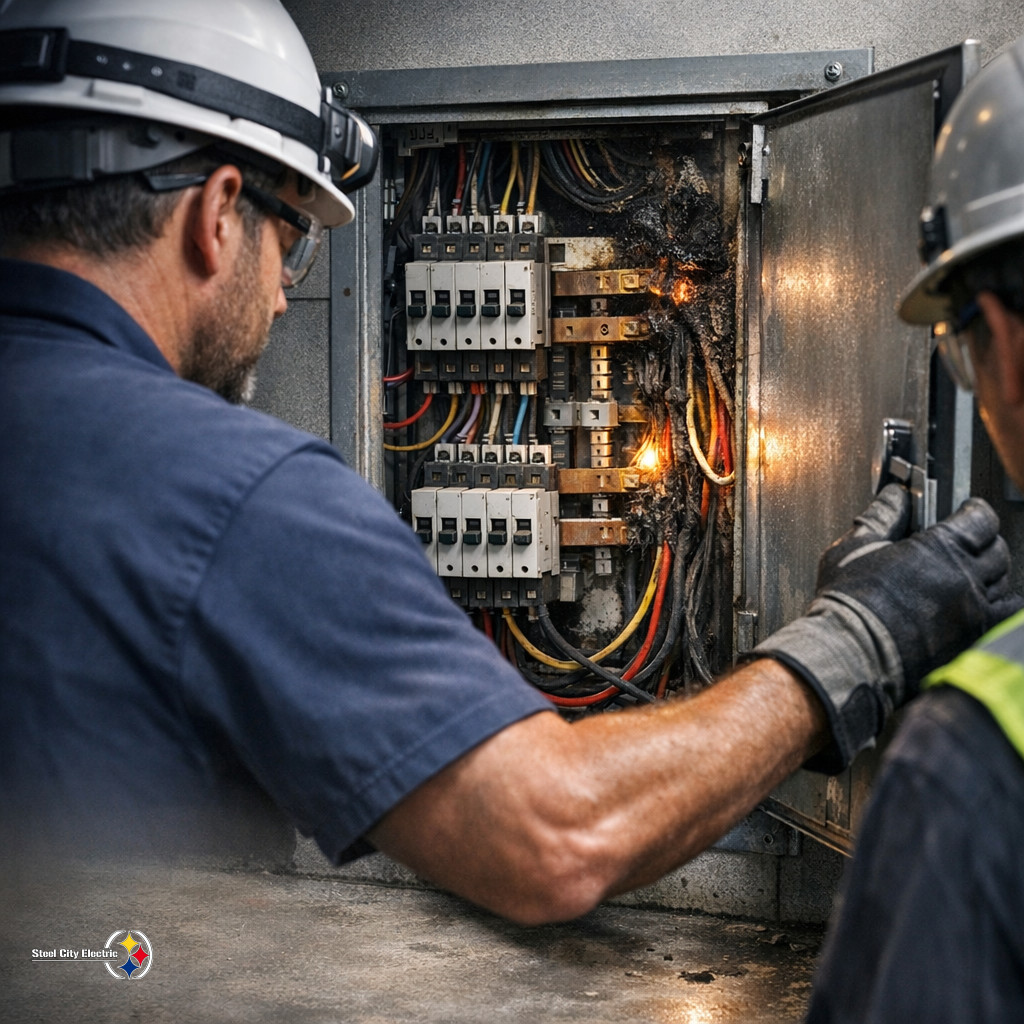
EV charging can look like a parking lot job until somebody opens the gear. Out front it is stalls, bollards, striping, maybe a payment screen. In the electrical room it gets less clean. Is there panel space. What size is the feeder. What else is already running for tenants. How old is the switchgear. Is the transformer near its limit on a hot afternoon. That is where commercial EV charger installation either stays on schedule or turns into a service problem. Around Saint Petersburg, Florida, owners of retail centers, offices, warehouses, and mixed-use buildings are running into this more often as charging moves from a nice extra to something drivers ask about.
A recent report from www.openpr.com titled Electrical Distribution Boards Market Analysis By Application, Type, Technology, and Geography put the distribution board market at 14.63 billion in 2026, with strong growth expected through 2035. That tracks with what shows up on job sites. More equipment is being added to buildings that were laid out for a different load profile. Not wrong at the time. Just not built with today’s charging demand in mind.
Chargers make that obvious fast. A manager may want four units this year and leave room for more later. Sounds reasonable. The question is whether the distribution equipment can carry it without creating trouble somewhere else. Crowded panels, old breakers, short conduit paths that are not really usable, load numbers pulled from guesses, all of that catches up. The trench outside may be simple. The shutdown inside is what hurts. Tenants lose power. Deliveries get interrupted. Utility work pushes the date. Nobody likes finding that out after chargers are already ordered.
Steel City Electric has dealt with that kind of planning on commercial buildouts like Foot Locker Sarasota, where crews had to work around existing interior electrical systems and keep the retail schedule moving. Jobs like that teach one thing pretty clearly: capacity is not something to assume from a panel label.
For commercial properties in Saint Petersburg, Florida, EV charging needs to start in the electrical room. Load calculations, panel condition, conduit routes, charger location, service capacity, and future expansion should be checked before saw cutting or equipment orders. Steel City Electric plans commercial EV charger installation around the building’s actual limits, so the chargers work without leaving a bigger electrical issue hidden behind the wall.