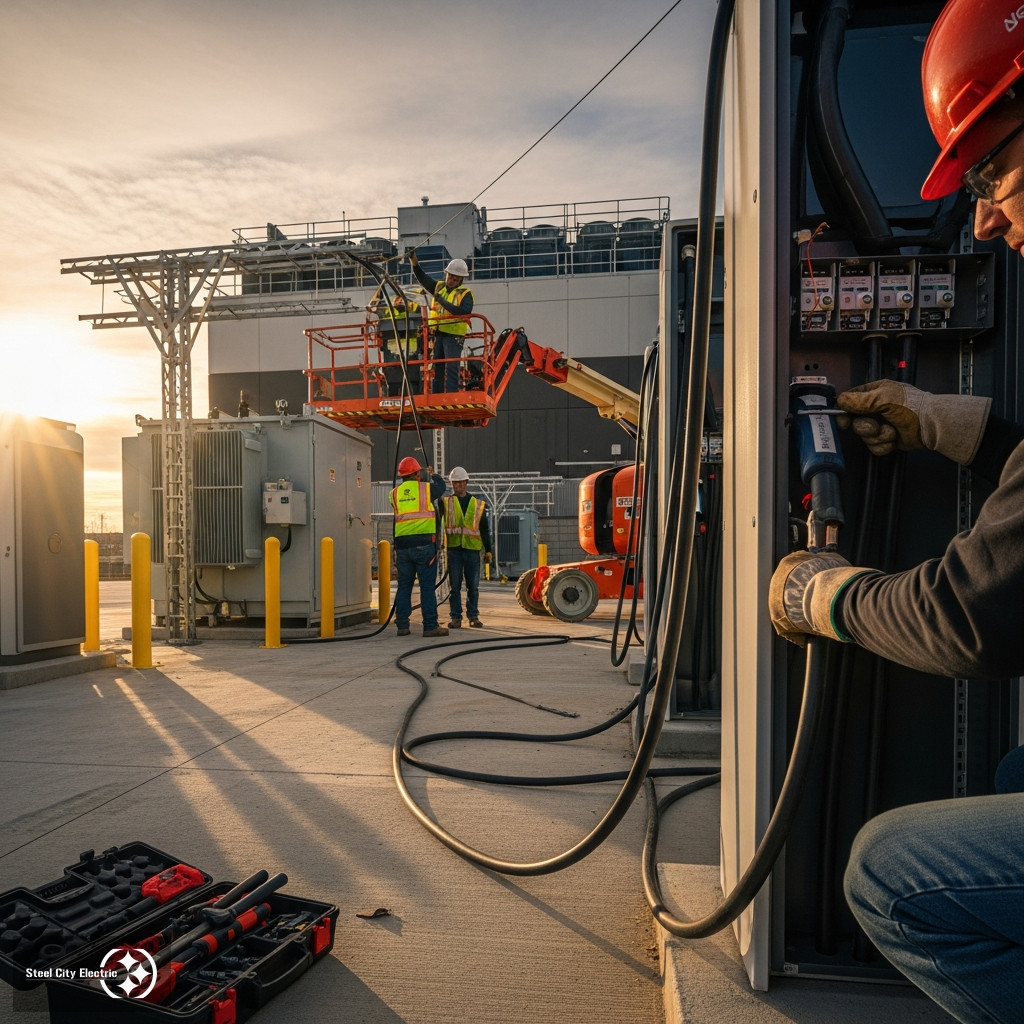
On EV charger jobs, the first problem usually is not the charger. It is the room it has to tie into. Old switchgear with no space left. A service that was fine for the building ten years ago but is now running close to the edge. A utility transformer nobody checked until the owner already had a delivery date. From the parking lot, everything can look easy. Paint a few stalls, set some posts, pull wire. Then the electrical room tells the real story. That is why Commercial EV Charger Installation needs to be planned like a power project, not treated like another outlet package.
Reuters recently reported that Emerald AI raised $25 million from Nvidia and other investors while working with utilities and power generators to speed up grid connections for data centers. That may sound far removed from a shopping center, condo property, fleet yard, or medical office lot. It is not. Big loads are all trying to get on the same system. Utilities have crews, transformers, engineering time, and switchgear lead times to deal with. If data centers and other large users get pushed through faster, smaller commercial work can still get caught waiting on reviews, equipment, or available capacity.
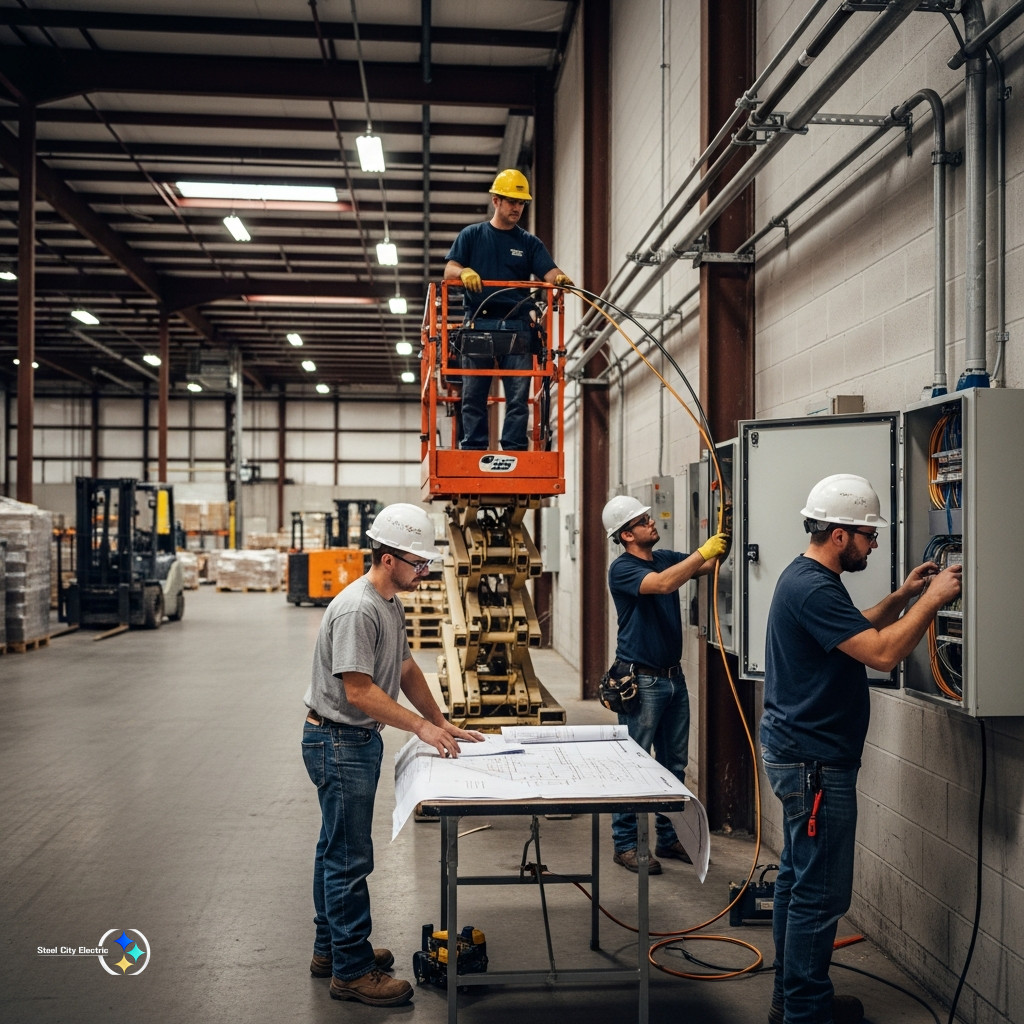
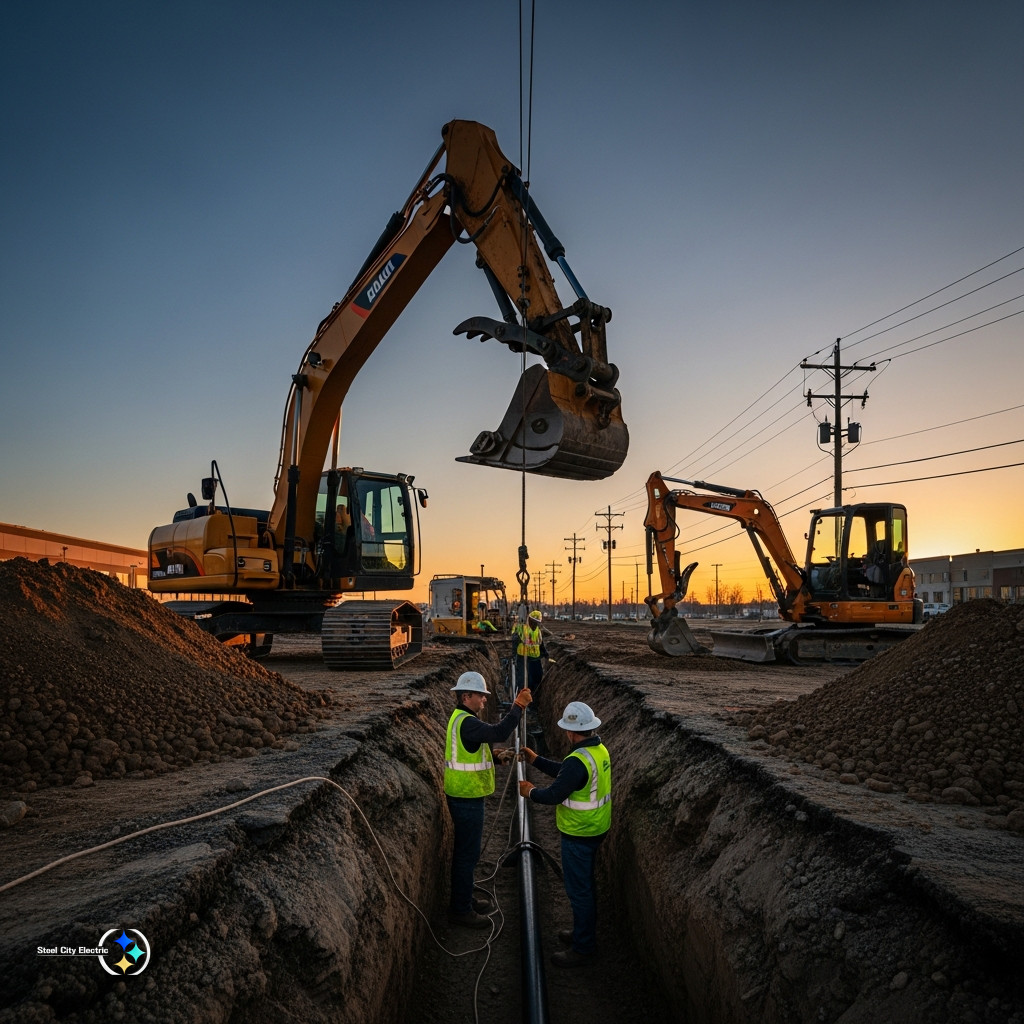
That is where owners get burned. Somebody buys chargers first. Then the electrician opens the panels and finds there is no real path without upgrades. Maybe the spare breaker space is gone. Maybe the service is too small. Maybe the conduit route crosses pavement that nobody wanted to trench. Sometimes the utility has to be involved before anything useful can happen. Load calculations, feeder sizing, panel condition, grounding, trench access, bollard layout, and permit requirements all need to be looked at early. Not after tenants have been told the chargers are coming next month.
Steel City Electric has dealt with tight site power conditions on the repair side too, including underground feeder repair at Stoneybrooke Clubside Condominiums in Sarasota. Those jobs make one thing pretty clear. Underground power and service capacity do not care about the schedule on paper.
EV chargers also do not behave like small convenience loads. They can sit there pulling steady power for hours. Add two, four, or eight vehicles at the same time and weak spots start showing up. Heat in gear. Tripping breakers. Voltage issues. Failed expectations. For retail centers, offices, condos, industrial properties, fleet parking, and healthcare sites, that turns into complaints or downtime fast.
The practical move is simple enough. Check the electrical side before the project gets boxed in. Steel City Electric can look at site conditions, utility requirements, service capacity, and the installation route for commercial EV charger installation in Florida. Better to find the hard parts early than after the chargers are sitting on a pallet and the grid queue has already slowed everything down.
For commercial properties dealing with this kind of issue, Steel City Electric can help evaluate the right service path for the building.