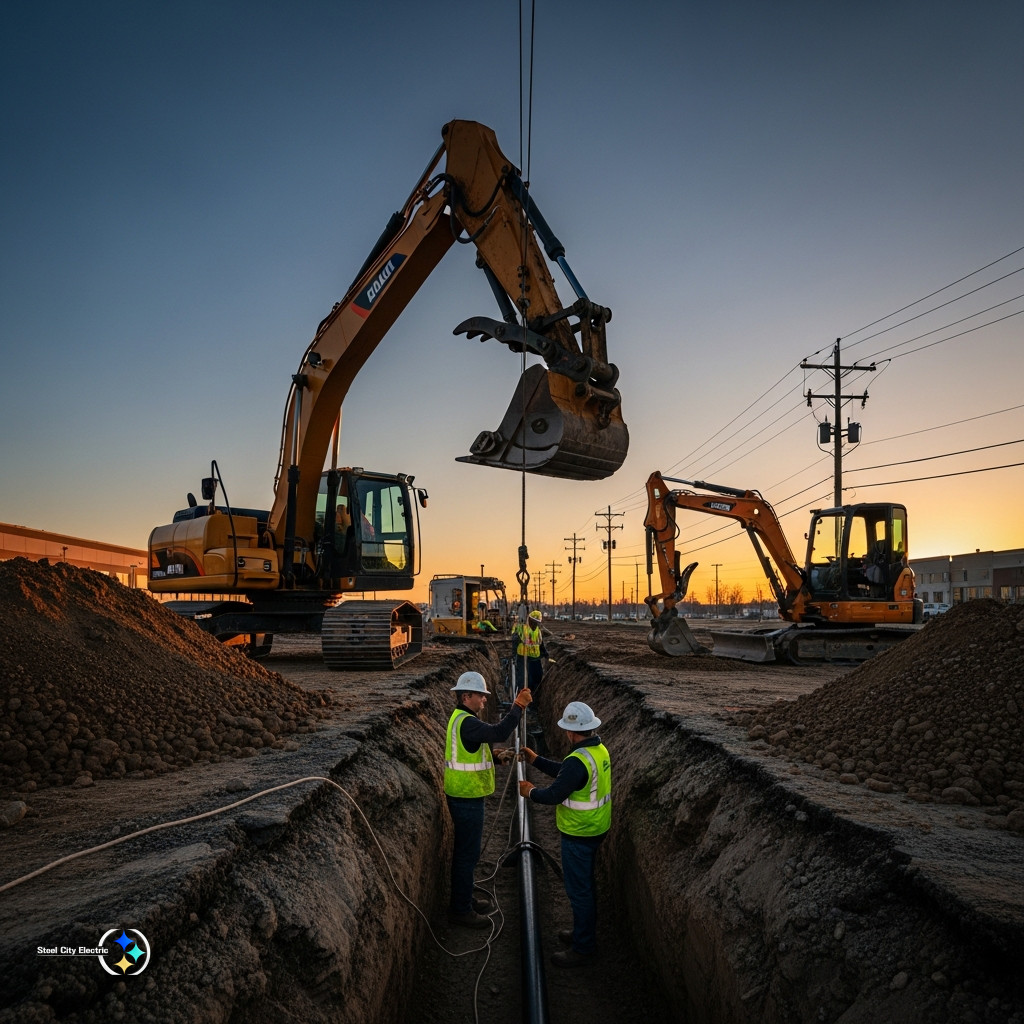
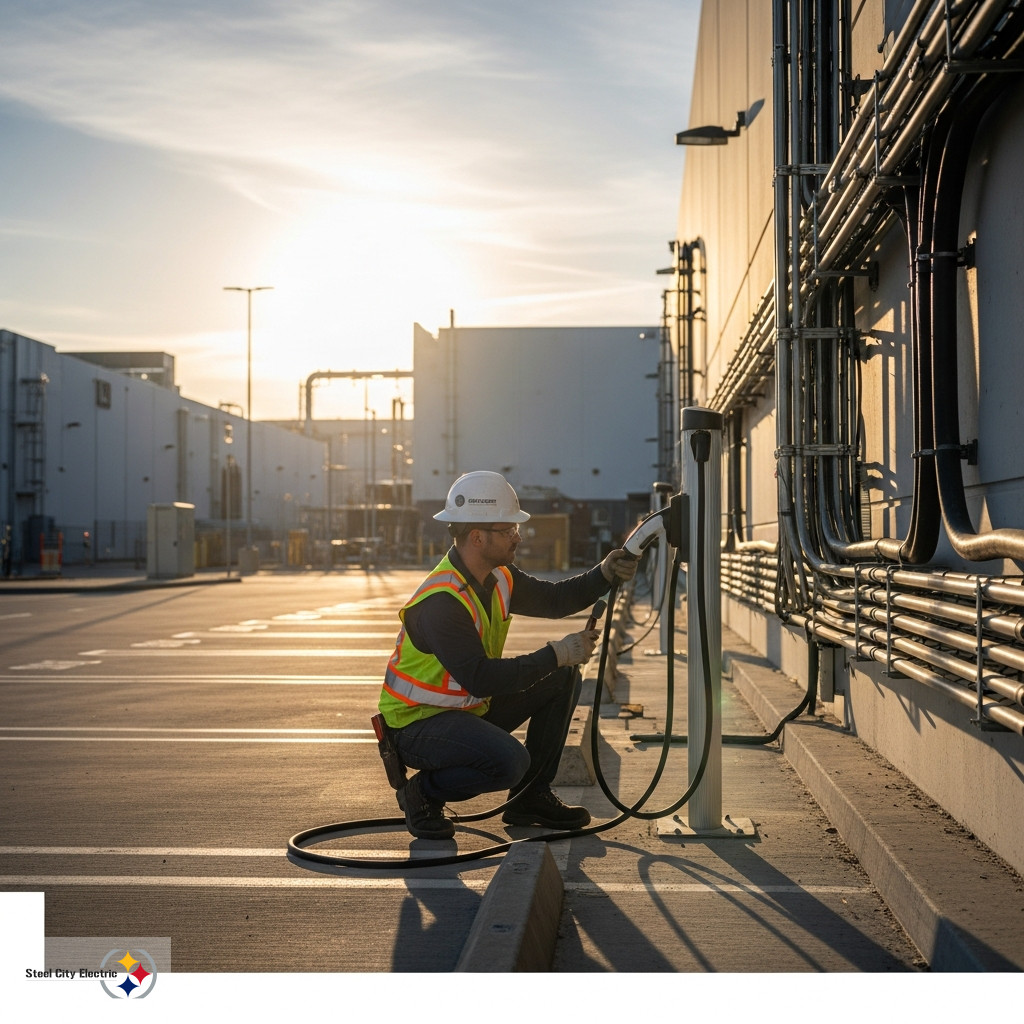
EV chargers look easy when you are standing in the parking lot. Set the pedestal, pull in, plug in. That is the part everyone sees. The real work is usually in the electrical room, at the service gear, or in a trench nobody wants opened twice. Before a commercial site picks chargers, somebody needs to look at the service size, panel space, feeders, conduit paths, transformer limits, and when the building can actually be shut down without upsetting tenants.
Lately that conversation has been getting sidetracked. Owners hear noise about AI data centers using huge amounts of power and water, then the guesses start. One person thinks the utility has plenty of capacity for anything. Another thinks every large load in the county is going to block their project. Neither one is a plan. commercial EV charger installation still comes down to what is sitting on that property, what the utility will approve, and what the existing gear can safely carry.
Reuters recently covered how much bad information is floating around AI data centers, especially around water use, cooling, grid demand, backup power, and utility planning. Some of that same confusion lands on smaller jobs. A landlord may hold off on chargers because they assume the grid is maxed out. Another may order equipment before anyone has done the load calculations. In the field, both choices create problems. Wrong gear. Delayed permits. Change orders that could have been avoided.
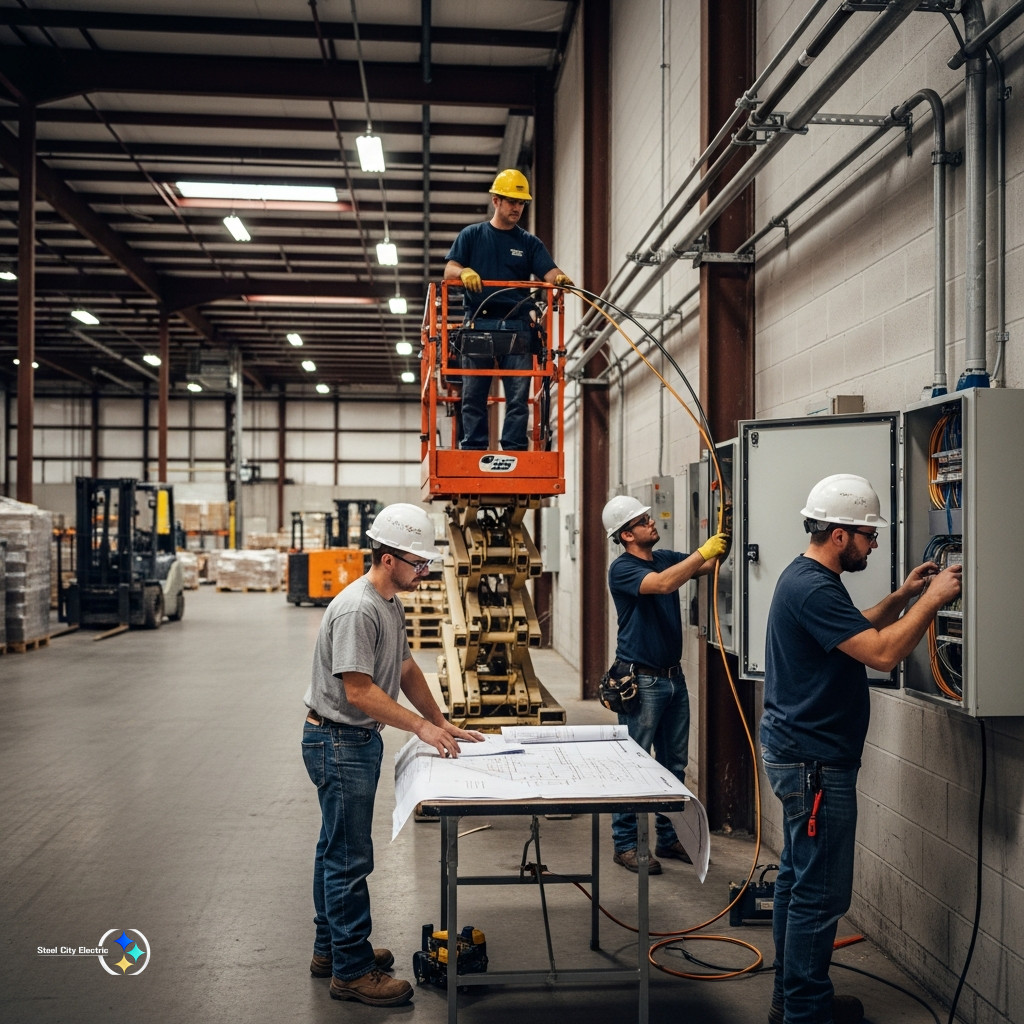
Retail centers, medical offices, warehouses, and office buildings all have their own traps. Maybe the panel is full. Maybe the service has no room left. Maybe the best trench route runs through irrigation, old conduit, or something the site drawings never showed. Once that happens, a charger job stops being simple and turns into tenant notices, shutdown planning, revised permits, and more labor. Steel City Electric has dealt with that kind of pressure on commercial interior work like PT Solutions Physical Therapy in Florida, where the power layout had to be right before the space could function.
EV charging should be looked at alongside the rest of the building plan. If a property has a tenant buildout coming up, meter work, service changes, or future expansion, it is usually smarter to coordinate the chargers with commercial new construction electrical work. Existing buildings may need panel upgrades, dedicated circuits, new conduit, or utility coordination before the chargers are ready for daily use.
The useful starting point is not a headline about data centers. It is the site. Load study. Gear inspection. Utility call if needed. Route planning. Shutdown window. Steel City Electric handles that work in the field and helps set up charger installs that fit the building instead of turning into a fight halfway through.