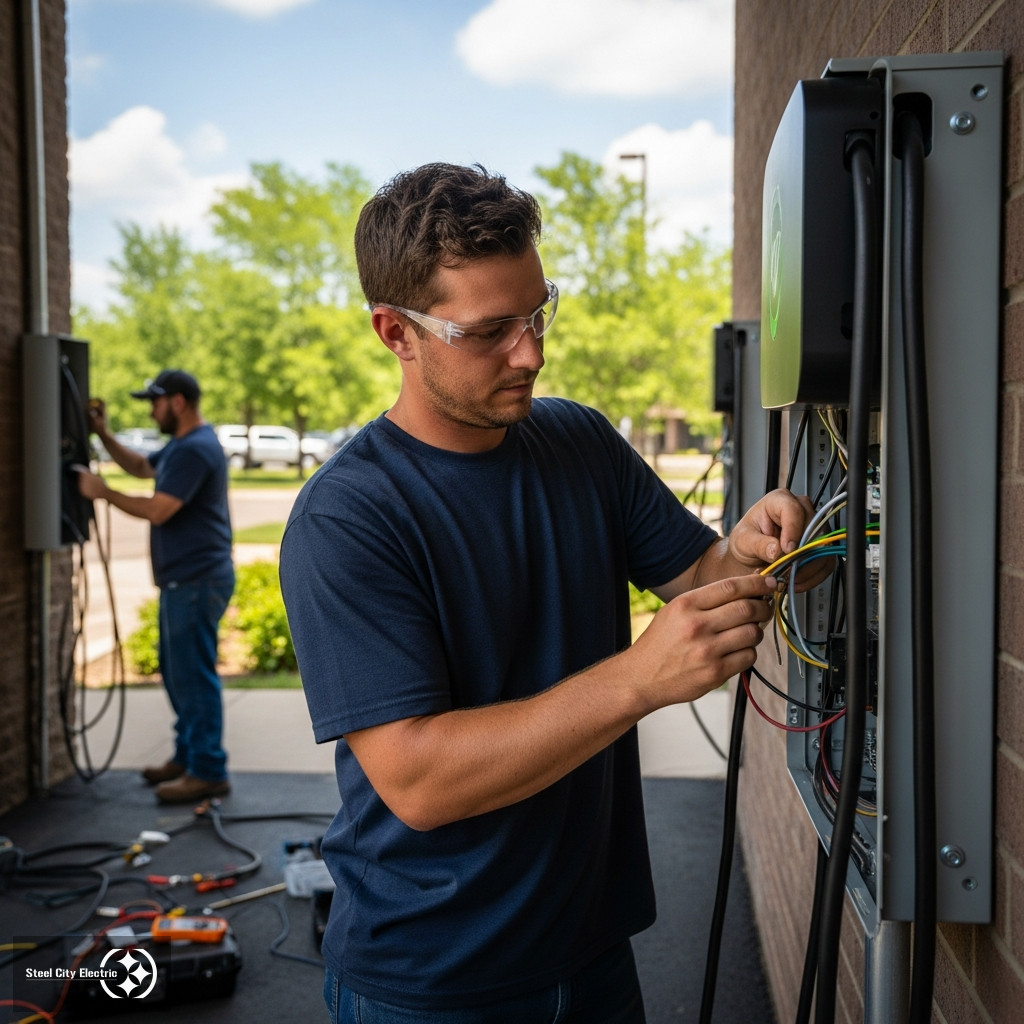
EV chargers look easy from the parking lot. Set the pedestal, pull wire, land it, done. It usually is not that clean. Once the gear is opened, the real picture shows up. In summer, a commercial building may already be loaded down with HVAC, coolers, kitchen equipment, site lighting, office loads, pumps, gates, and whatever else runs all day. Add chargers on top of that without checking demand and the failure may not happen during startup. It happens later, usually on a hot afternoon when every unit on the property is calling at the same time.
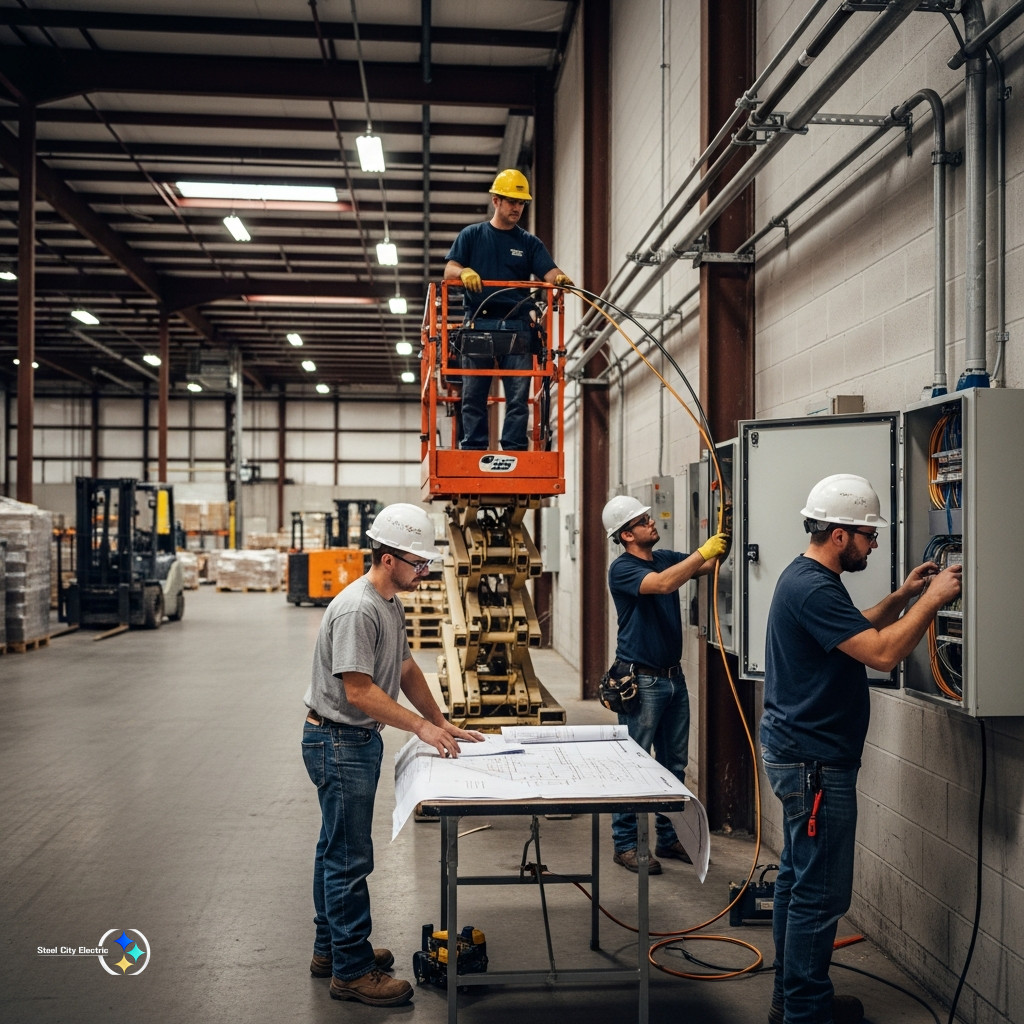
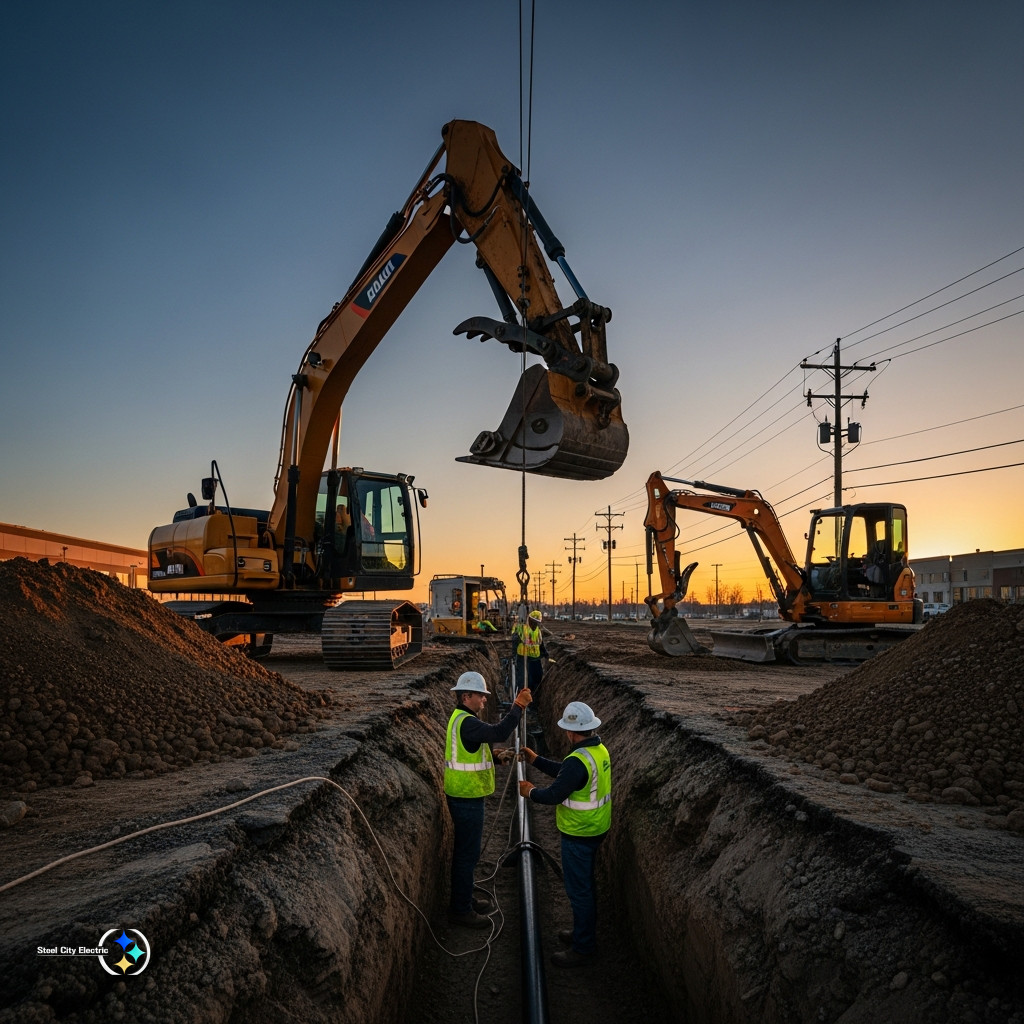
That is why commercial EV charger installation has to start before the charger boxes arrive. Crews need to look at panel space, service size, transformer capacity, feeder condition, conduit routes, trenching, parking stalls, ADA layout, bollard placement, and future expansion. Some sites have capacity sitting there. Some are already maxed out. Some look fine on a drawing, then the electrical room tells a different story.
A recent PressAdvantage release on Holton Electric in Minnesota talked about summer readiness for commercial electrical systems, especially with air conditioning, refrigeration, lighting, and other seasonal loads pushing equipment harder. Florida properties deal with the same thing, only the heat sticks around longer. If the base load is already high, EV charging can expose weak panels, worn feeders, old breakers, or service gear that has been running close to the edge for years.
Steel City Electric has run into this type of site pressure before. At Stoneybrooke Clubside Condominiums in Sarasota, crews handled underground feeder repair while the property stayed occupied. Work like that reminds you fast that field conditions beat assumptions every time.
On many jobs, the EV discussion turns into commercial electrical service work before any charger gets mounted. The site may need new breakers, load management, service upgrades, concrete cuts, utility coordination, panel cleanup, or after-hours work so tenants and customers are not boxed in. Flickering lights, warm panels, nuisance trips, and overloaded circuits should not be ignored. Chargers only add more demand.
Bad planning also creates downtime. Parking areas get blocked. Businesses lose access. A promised amenity gets delayed. Once problems are found late, the cost climbs fast. Having commercial emergency electrical repair available matters, but it is better to find the load problem before equipment is ordered.
For property managers, facility teams, and owners, the first step is a real site walk. Open the gear. Check demand. Trace the route. Talk through what the building can actually carry. Steel City Electric handles commercial EV charger installation with the service infrastructure figured out first, not cleaned up after the fact.