Security work never looks like much on the early plans. A few cameras. Some card readers. Maybe a note for access control. Then rough-in starts and everybody wants wall space, ceiling space, a cabinet, a raceway, a dedicated circuit, and a spot in the electrical room. By then the service layout is already getting crowded. On a new commercial job, commercial new electrical service installation has to cover more than the main gear and panels. It has to leave the building room to breathe after the owner starts adding systems.
Facility Executive recently covered the risk of single-vendor security setups, especially closed systems that end up controlling too much of a building’s protection network. In the field, that problem does not stay on the software side. It shows up as full conduits, no spare breakers, cabinets stacked too tight, poor surge protection, weak backup planning, and equipment rooms nobody can work in. If the original electrical service was built around one security layout, changing it later can turn into a mess. Finished walls. Open tenants. Hot buildings. No one wants to cut into a running space because nobody left a pathway.
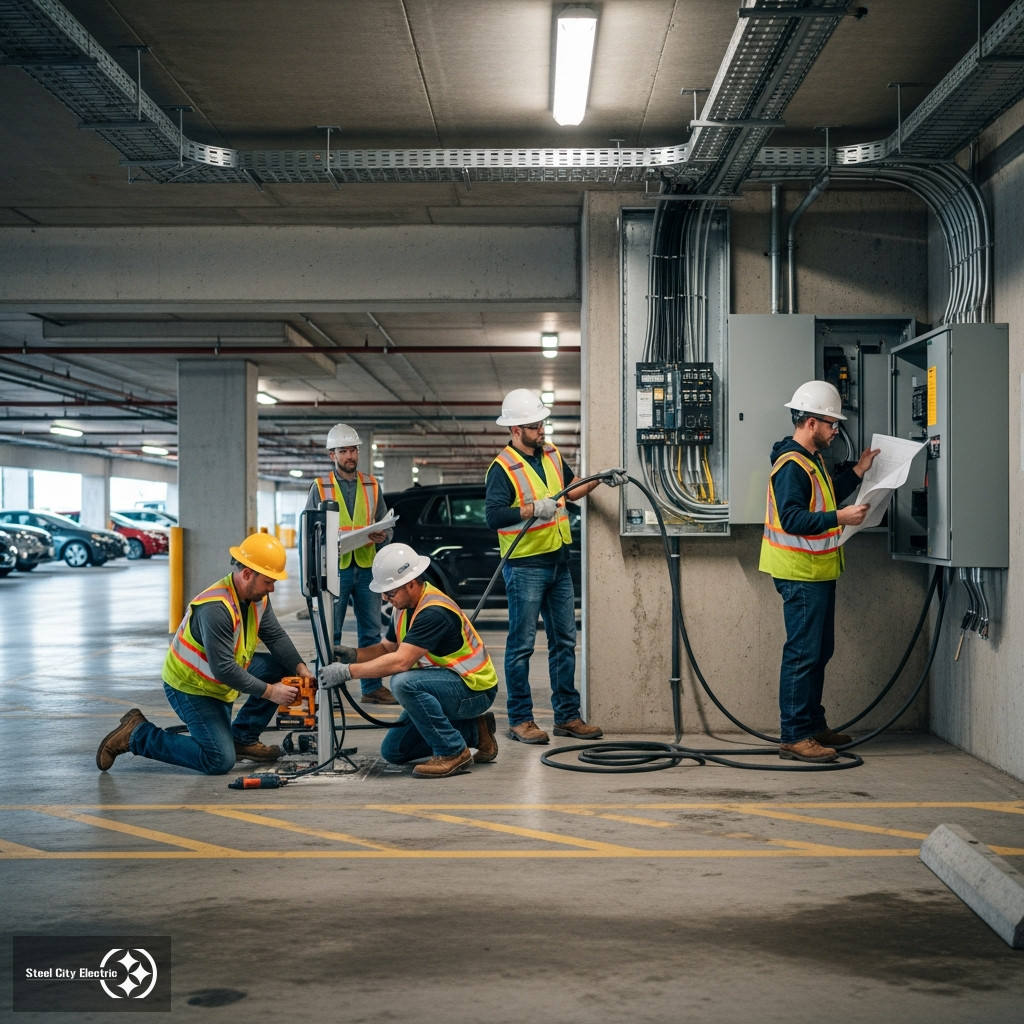
Cameras, card access, mag locks, strikes, intercoms, switches, monitoring panels, power supplies, and battery backup all add up. Some of it needs clean dedicated power. Some of it needs separation. Some of it needs to stay alive when utility power drops. That coordination needs to happen before low-voltage racks and security panels start taking every usable corner. Bringing in commercial electrical services early gives the job a better shot at staying serviceable.
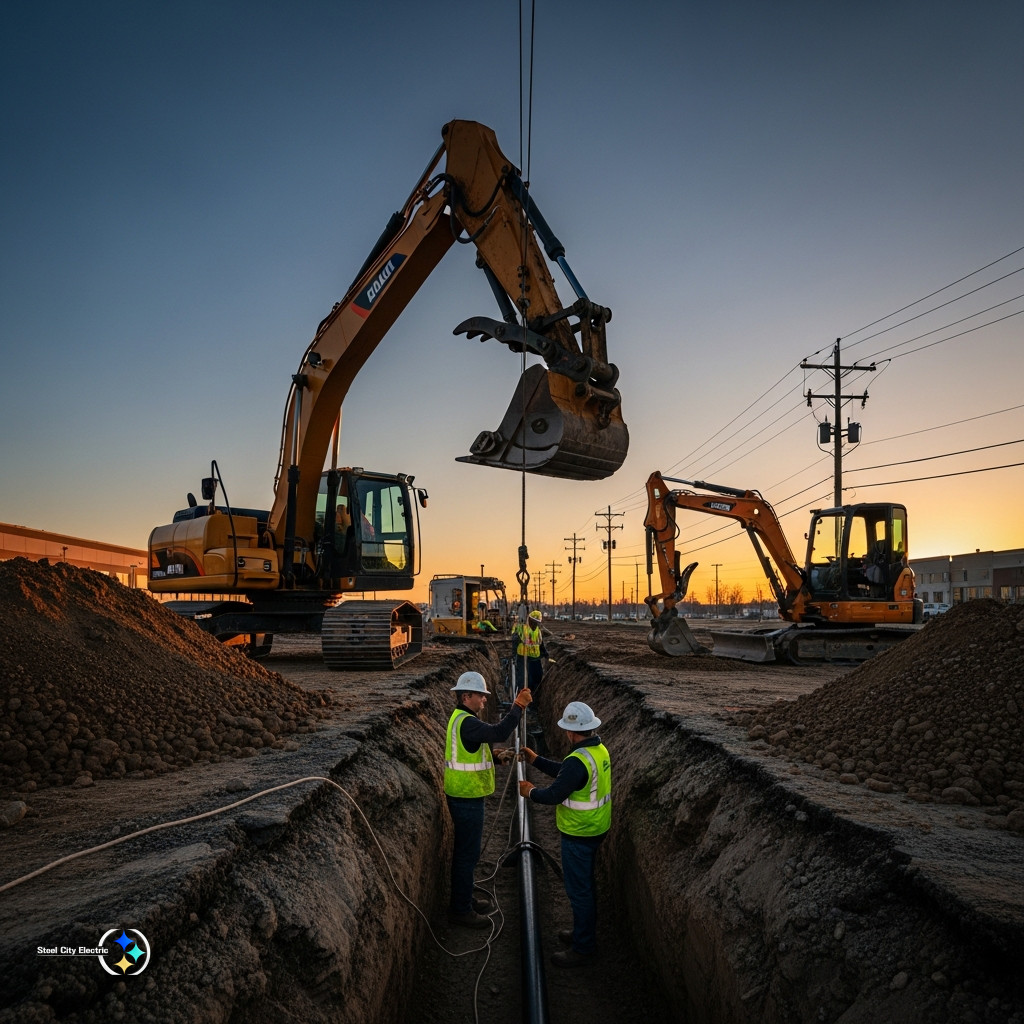
Steel City Electric has dealt with this kind of space and routing pressure on real jobs around Sarasota. On the All Points Equipment project, underground conduit had to be planned around power distribution needs and rough site conditions. Not a security-heavy example, but the lesson is the same. If routing is treated like a leftover item, it costs more later.
Owners, GCs, and facility managers should assume the security package will change. The vendor may change. The tenant may add cameras. Access control may expand after one break-in or one insurance review. The electrical system should not trap the property in yesterday’s layout. Service sizing, panel space, grounding, surge protection, and accessible conduit paths are boring items until the day they prevent downtime.
Steel City Electric looks at new commercial service work from the maintenance side as much as the install side. New facility, tenant buildout, warehouse, medical office, retail space, industrial building, it all needs power planned around the real operation. Get the service gear right first. Everything tied to security depends on it.