In a commercial space, the panel usually tells you what has been happening in the building. Not on paper. On the wall. Extra circuits. Old labels scratched out. A few blanks left, maybe none. Somebody added HVAC. Then a kitchen line. Then card readers, lighting controls, network racks, treadmills, chargers, whatever the tenant needed to open or keep running. After a while the question is not whether another breaker will fit. The question is whether the service and panel were ever meant to carry what the space is doing now. That is when commercial electrical panel installation and upgrades move from “later” to “we need a date.”
The field problems are usually plain once the cover comes off. Crowded gutters. Warm gear. Spares that are not really spares. Feeders already working hard. Clearances blocked by storage. Old directories that do not match the circuits anymore. A recent industry update from N/A titled “” pointed to the same issue: commercial buildings are pulling more power as equipment packages change. That is accurate, but it sounds cleaner than it feels on site. In the real world, missed load planning turns into tenant delays, shutdowns at bad hours, inspection comments, and crews trying to work around a panel that should have been addressed before the new equipment showed up.
Steel City Electric has dealt with this in occupied commercial work, including LA Fitness Tampa. Fitness spaces are a good example because the loads are not small and the building still has to function. You cannot guess your way through that kind of job. The existing service, available capacity, grounding, labeling, utility coordination, and outage window all have to be checked before wire starts getting pulled.
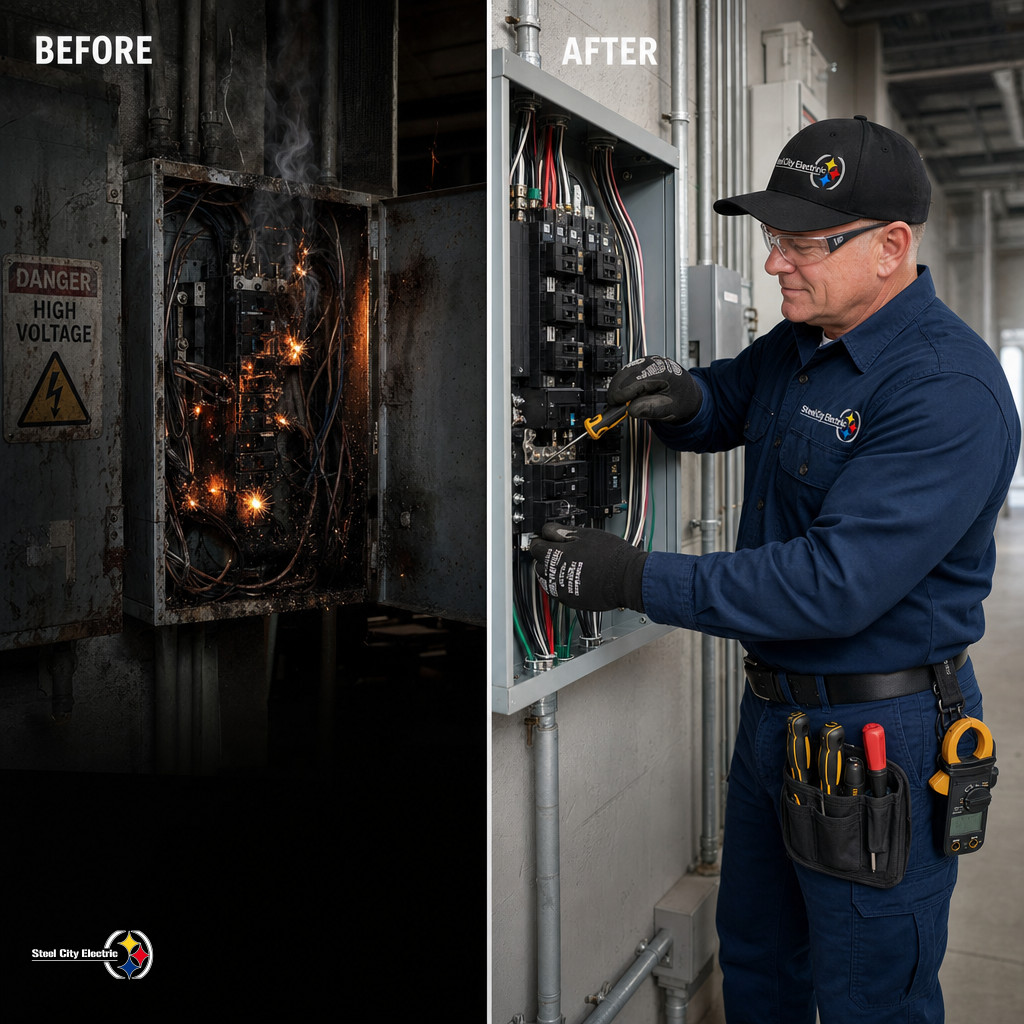
A proper commercial panel upgrade is not just hanging a new can and calling it done. The gear has to fit the space. The shutdown has to be planned. Circuits need to be identified. Inspectors need a clean installation they can follow. Most important, the finished panel has to match how the business actually operates, not how the building was used ten years ago. If the panel is packed, mislabeled, running hot, or being kept alive with temporary fixes, it is better to look at it now than after the next equipment order is already sitting on the floor.