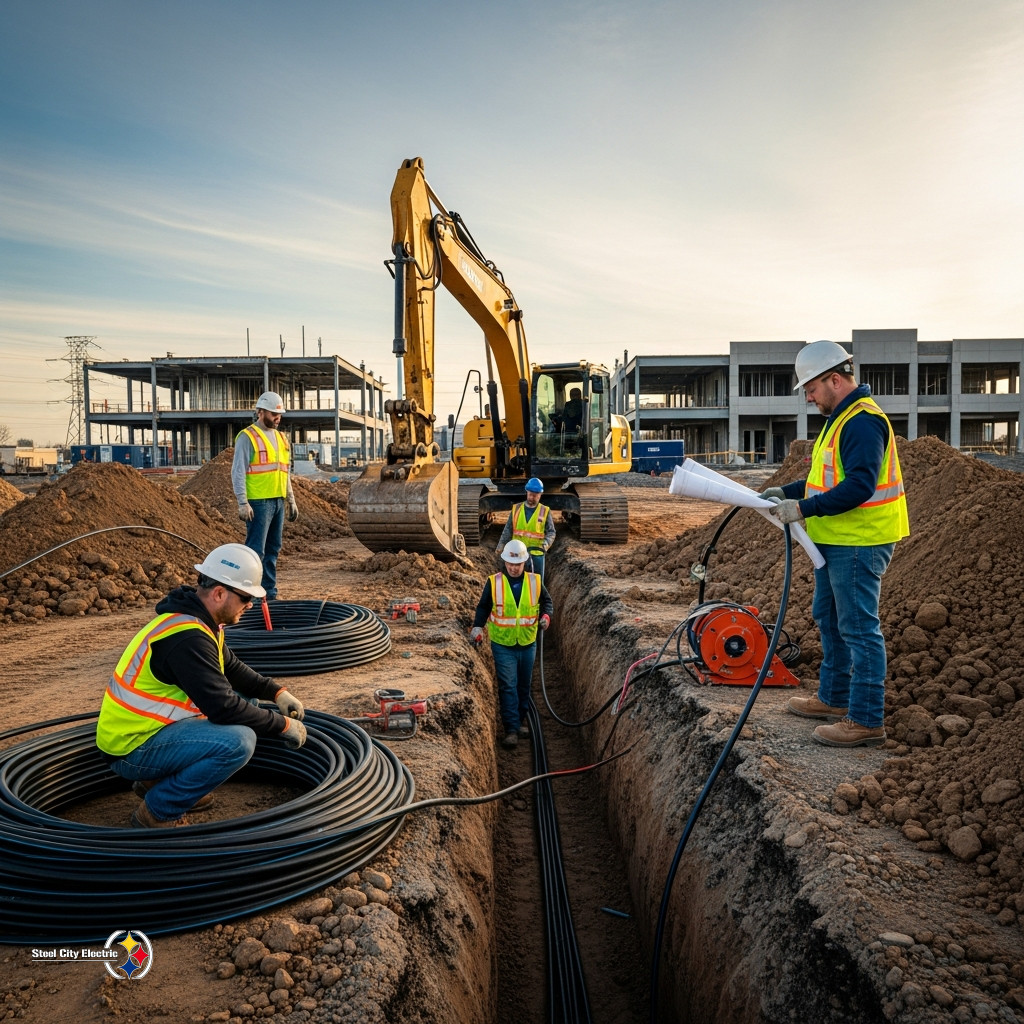
Underground electrical is one of those scopes that looks like nothing is happening until the site is already in trouble. A trench gets delayed. The utility changes a transformer location. Civil work cuts across the planned route. Somebody pours or paves before the sleeves are right. Then the electrical room is framed, gear is close, and there is still no clean path from utility service to the building. Steel City Electric sees this on commercial jobs when underground power gets treated like a small early task instead of a schedule item that can block everything behind it.
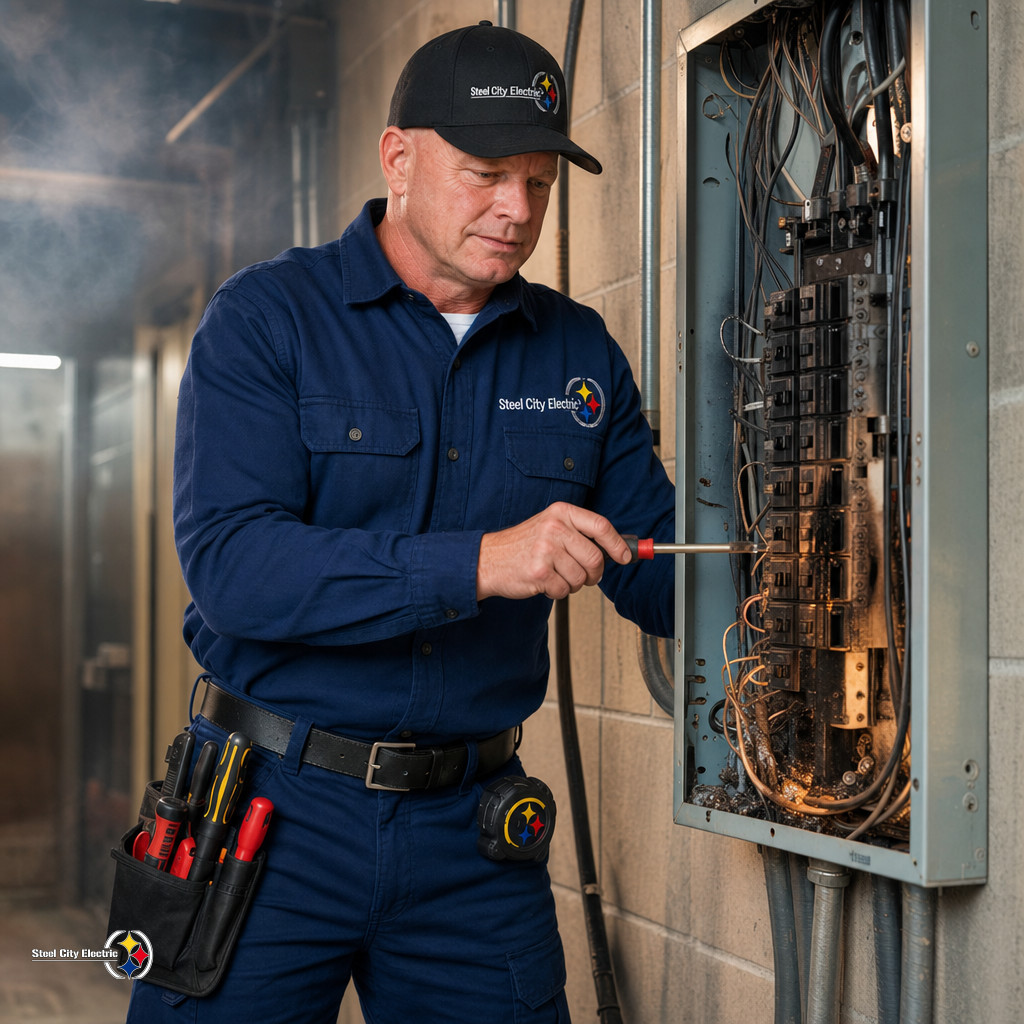
With commercial underground electrical utility installation, the trench is only part of it. The route has to clear drainage, curbs, fire lanes, landscaping, gas, water, telecom, and whatever else is already in the dirt. Utility specs matter too. Depth, bends, sweeps, pull points, conduit size, concrete encasement if required. A plan set may look fine in the trailer. Out in the field, five feet can make the difference between a clean install and a full rework. If that feed is wrong, commercial electrical panel installation is not going to fix it later.
These problems usually do not come with a dramatic warning. Work just starts stacking up. Temporary power stays longer than planned. Inspectors need another look. The utility crew is waiting on corrections. Other trades are asking when permanent service will be ready. No news article available fits a lot of these delays pretty well. Nothing loud happens. The job just stops moving like it should.
Steel City Electric handled similar coordination on LA Fitness Tampa, where power upgrades had to be planned around an operating fitness facility. That kind of work does not leave much room for guessing. Loads, shutdowns, service paths, and utility timing all have to line up before crews start tearing into things.
Buried work also sets up the next ten or twenty years of service. Bad conduit paths, crowded gear locations, buried access issues, or poorly placed pull boxes become problems later. If the property needs more capacity, extra site lighting, EV charging, tenant power, or commercial electrical repair, the original underground install either makes that work manageable or turns it into a fight with concrete and asphalt.
Before switchgear, meter sections, or panels get called ready, the underground path needs a real field check. Route. Depth. Bends. Utility approval. Inspection timing. Access for future work. Steel City Electric plans commercial underground utility installation around what is actually happening on site, not just what looked clean on the drawing. If new or upgraded utility service is part of the job, review the underground electrical scope early. It is cheaper before the trench is closed.