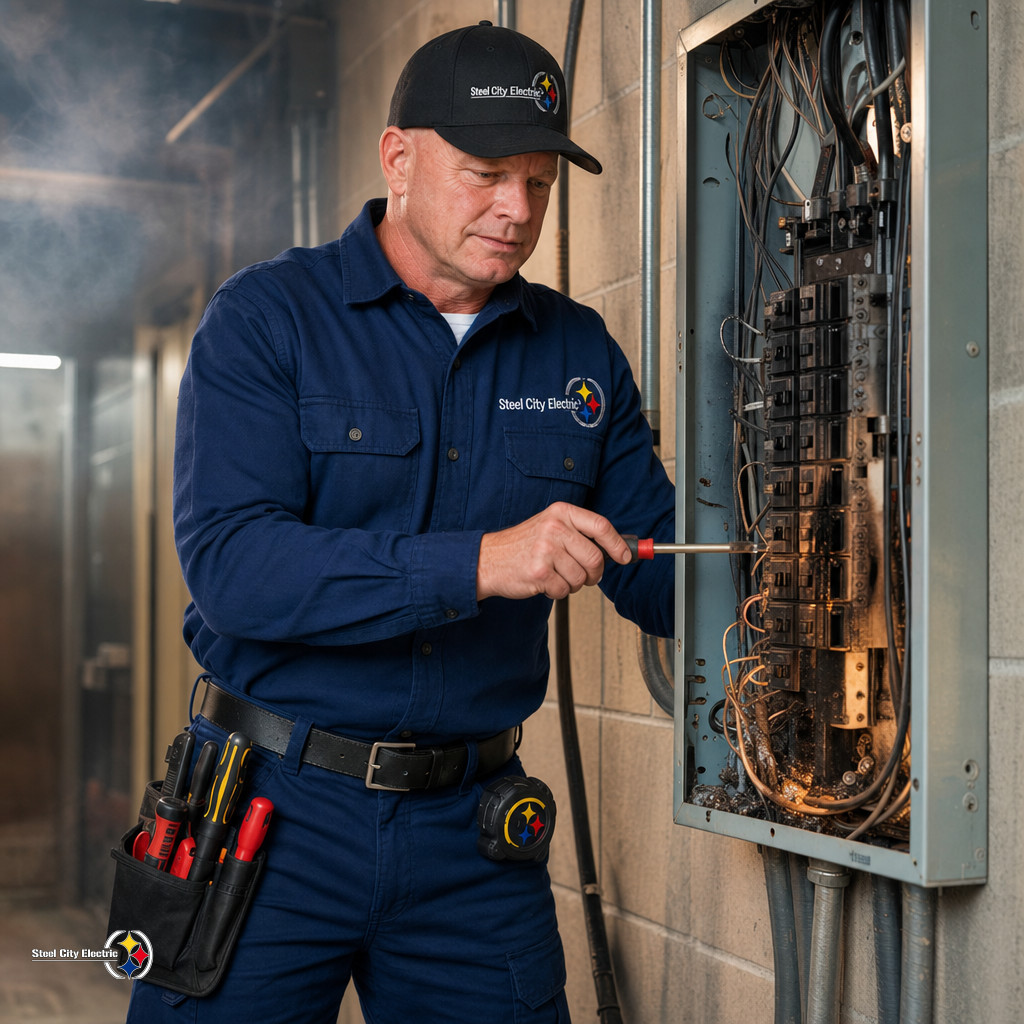
Most EV charger jobs do not get hung up because the charger was missed on the order. That is almost never it. The trouble usually shows up behind the wall or back at the service. Old gear. No spare breaker space. A packed electrical room. Panels that look fine on a plan but are already working hard during the day. We see it at fleet yards, retail buildings, gyms, warehouses, and office properties. The site looks ready until somebody does the load check. That is when commercial EV charger installation stops being a simple equipment set and turns into an electrical project.
Fleet charging delays have made this more obvious. Trucks or vans sitting around waiting for power create problems fast. Dispatch gets pushed. Parking gets messy. Employees lose time moving vehicles around. Customers may end up near work areas they should not be near. Delivery schedules slip. On a small property, a couple of Level 2 units may be straightforward. On a larger commercial site, the list grows quickly. Service capacity, trenching, conduit path, permitting, transformer availability, bollards, lighting, striping, data signal, charger networking. It all has to line up or the install drags.
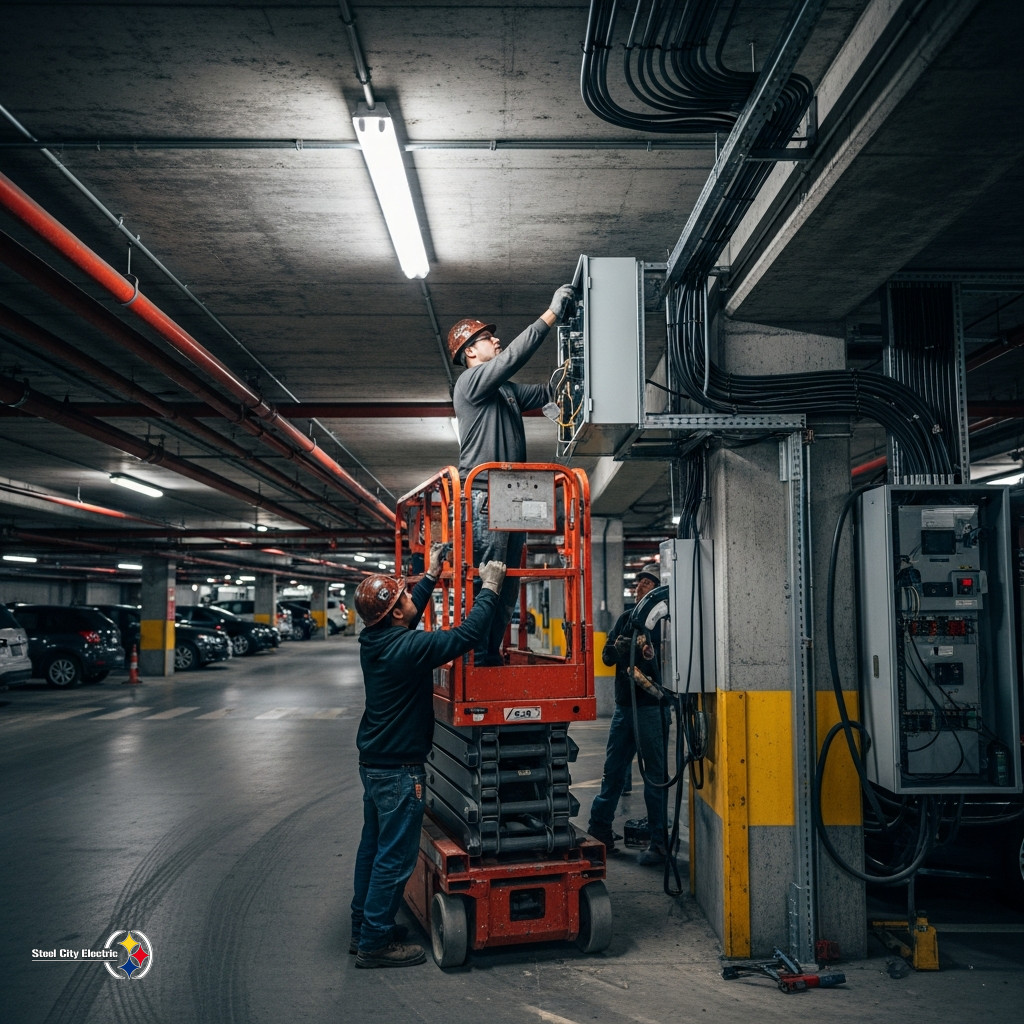
Steel City Electric has run into this kind of pressure before on active commercial jobs, including work at LA Fitness Tampa. Power upgrades in a building that stays open are different from working in an empty shell. Crews have to plan shutdowns, keep access clear, protect the public, and not leave the owner with a half-working building while the job is still underway. EV charging needs the same type of planning.
The part owners miss early is the added load. HVAC, coolers, kitchen equipment, lighting, elevators, office panels, and tenant loads may already be close to the limit at peak hours. Add chargers on top without checking the full service and the problems come later. Breakers trip. Gear heats up. A charger gets installed but cannot be used the way the fleet expected. A proper commercial EV charging install follows the path from the utility service all the way out to the parking space.
The site layout matters too. Chargers have to be where drivers can actually pull in, queue, turn, and leave without blocking the rest of the property. Conduit runs need to be practical, not just short on paper. Sidewalks, drive lanes, drainage, and curbs all matter once concrete starts getting cut. In Florida, outdoor electrical gear also has to deal with rain, heat, corrosion, and standing water in low spots.
For fleet operators, property managers, and commercial owners, the safer move is to review the electrical side before chargers are bought or vehicle schedules are promised. Steel City Electric can look at capacity, field conditions, and routing for Commercial EV Charger Installation before the project gets stuck with vehicles on site and no reliable power ready for them.