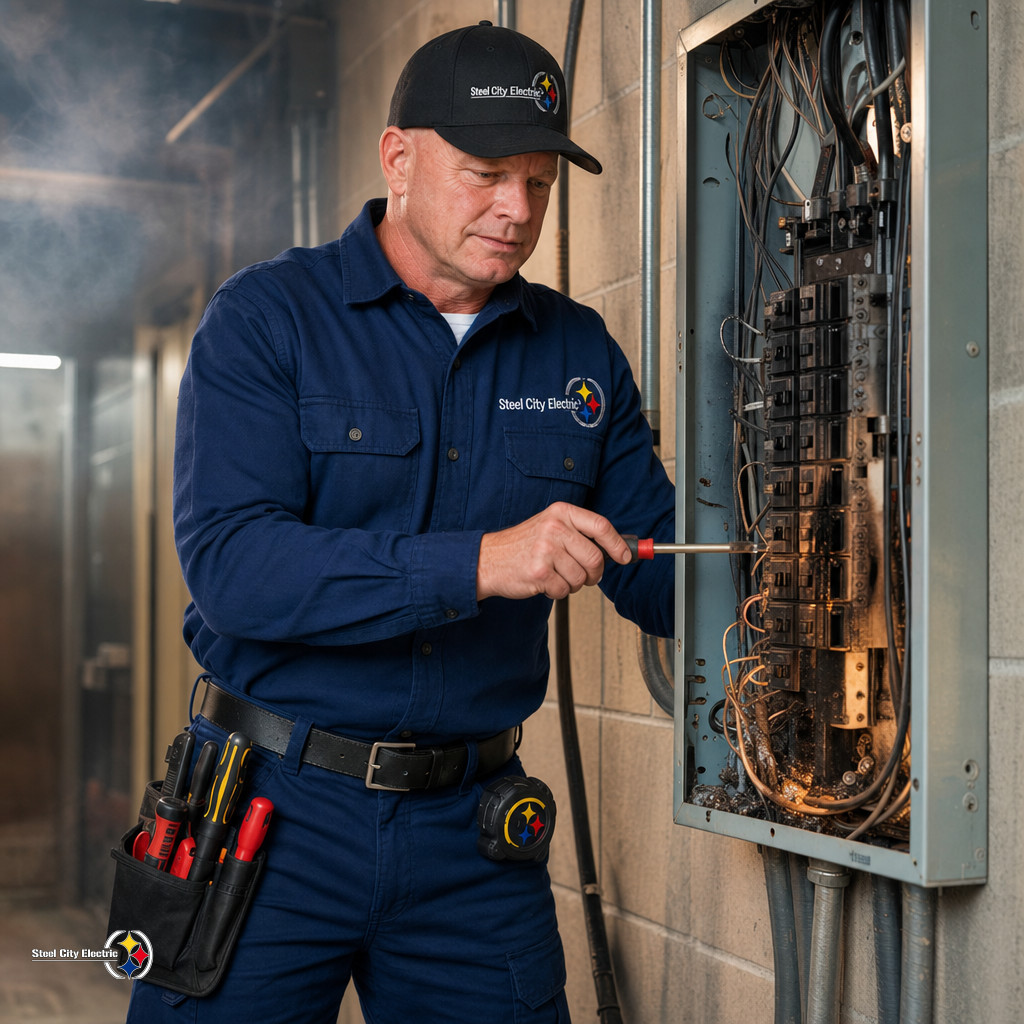
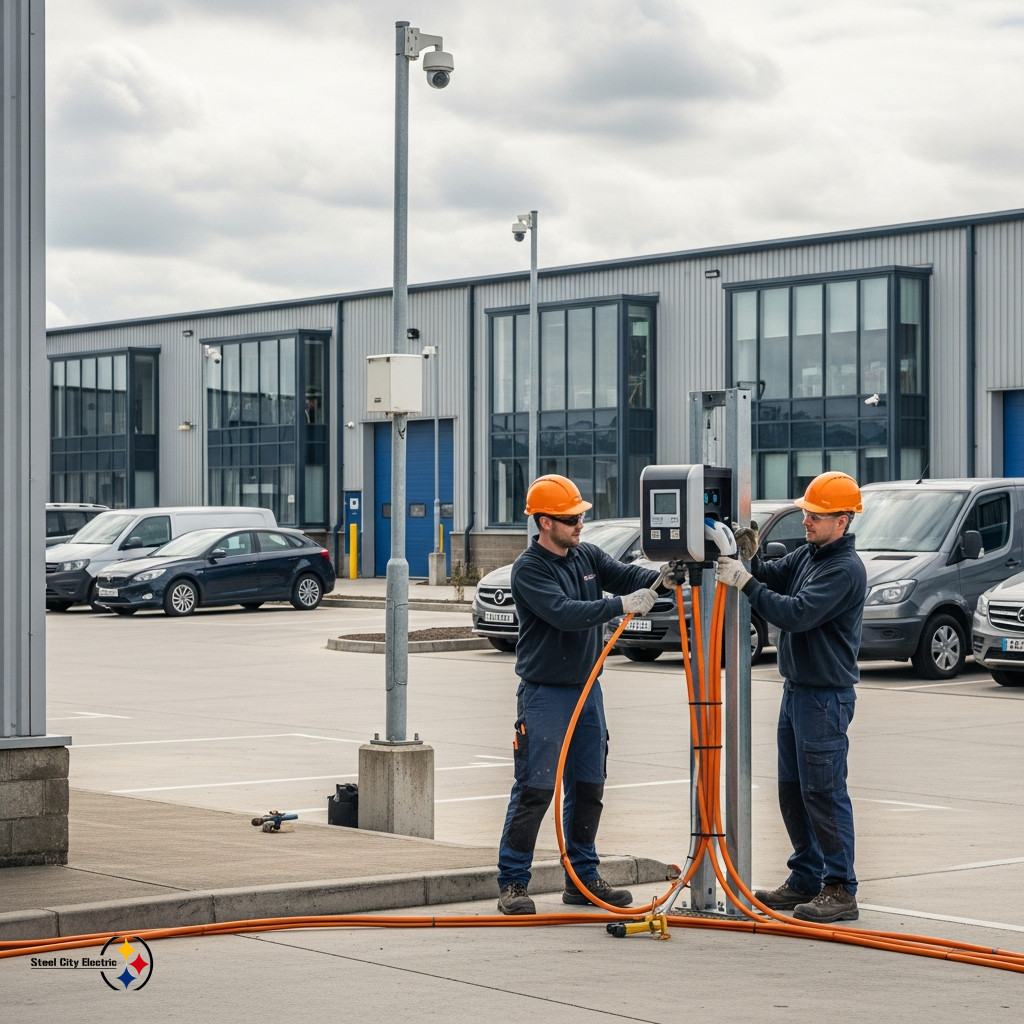
EV charging in a fleet yard usually looks clean on the first layout. Chargers here, bollards there, trench line across the pavement, done. Then somebody opens the electrical room and the job changes. No spare breaker space. Old labeling. Service gear already carrying more than the owner thought. A conduit route that was supposed to be easy runs straight into something buried years ago. That is why commercial EV charger installation needs to be handled like site power work, not a quick equipment set.
The slowest part is often not the charger. It is the utility. Fleet yards, delivery sites, shops, office campuses, and commercial parking lots can add a serious load fast. The chargers may be sitting onsite. The concrete may already be marked. The vendor may be asking for an install date. Meanwhile the transformer request or service upgrade is still waiting on review. On the ground, that means vehicles do not get charged when they need to. Staff starts shuffling units around the yard. Managers start making temporary charging schedules. Nobody wants that becoming the nightly routine.
There are a lot of pieces that have to land in the right order. Existing service capacity. Feeder sizing. Switchgear lead times. Metering. Trenching. Protection. Load management. Utility transformer availability. One missed item can park the whole project for weeks, sometimes with barricades, open cuts, and a yard manager asking when the place gets put back together.
A field walk before ordering equipment saves pain later. A good fleet charging installation plan looks at what the building is already using, what the fleet needs now, and what the owner may add next year. It also checks whether the existing gear can take the added demand without creating nuisance trips or heat problems after the chargers go live.
Steel City Electric has dealt with that kind of load planning on active commercial sites, including LA Fitness Tampa, where crews worked through commercial power upgrades while the facility stayed in use. Same lesson applies here. The plan has to match the building and the operation, not just the drawing.
For properties adding EV charging, downtime is the real cost. Not only during installation. After startup too, if the system was guessed at instead of checked. Several chargers pulling at once will find weak gear quickly. Steel City Electric helps commercial clients plan, install, and coordinate commercial EV charging systems from the electrical side first. If chargers are coming to your yard or shop, get the service capacity reviewed early. Waiting on the utility surprise is how a charger project turns into an operations problem.