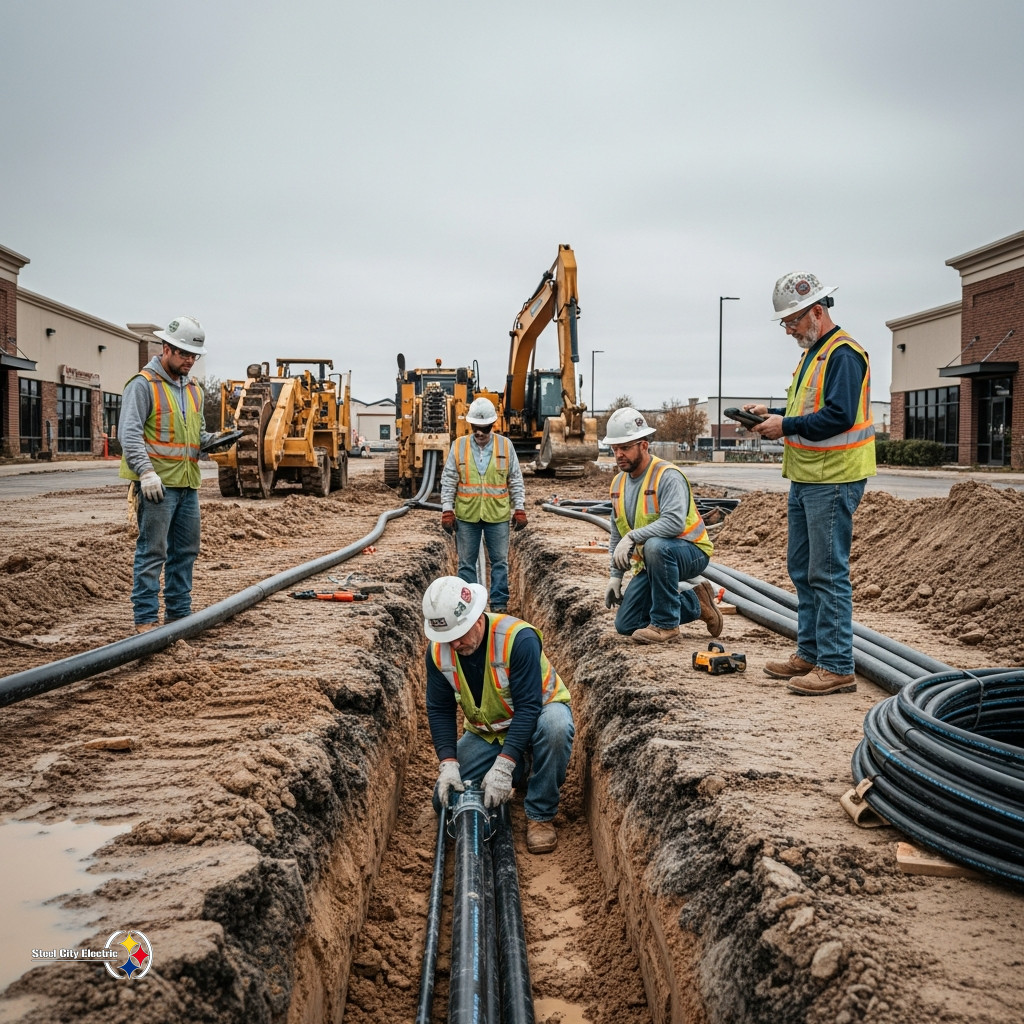
Underground electrical is one of those scopes that looks quiet on the schedule until it is not. Trench opens, pipe is supposed to go in, utility wants their clearances, inspector has a window, and the site contractor is already asking when they can close it back up. If the duct bank is off, or the transformer pad is not ready, the delay does not stay in one corner of the job. It rolls into concrete, paving, temp power, and turnover.
That is why GCs pay attention when an electrical contractor files bankruptcy, even if the company is not on their project. A recent whatnow.com report, North Texas-Based WBE-Certified Electrical Contractor Files for Chapter 11 Bankruptcy, said a Dallas-based electrical contractor filed for Chapter 11 protection. News like that makes project teams start asking plain jobsite questions. Who owns the material sitting in storage. Are permits actually moving. Is manpower still showing up next week. Who is responsible for getting the underground utility scope across the line.
On commercial work, the buried electrical package is easy to underestimate because most of it disappears. Once it is covered, people move on. But a hang-up in commercial underground electrical utility installation can hold up service release, feeder pulls, slab work, parking lot sections, and tenant dates. Conduits, sweeps, pull boxes, grounding, service laterals, duct banks, utility stub-ups. All of it has to match the field, not just the drawing set that looked clean in the trailer.
Steel City Electric has dealt with that kind of coordination on active Florida jobs, including PT Solutions Physical Therapy. Tenant work does not give much room for guessing. One bad route or one unanswered utility comment can chew up days fast.
Financial trouble with a contractor usually shows up in small ways before it becomes obvious. Material does not arrive. The crew gets thinner. RFIs sit. Utility comments take too long. A trench waits open because nobody confirmed a detail that should have been handled before mobilization. Underground work punishes that kind of drift. Digging twice costs money. Moving a stub-up after layout has shifted costs more. Waiting on permanent power near the end of a buildout is worse.
For Florida commercial projects, Steel City Electric keeps underground utility work tied to real sequencing, inspection points, and site conditions. If the job needs the electrical path sorted out before dirt starts moving, our team can support commercial underground utility installation with planning that fits the way projects actually run in the field.
For commercial properties dealing with this kind of issue, Steel City Electric can help evaluate the right service path for the building.