Growing Loads Push Commercial Underground Electrical Utility Installation Earlier in the Job Schedule
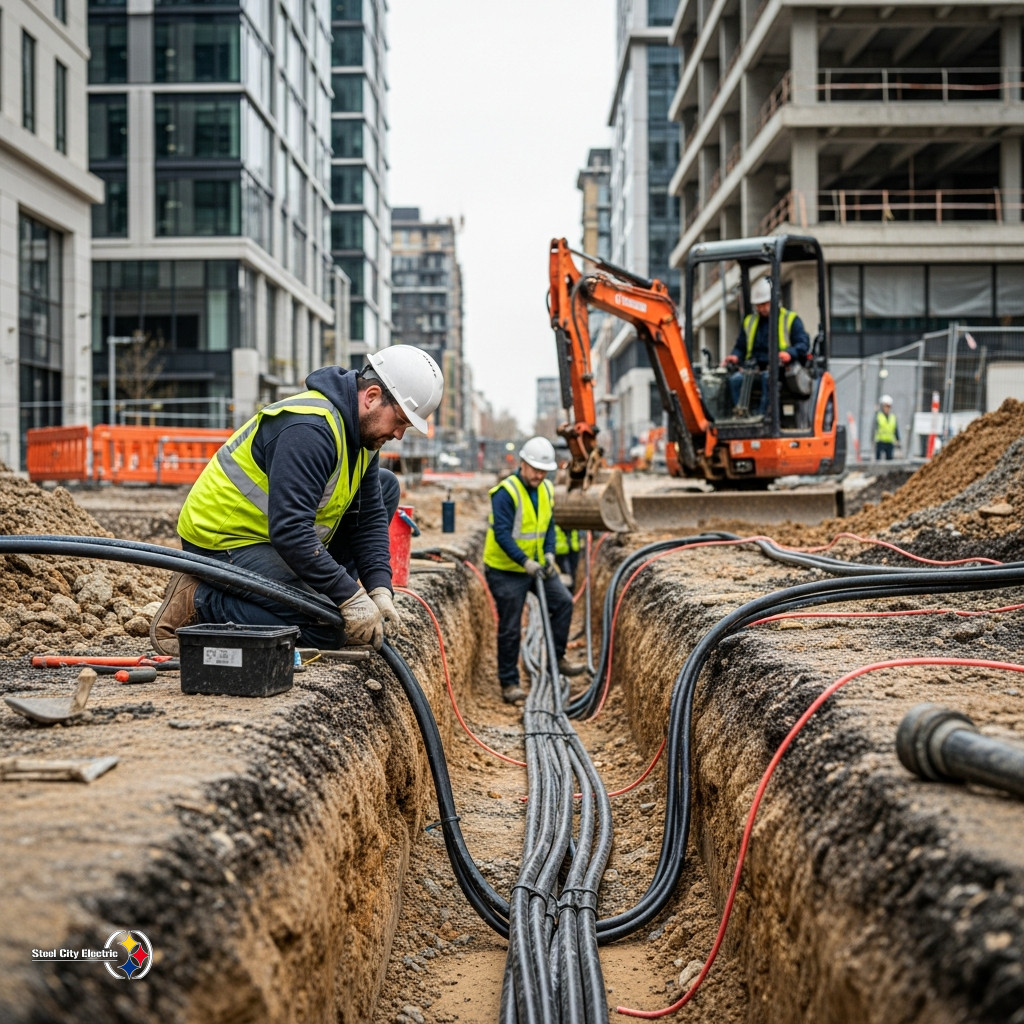
On commercial jobs around Saint Petersburg, Florida, the underground electrical work is not something crews can leave sitting on the back end anymore. It used to get treated like early rough site work until the real questions showed up. Service size. Transformer location. Pad clearance. Utility release. Conduit runs crossing a parking lot that is already formed up. By then it is a mess. Sawcutting new work, holding temp power longer than planned, moving other trades out of the way. Nobody wants that fight.
For Steel City Electric, commercial underground electrical utility installation is usually where the job either gets set up right or starts collecting problems. Loads are heavier now. RTUs, walk-in coolers, EV-ready spaces, signs, cameras, kitchens, tenant panels, all of it lands back at the service. The pipe route on the plan might look fine in a meeting. Out in the dirt it hits storm, water, gas, grease traps, old duct bank, or something nobody had marked. That is normal work, but it has to be found early.
According to a recent report from www.einpresswire.com titled Morgan Company Highlights Trends in Commercial Electrical Work, owners in commercial and industrial spaces are paying closer attention to electrical planning as buildings take on more capacity. That lines up with what happens in the field. Underground service is not just laying conduit and covering it up. It ties into switchgear dates, utility inspections, outages, pull schedules, backfill, and the day the tenant expects lights on.
Steel City Electric saw that same planning pressure on Foot Locker Tampa, where power distribution had to work with the buildout schedule, not chase it after walls and finishes were already moving.
In Pinellas County, existing conditions can burn up time fast. Old feeders. Dead conduit that is not really dead. Utility maps that are close enough to be useful, but not close enough to trust blindly. A commercial underground utility run may need potholing, a field reroute, bedding review, compaction coordination, and a utility crew lined up before conductors ever get pulled. That is why the contractor handling underground electrical utility installation needs a seat at the table while the site contractor can still adjust grade, trench, and layout.
For projects in Saint Petersburg, Florida, the smart move is getting electrical involved before the site starts looking finished. Once curb, asphalt, landscape, and storefront work are in, every correction costs more. Steel City Electric helps commercial teams work through service paths, utility coordination, conduit placement, and sequencing so power is ready where the building needs it, without a last-minute scramble at the worst part of the schedule.