Commercial EV Charger Installation Has Become Parking, Power, and Tenant Infrastructure Work
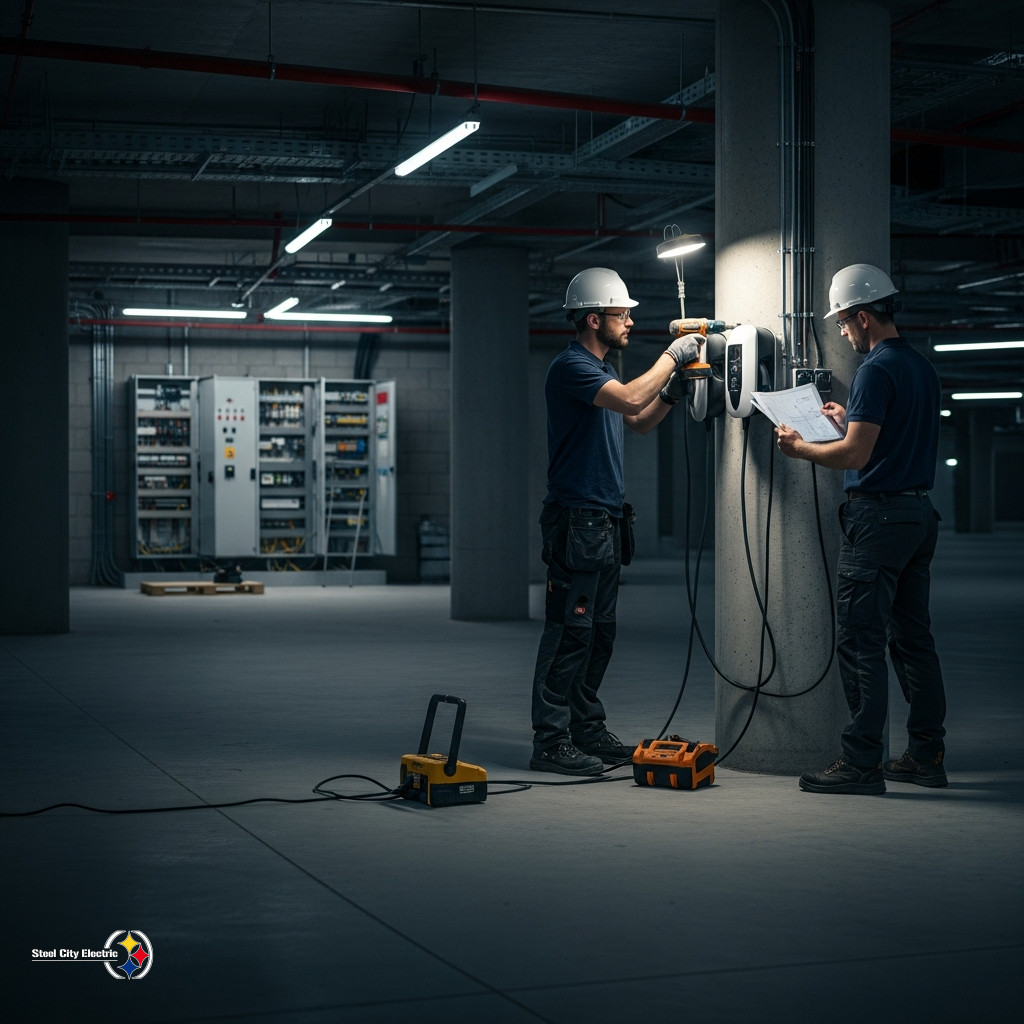
EV chargers look simple when they are sitting in a parking space. They never are. The pedestal is the visible part. The job usually starts farther back, at the gear. Is there room in the panel? Can the existing service carry the added load? Where does the conduit run without tearing up half the site? What has to be shut down, and when? On commercial properties in Palmetto, Florida, commercial EV charger installation is not just mounting equipment and walking away. It touches parking flow, trenching, utility coordination, bollards, signage, distribution, and the way the building is actually used every day.
The smart building conversation is pushing this even harder. A recent report from www.twinfm.com titled Wates Roundtable: What Makes Smart Buildings Smart? talked about buildings needing to respond to real occupant use, not just look modern on paper. Parking is part of that now. Tenants ask about charging. Employees ask. Fleet users ask. Visitors notice when it is missing. If the electrical system was never planned for that demand, the problems show up later as nuisance trips, hot equipment, blocked spaces, or shutdowns nobody budgeted for.
Adding chargers after a building is already operating can get ugly. Drawings may say one thing, but the ground says another. Panels are often packed. Old underground routes are not always where anyone expects them to be. Sometimes the path has to cross drive lanes. Sometimes it has to dodge utilities, drainage, curbs, landscaping, or active loading areas. Steel City Electric has dealt with that kind of practical site work on All Points Equipment, where underground conduit layout had to fit the real conditions on site, not just the clean version of the plan.
The biggest mistake is treating the charger as the whole project. A charger that powers up on day one can still be a bad install if the layout creates traffic problems or the electrical plan is too thin. Commercial charging can pull steady load at odd times, especially around offices, service yards, retail centers, medical properties, and mixed-use buildings. If the design is short-sighted, the owner ends up with heat issues, failures, tenant complaints, and pavement getting cut a second time. Nobody wants that bill.
Before crews start trenching or setting equipment, Steel City Electric looks at the service, the distribution path, the parking layout, and utility requirements. That front-end work matters on commercial sites because downtime is expensive and tenants usually do not care why the power is off. If a Palmetto facility is adding chargers, improving parking amenities, or trying to make the building work smarter, the electrical planning needs to come first through proper EV charger installation for commercial properties.