
After Baidu Robotaxis Stalled in Traffic, Commercial Electrical Panel Upgrades Look Less Optional for EV Fleet Sites
Reuters recently reported that Baidu’s Apollo Go robotaxis stopped in traffic in Wuhan, China. Social media posts showed at least one crash connected to the stopped vehicles. That is China, not Florida. Different roads. Different grid. Different rules. But anyone who has been around fleet charging long enough has seen the same kind of trouble in another form. The system looks fine on paper, then one piece quits acting like it was supposed to.
EV fleets are not just cars sitting in parking spaces. They are electrical load. Heavy load. And if the site was not built for it, that load can get ugly fast.
When vans, service trucks, cars, or automated vehicles all roll back in and plug in around the same time, the electrical room is no longer some back-of-house space nobody thinks about. It becomes part of dispatch. Part of operations. Part of whether the business can get vehicles back out the next morning. Panels, feeders, switchgear, disconnects, metering, grounding, all of it starts to matter in a very practical way. Not theory. Not a note on a drawing. Real equipment carrying real current for long hours.
We run into this on commercial properties where chargers get added to buildings that were never designed for that kind of continuous demand. There may be open spots in the panel. That fools people. Open breaker spaces do not mean the service has room. They do not fix a main that is already loaded hard in the afternoon. They do not fix hot lugs, tired breakers, bad labeling, crowded gutters, weak grounding, or feeders that were sized for a much lighter building years ago.
That is why commercial electrical panel installation and upgrades should be looked at before the fleet project gets too far along. Once the vehicles are ordered, the stalls are painted, the chargers are mounted, and the operations team has built schedules around it, electrical problems cost more. Now the crew is working around a running business. Shutdowns get squeezed into bad hours. Temporary fixes start getting discussed. Nobody is happy at that point.
The Baidu robotaxi situation is mostly being treated as an autonomous vehicle issue. Fair enough. That is the part people see. From the electrical side, though, it is another reminder that fleets depend on plain old infrastructure doing its job every day. Charging gear, controls, panelboards, emergency planning, clean distribution, service capacity. If one of those pieces is weak, the whole operation can look unreliable. The vehicle gets blamed first, but the support system may be part of the story.
On one recent portfolio review tied to the Baidu robotaxis reportedly halted mid-traffic causing crashes in Wuhan, China, our field team did not spend much time on the headline itself. What stood out was the exposure. A fleet that cannot move when it is supposed to move creates traffic problems, missed service windows, dispatch headaches, customer complaints, and pressure on whoever is responsible for keeping the site running. Commercial buildings have their own version of that. Add load without giving the electrical system enough room and the weak point eventually shows itself.
A panel upgrade for a fleet site is usually not just taking one box off the wall and hanging another one. Sometimes the service needs to be recalculated all the way back to the utility. Sometimes the existing gear is old enough that replacement parts are questionable or overpriced. Sometimes the panel is in the wrong place for the charger layout, so conduit routing turns into a mess unless somebody catches it early. Older buildings bring their own surprises too. Mystery circuits. Dead conduits. Subpanels fed from places nobody expected. Tenant work layered over older tenant work. You do not catch all of that by standing in the doorway for five minutes.
A real site check matters. Load readings help, but they are only part of it. Somebody needs to open equipment where it is safe to do so, trace feeders, verify grounding and bonding, look at fault current, check labels, and understand how the building actually runs during the day. A warehouse does not use power like a restaurant. A medical office is not the same as a fleet yard. A retail center has different peaks than a service shop. Add EV chargers and the old panel schedule may stop telling the truth.
Some properties need a new distribution panel with properly sized feeders. Others need service equipment replacement, added disconnects, transformer coordination, or a cleaner split between charging loads and building loads. If the owner is planning future charger phases, the first phase has to be installed with that in mind. We have seen the other version. Four chargers go in. Six months later they want more. Then the electrical room gets opened up again because nobody left space, capacity, or a decent path for expansion.
Maintenance becomes a bigger deal once commercial EV charging is part of the site. Heat is hard on electrical gear. Long charging cycles can uncover loose terminations, weak breakers, and panels that were already running too close to their limit. One bad charger pedestal is a service call. A panel issue that drops a whole row of chargers is an operations problem. Routes get delayed. Vehicles sit. Managers start asking why the expensive new charging setup cannot stay online.
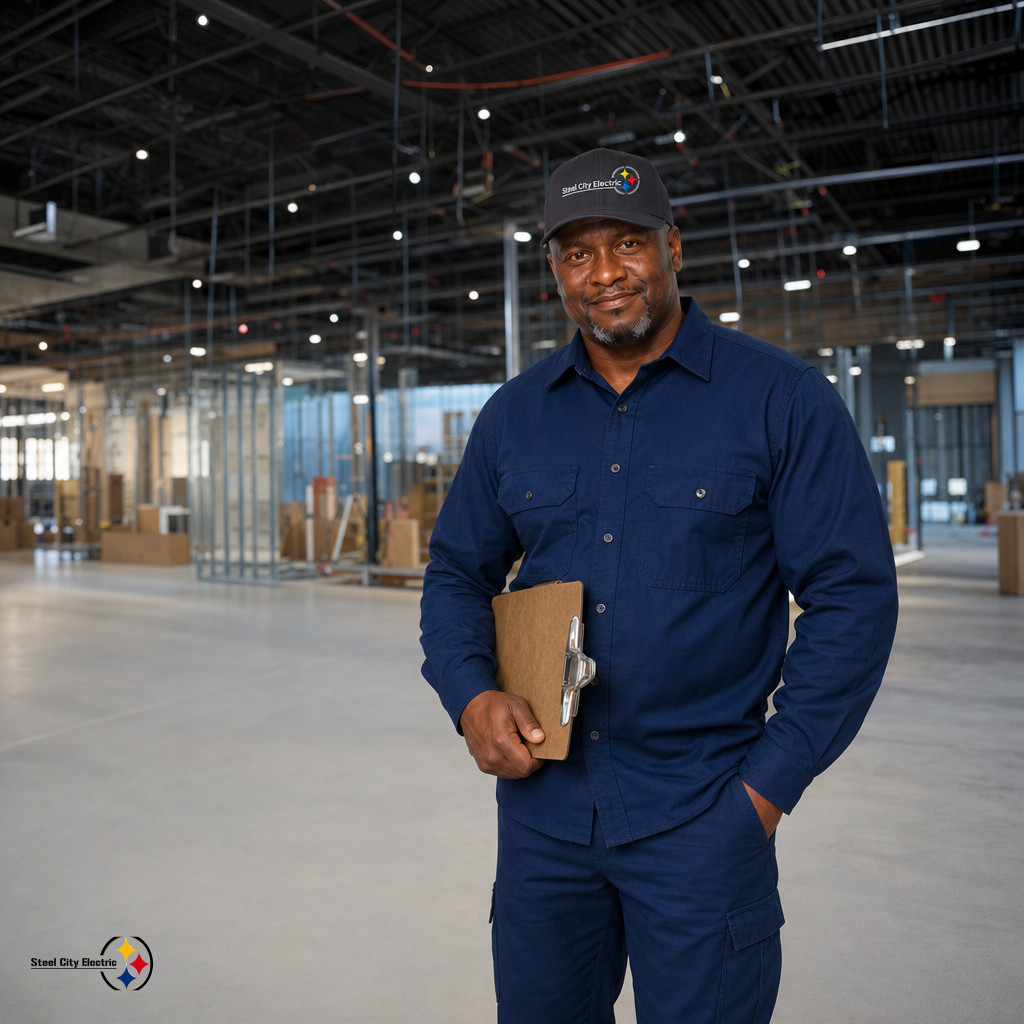
Steel City Electric looks at this work from the field first. Where is the existing gear? How far is the trench or conduit run? Is there working clearance, or has the electrical room become storage like it does in half the buildings we walk into? Can the business shut down for the tie-in? Is the panel rated for the equipment being added? Is the existing service already maxed out when HVAC, lighting, refrigeration, and production loads are running? These are basic questions, but they decide whether the job is clean or painful.
Fleet charger projects usually need more than one electrical conversation. The panel work connects directly to commercial EV charging station installation, utility coordination, permitting, inspections, and service after the install. If the building already has issues, it may need commercial electrical repairs before anyone adds more continuous load. New chargers do not make an old weak system modern. They just put more stress on the bad parts.
Shutdown planning is its own piece of the job. A panel upgrade in an active commercial building has to be staged. Tenants need notice. Refrigeration may need protection. IT rooms, access control, production equipment, lighting, alarms, and life safety equipment all have to be accounted for. Some prep can happen with nearby equipment still in service, depending on the setup, but the cutover needs control. Rushed cutovers are where small mistakes turn into long nights.
Fleet operators usually talk first about charger count. Makes sense. They want to know how many vehicles can plug in. From the electrical room, that is only one part of the calculation. Charger output matters. Demand management matters. Voltage, feeder length, panel rating, utility capacity, and future expansion all matter. A site might handle four chargers just fine and still be a poor candidate for twelve without a service upgrade or distribution changes.
The robotaxi story out of Wuhan will get pulled apart by transportation people, software teams, insurance people, and regulators. That is their lane. For commercial properties here, the point is simpler. If vehicles are part of the business, the electrical system is part of the business too. Treating it like an afterthought usually costs more later.
Steel City Electric handles commercial panel installation, panel replacement, service upgrades, and the wiring work that supports heavier commercial loads. For businesses preparing for EV fleets, charger expansion, or new equipment, it is better to address the panel before a failure sets the schedule. A planned outage is inconvenient. An unplanned outage can shut the whole day down.
If a site is already dealing with breaker trips, warm panels, limited capacity, poor labeling, or old electrical layouts that nobody fully trusts, start with a field review. Not a guess from a photo. Not a quick promise over the phone. A real look at the gear, the load, the building use, and the path for the work. That is how a commercial panel upgrade gets built around the operation instead of becoming one more problem sitting behind the electrical room door.