
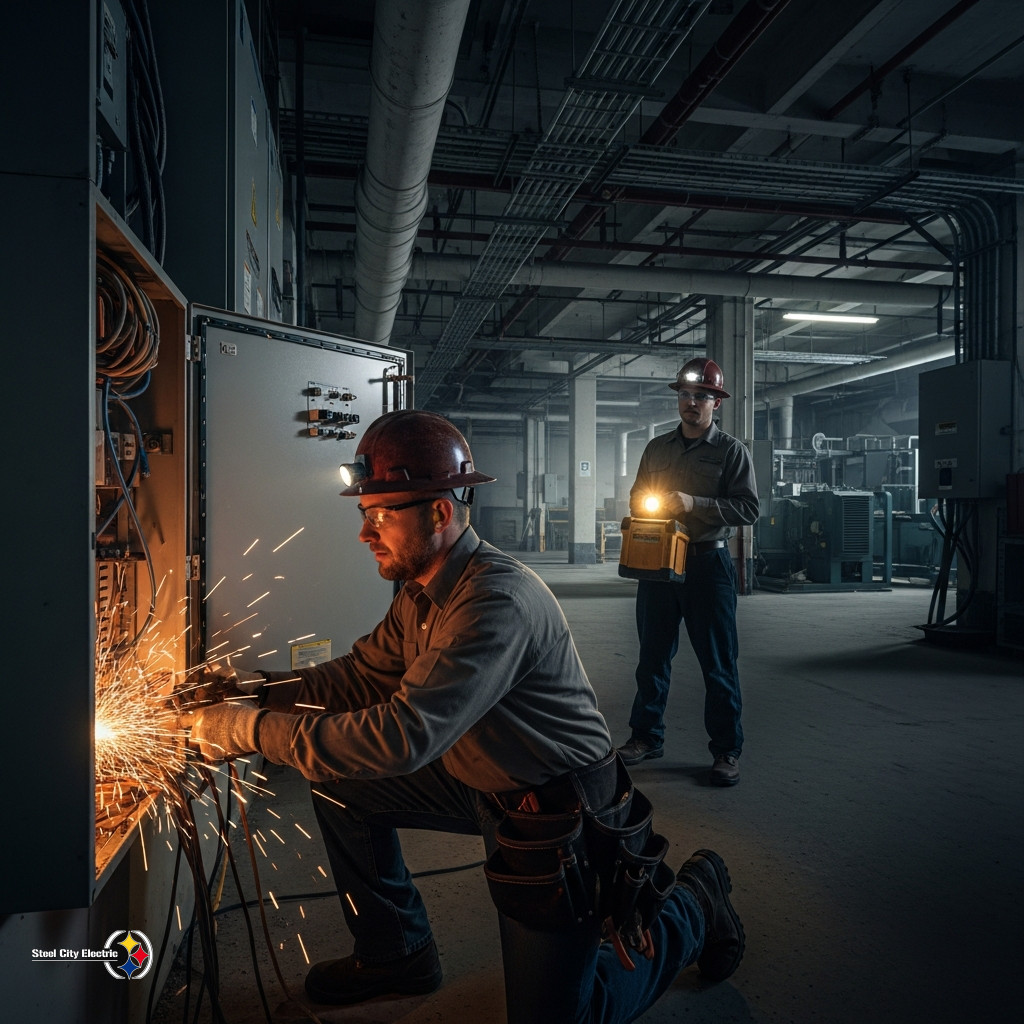
After-hours electrical calls are rarely clean. A restaurant is halfway through dinner. A fitness center still has people on treadmills. A warehouse has trucks backed up to the doors. Then somebody notices one row of lights is out, a breaker will not reset, or there is heat coming off a panel cover. By the time the call comes in, the building staff has usually tried the obvious stuff and figured out it is not going away on its own.
Crews sent out for 24/7 commercial emergency electrical repair do not always get a perfect report. Sometimes it is “half the place is dead.” Sometimes it is a burnt smell near the electrical room. Other times the utility power is good and the problem is sitting inside the building, in the switchgear, feeders, panels, disconnects, lighting controls, or a piece of equipment that finally pulled too much load. The first job is to find the bad section without making the rest of the facility worse.
Out in the field, that means checking what is hot, what is dead, and what is unsafe to leave energized. Loose lugs, overloaded circuits, water in a disconnect, failed breakers, damaged conductors, bad contactors. We see all of it. If the exact part is not on the truck, the site still has to be stabilized. Life safety stays first. Critical loads get protected where possible. Temporary measures have to be safe, clearly understood, and not treated like a permanent repair.
Steel City Electric has dealt with this type of occupied-building pressure on commercial work like LA Fitness Tampa, where lighting renovation work had to be handled around real facility operations. That kind of coordination matters. Emergency electrical work is not done in a quiet empty building most of the time. People are inside, equipment is running, and managers are trying to keep doors open.
Older properties add another layer. Panel schedules may be wrong. Tenant improvements may have been stacked on top of old circuits. A lighting failure might not be a simple lamp or breaker issue at all. It may trace back to controls, contactors, shared neutrals, overloaded branch wiring, or service equipment that needs a harder look. When the repair points beyond a quick field correction, follow-up through commercial emergency electrical service keeps the temporary fix from becoming a long-term risk.
Waiting until morning can cost more than the repair. Spoiled product, lost sales, failed HVAC, security problems, damaged equipment, and angry tenants all show up fast when power is unstable. If your facility has partial outage, repeated breaker trips, burnt odor, damaged wiring, hot panels, or equipment shutting down during business hours, get emergency commercial electrical repair scheduled before the problem spreads through the building.