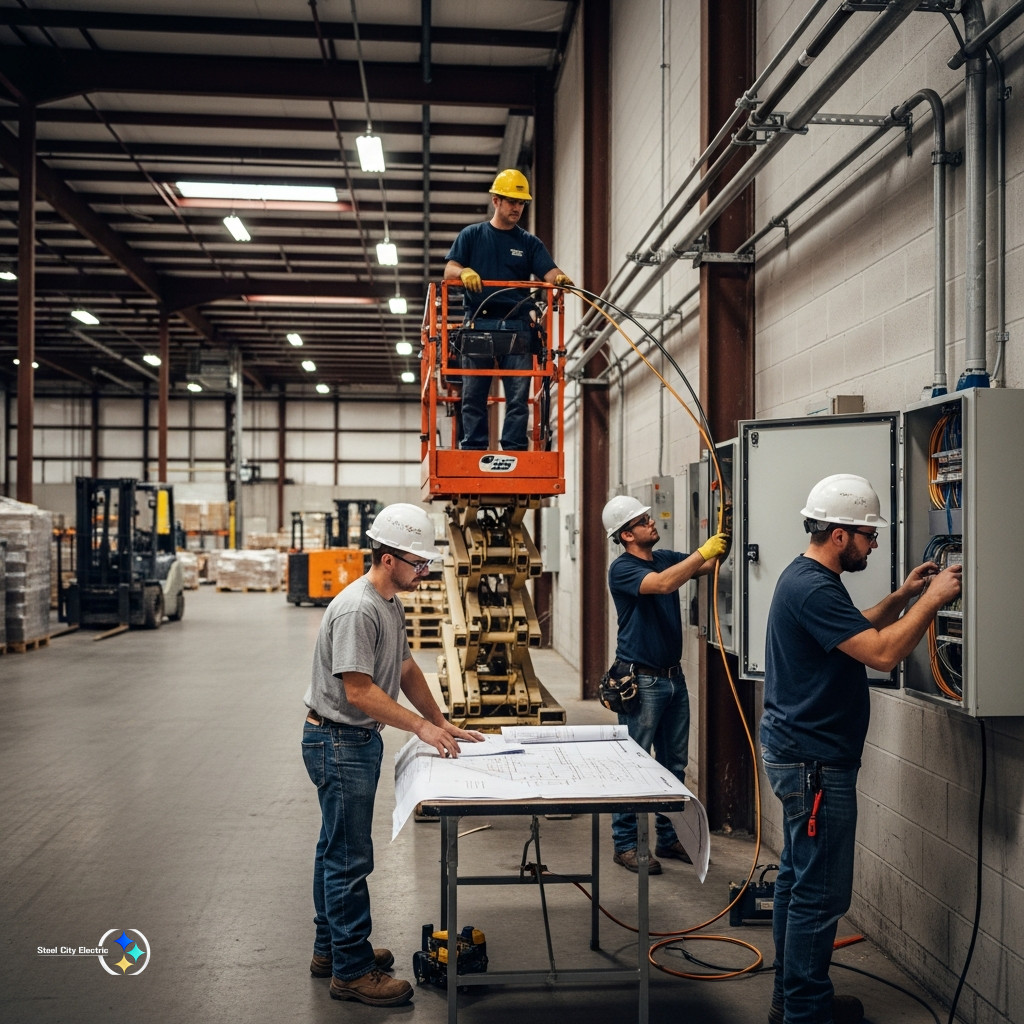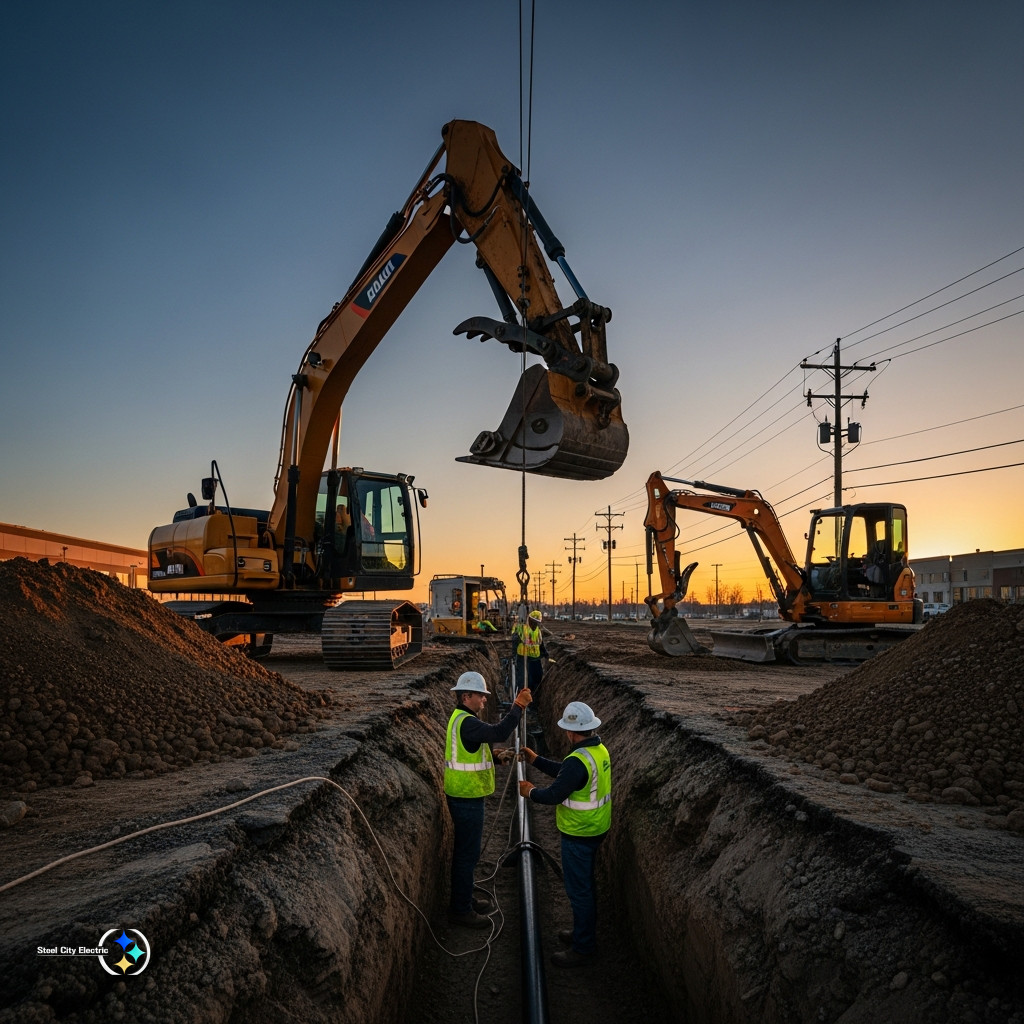
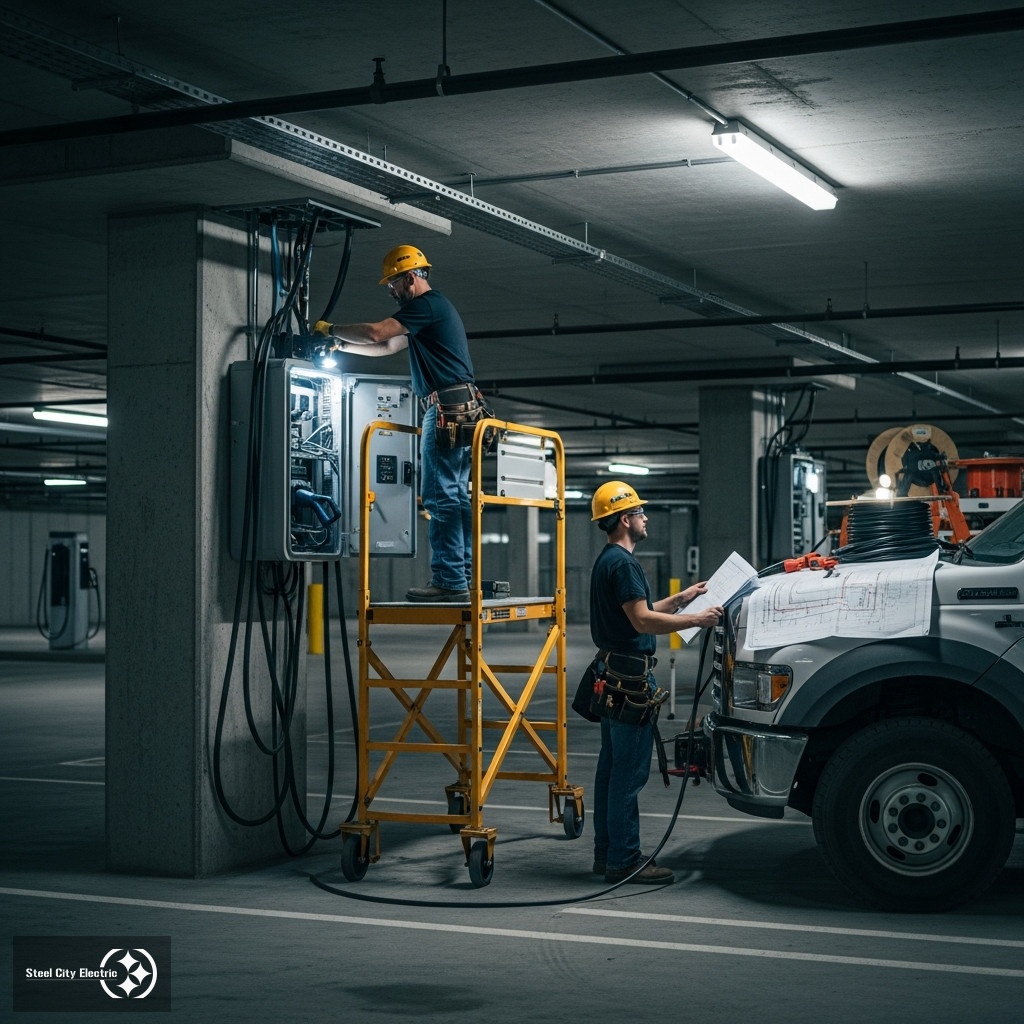
EV charging on a commercial property is never just setting a pedestal in a stall and calling it done. The work shows up in the service gear, trenching, conduit runs, breaker space, disconnect locations, bollards, access for maintenance, and the utility schedule. More than once, a charger layout has looked clean on a drawing, then the field visit tells another story. Old panels. Packed gutters. No spare capacity. A feeder that was fine for the building yesterday but not for a row of chargers tomorrow. Good commercial EV charger installation has to be treated like equipment the business will lean on every day.
TechCrunch recently reported on a Baidu robotaxi problem in China where a system failure left cars stopped and riders stuck. That is not the same equipment and not the same market, but the point lands pretty quick for anyone building around electric vehicles. If the chargers are part of the operation, there needs to be a plan for the bad day. One charger dead. Several vehicles low at the same time. Building load already high. Storm rolls through. Utility voltage dips. Breaker trips. Contactor fails. Someone damages a feeder. The ribbon cutting is easy. Keeping the system useful six months later is the part that needs planning.
A lot of that gets figured out before the charger order is placed. Some buildings need commercial panel upgrades first. Some need cleanup in the electrical room, better labeling, service repair, or a different distribution approach so the charging load is not stacked on top of already stressed gear. Steel City Electric has dealt with that kind of field pressure before, including work at Suntide Island Beach Club in Sarasota, where damaged life safety systems had to be handled during real restoration conditions. Jobs like that remind you quickly that the site does not care what the schedule says.
The weak point on charging jobs is often margin. Not enough capacity. No empty conduit for later. No clear way to isolate part of the system. Poor access around the gear. No thought given to what happens when the business adds vehicles or opens charging to customers. Once the chargers matter to daily operations, downtime turns into phone calls, lost time, and workarounds nobody wanted. Fleet sites and public charging locations should have the service checked, the load calculated properly, and the installation built with maintenance in mind. Steel City Electric can review the existing electrical service, point out limits, and build a charging setup backed by real commercial electrical repair experience when the building needs attention before chargers go in.
For commercial properties dealing with this kind of issue, Steel City Electric can help evaluate the right service path for the building.