
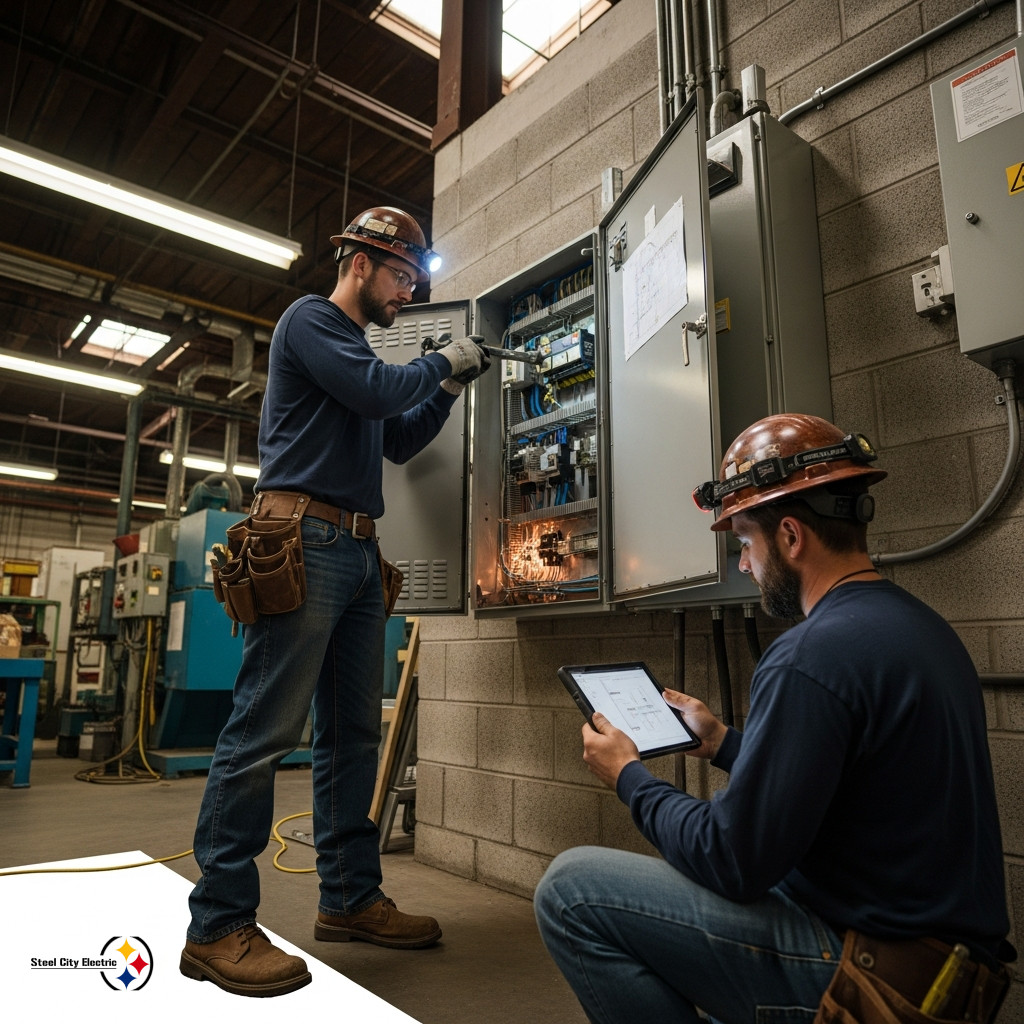
Old commercial panels do not usually quit all at once. More often it starts with little stuff. A breaker that trips when the kitchen is busy. Covers that do not line up right. Handwritten labels nobody trusts. Heat on a breaker face. One tenant says their lights flicker, another says a copier or cooler keeps dropping out. Then somebody adds equipment, moves walls, or brings in a new use for the space, and the panel that got by for years is now the holdup.
That is when commercial electrical panel installation and upgrades turn into a real jobsite problem, not a nice future improvement. Restaurants, gyms, offices, medical suites, retail bays, and warehouses all load panels harder than they used to. HVAC, lighting controls, POS gear, dedicated appliances, IT racks, security, fire alarm connections, and tenant equipment all need space and clean distribution. If the panel is packed full, damaged, obsolete, or too small for the work being planned, the rest of the project starts waiting on electrical.
A recent industry update titled commercial electrical infrastructure strain and aging service equipment pointed at the same issue contractors keep running into: older gear becomes the choke point when a building tries to add load and stay open at the same time. Out in the field, it is not usually one bad breaker. It is feeder condition. Shutdown windows. Grounding. Available fault current. Clearances. Panel schedules that have not matched reality in ten years. Sometimes there is not enough room left to work safely without cleaning up what came before.
Steel City Electric has dealt with these conditions on commercial sites, including work at LA Fitness Tampa, where electrical improvements tied into commercial power systems. A gym is a good example. Loads are steady, equipment is expensive, members notice outages fast, and nobody wants half the building acting unreliable.
Good panel work has to be planned around the building, not just the wall the panel sits on. Some jobs need after-hours shutdowns. Some need utility coordination, temporary power, feeder replacement, old circuit tracing, or space left for equipment that is coming later. Rushing a panel change in an occupied building can make a mess. Lost power costs money and tenants remember who caused it.
If a panel is full, hot, tripping, missing parts, poorly labeled, or blocking tenant improvements, it should not sit on a maintenance list until it fails on its own schedule. Steel City Electric handles commercial panel upgrade work with the coordination needed to keep the building moving and the installation code-compliant.