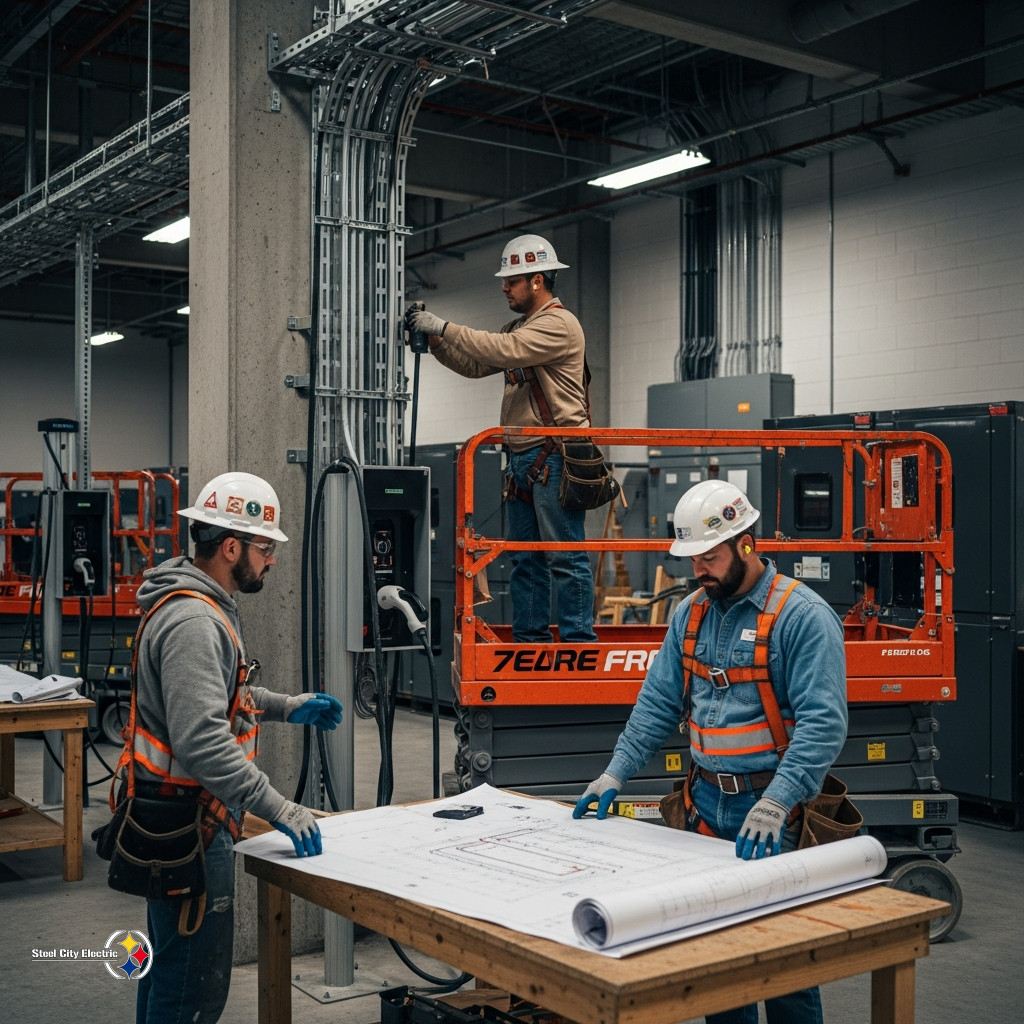
EV chargers look simple from the parking lot. Set the pedestal, pull wire, land it, test it. That is not how most commercial sites go. The trouble is usually inside the building or under the asphalt. Panel space is short. The gear is older than anyone thought. The trench route hits irrigation, storm pipe, roots, or a sign base nobody marked. Then the owner wants the parking spaces kept open during business hours. That is where the schedule starts getting squeezed.
A recent report from whatnow.com, North Texas-Based WBE-Certified Electrical Contractor Files for Chapter 11 Bankruptcy, said Allied Electrical Group of Texas, Inc. filed for Chapter 11 protection. Different state, different market, but contractors notice these things. When an electrical contractor gets tied up with bankruptcy, bonding issues, vendor payments, or crew shortages, unfinished scopes do not just disappear. They land on somebody else’s desk. Owners planning commercial EV charger installation can end up waiting on gear, drawings, inspections, or a crew that is qualified enough to clean up what was left behind.
Charger work is load work. A bank of stations can pull for hours, not minutes. Before anything gets installed, somebody has to look at service capacity, panel schedules, breaker sizes, voltage drop, conduit fill, and how the chargers will be managed later. If another contractor started the job and walked away, nothing gets trusted at face value. Feeders get traced. Labels get checked. Disconnects get opened. Underground routes get verified before anyone adds more pipe or wire. It is slow, but skipping that step is how buildings inherit problems.
Steel City Electric has handled that kind of planning on occupied commercial sites, including PT Solutions Physical Therapy in Florida, where electrical work had to fit around clinic operations and tenant needs without turning the building into a construction zone.
For property managers, fleet yards, retail centers, office parks, and medical plazas, EV charger planning should start before paving crews show up or parking changes are locked in. Steel City Electric checks the service, routes the feeders, plans shutdowns, reviews equipment locations, and looks at future expansion before the job gets boxed into a bad layout. If your site is adding chargers or trying to get a delayed scope moving again, schedule commercial EV charging infrastructure work with a crew that understands what actually happens in the field.