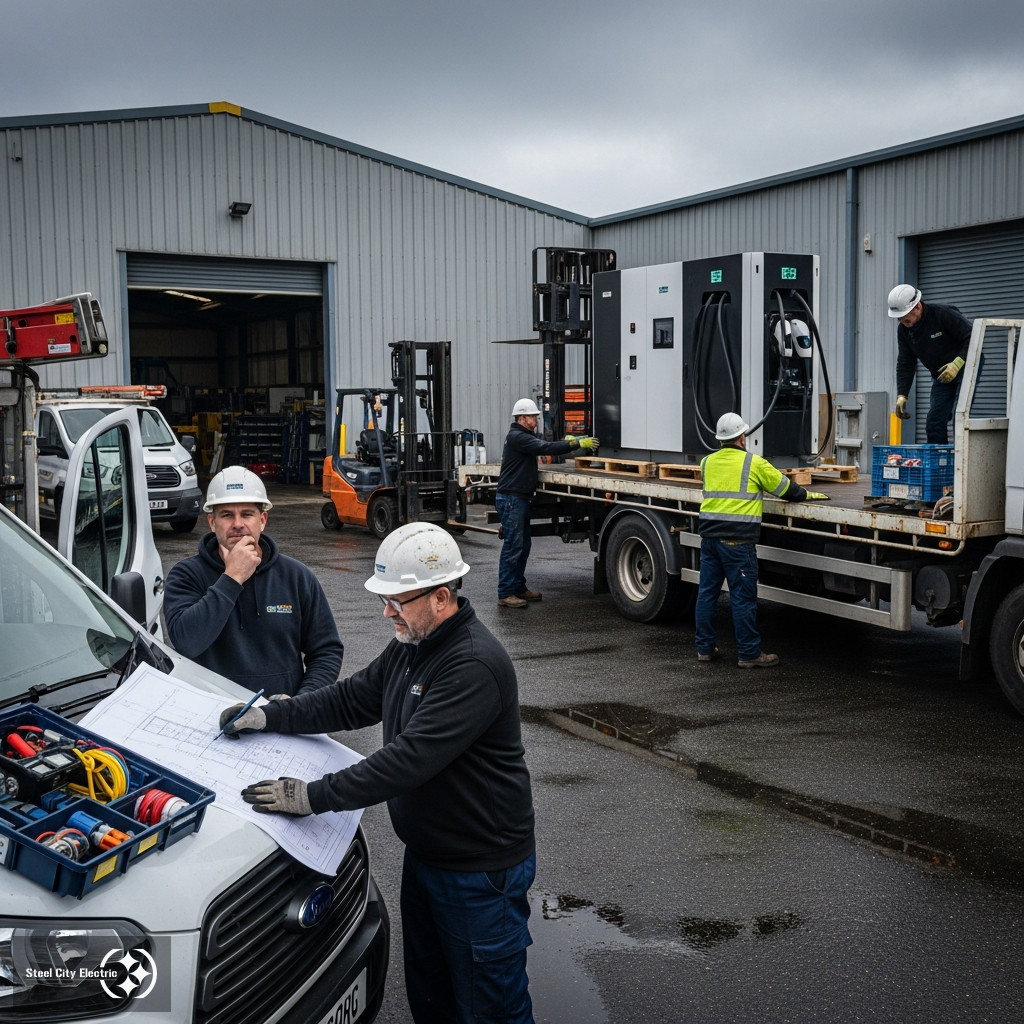
Fleet yards usually wait on EV charging until somebody needs numbers for next quarter, or a new van order shows up. Then the rush starts. Chargers get pointed toward loading doors, service bays, employee spots, customer pickup lanes. On paper it looks simple. In the field, the panel is full, the conduit run is ugly, and the spot everyone picked needs trenching through the worst part of the lot.
Fuel prices push these jobs forward. A recent Reuters report had markets sharply lower at midday, with the Sensex down 1,053 points and crude oil above $115. That kind of news makes owners ask harder questions about fuel bills. It does not mean every fleet changes overnight. It does mean Commercial EV Charger Installation stops being a nice parking feature and starts getting treated like operating equipment.
The first thing to check is not the charger. It is the service. A small office might get by with two Level 2 units. A delivery yard or service company may have trucks plugged in for hours, sometimes all at once after closing. That load finds weak spots fast. No breaker space. Bad panel schedules. Old gear running hotter than it should. Underground routes nobody marked right the first time.
Steel City Electric has run into the same type of commercial power planning on retail work like the Insomnia Cookies buildout in Florida. Food service is not fleet charging, but the lesson is close enough. The tenant needs steady power, the schedule is tight, and the electrical room has to be handled correctly before the finish work matters.
Before equipment gets ordered, somebody needs to walk the site and look at load, access, protection, clearances, and future bays. Sometimes the charger job needs commercial panel upgrades first. Sometimes the real issue is damaged or unstable existing equipment, which puts commercial and industrial electrical repair ahead of any charger install.
A bad layout costs money after the electricians leave. Trucks sit. Crews wait. Temporary fueling comes back. Bollards, ADA paths, drainage, disconnect access, service clearances, and traffic flow all matter on these jobs. Steel City Electric helps commercial sites handle the electrical side before chargers land in the wrong place. For fleet charging, customer charging, or cutting fuel exposure, start with a field review for commercial EV charger installation.