
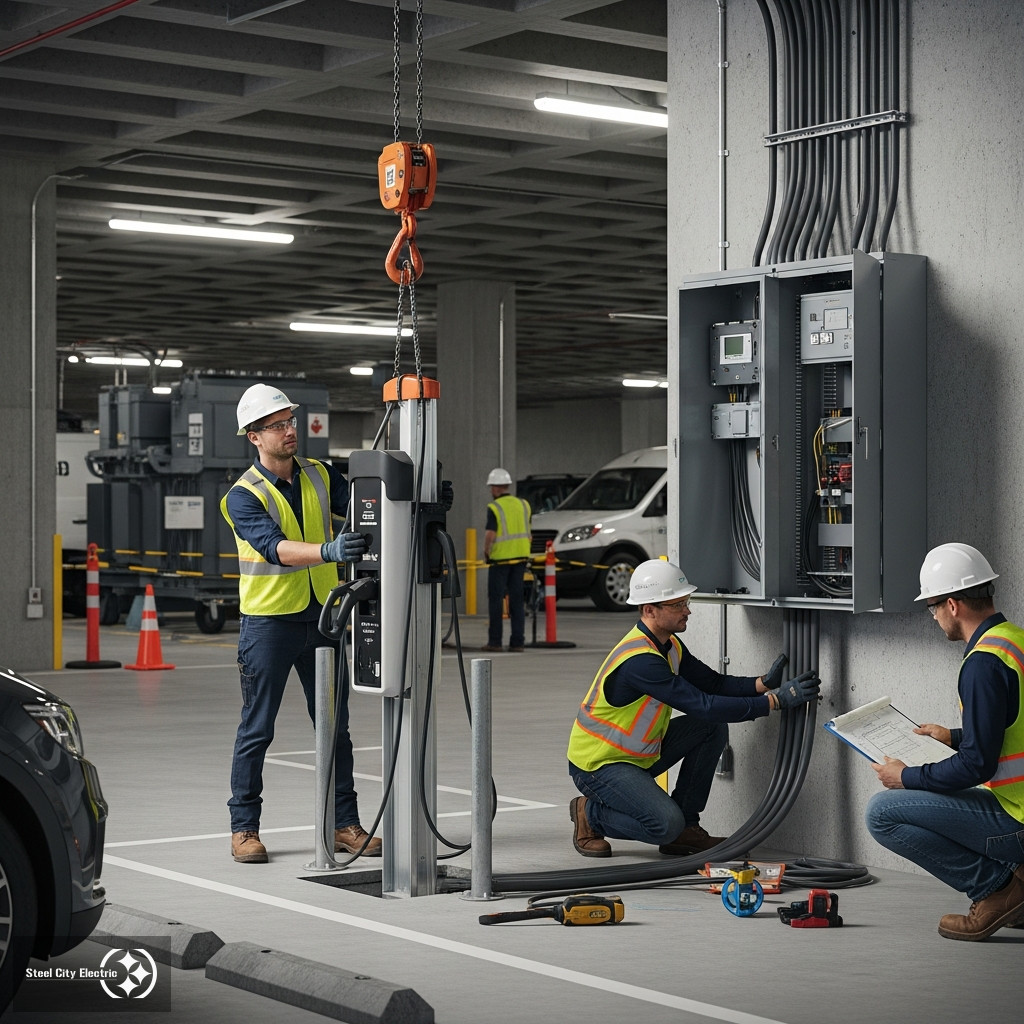
Commercial EV charger jobs do not really begin out at the parking stall. First stop is usually the electrical room. Panel space. Spare capacity. Transformer size. Where conduit can actually run without tearing up half the property. Then comes the part nobody likes talking about early enough: what has to stay powered while the work is happening. Tenants still need lights. Stores still need registers. Coolers, gates, access control, cameras, all of it. A schedule can look simple on paper, then change quick once the gear is opened up.
Property managers are paying closer attention to contractor availability for that reason. Kalkine recently noted Southern Cross Electrical Engineering as a contractor stock getting more investor interest. That is a market story, but the jobsite reason is pretty plain. Commercial electrical upgrades are stacking up. EV charging, fleet lots, retail chargers, employee parking, service upgrades. They all need people, switchgear, coordination, and shutdown windows that are not always easy to get.
For an owner looking at commercial EV charger installation, the charger ship date should not be treated like the start date. That mistake causes problems. The equipment may be sitting on site while the building still needs feeder planning, breaker verification, trench layout, utility review, or panel work. Sometimes concrete has to be cut. Sometimes asphalt. Sometimes the cleanest route on the drawing runs right through the busiest part of the property.
Steel City Electric dealt with that same kind of load planning on the Insomnia Cookies buildout in Florida, where a service upgrade had to be worked around retail power needs. Different project, same issue. The existing building has its own limits, and the work has to fit around the business.
The expensive part is usually downtime. A charger install scheduled wrong can hit deliveries, tenants, refrigeration, lighting, customer access, or security systems. Before crews mobilize, the site needs a real look. Not just a charger count. Routing, capacity, safe work zones, parking control, and realistic work hours all matter. A pedestal install can be simple. It can also turn into a service upgrade once the load is checked.
Steel City Electric handles commercial EV charging projects with that field side in mind. Customer charging, employee charging, tenant use, fleet vehicles, each one has to match what the property can support. The best time to review the electrical setup is before chargers are ordered and parking spaces are promised. On active commercial sites, that early review keeps the work cleaner and helps avoid shutdowns that should have been planned out from day one.
For commercial properties dealing with this kind of issue, Steel City Electric can help evaluate the right service path for the building.