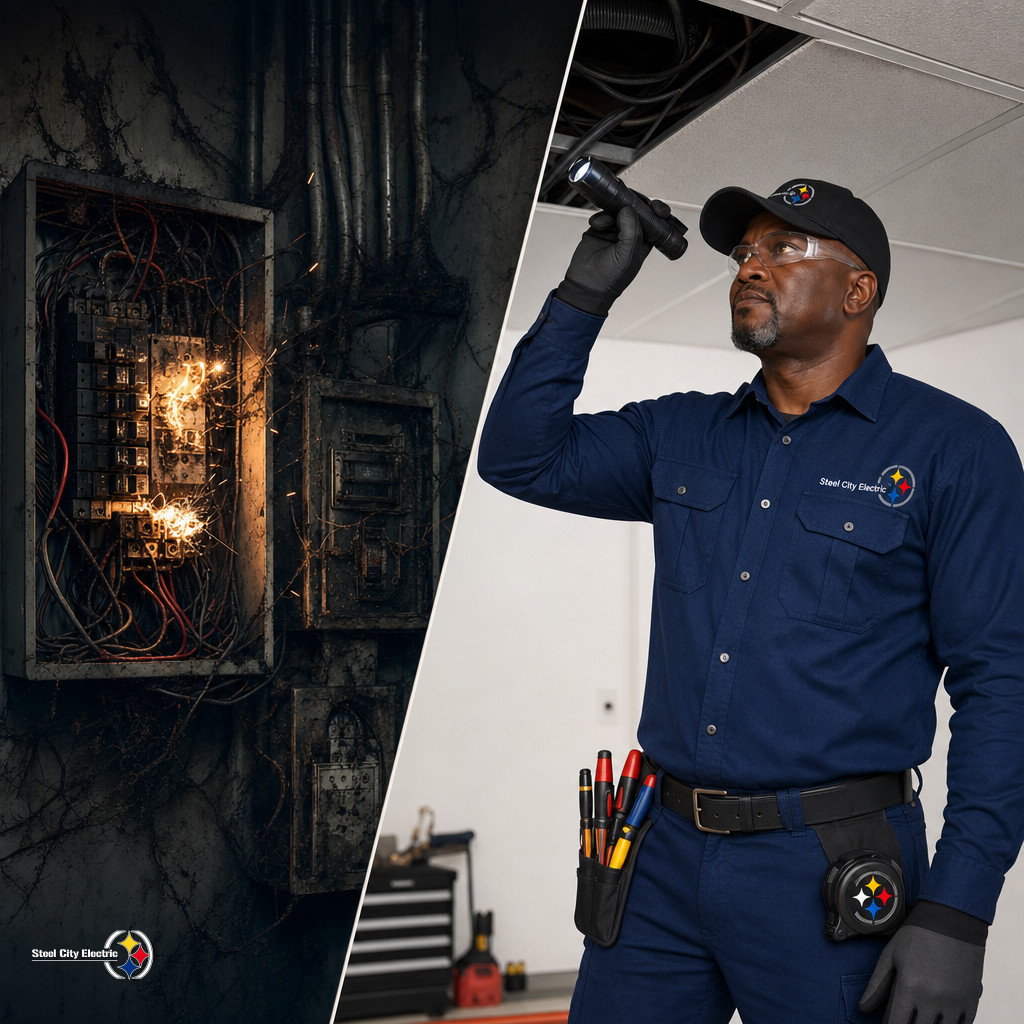

Most EV charger jobs do not start at the pedestal or wall unit. They start in the electrical room, with a flashlight on the panel schedule and somebody asking when the last service upgrade was done. Parking spots may already be marked. The owner may already have charger quotes. That still does not mean the property is ready for the extra load. On commercial sites around Tampa, Florida, that gap shows up more often than people expect.
A report from www.govtech.com titled Ohio, Neighboring States Safeguard Electric Customers covered how states are trying to keep residents and small businesses from eating big infrastructure costs caused by data centers. Different scale, but the electrical lesson is familiar. Big new loads do not stay isolated. They affect transformers, feeders, switchgear, utility planning, and sometimes the customer standing there waiting for approval.
Commercial EV charging is not a data center. Nobody is saying that. But once a property goes from one or two chargers to a row for tenants, customers, employees, or fleet vehicles, the building load can change fast. Open breaker spaces can fool people. A panel may have room for breakers and still not have capacity worth relying on. A proper commercial EV charger installation needs the boring checks done first: load calculations, utility review, conduit path, voltage drop, equipment location, working clearances, and what the building is already pulling during its busiest hours.
Steel City Electric has dealt with that kind of coordination on jobs like Foot Locker Sarasota, where the wiring had to land cleanly with the tenant buildout and available panel space. Same idea here. The drawings need to match the site. If they do not, the field will prove it pretty quickly.
Retail centers, offices, hotels, warehouses, service yards, and fleet lots all run into different limits. A rushed charger plan can turn into nuisance trips, a failed inspection, utility delays, trenching changes, or downtime right after the chargers are supposed to be live. Steel City Electric handles EV charger planning as part of its commercial electrical services, including service evaluation and installation layout. Before ordering equipment, it is worth checking whether the infrastructure can actually carry it.