DSPS code changes raise the stakes for commercial EV charger installation timelines after September first
From the lot, EV chargers look like a small add. Set the pedestal, pull wire, stripe the space, done. That is not how it goes on most commercial jobs. The hard part is usually back inside the electrical room or under the asphalt. Panel space. Service size. Empty conduits that were supposed to be there but are not. Utility lead time. ADA clearance. Bollard layout. Network gear. A shutdown window nobody wants during business hours. For commercial properties in Apollo Beach, Florida, that all needs to be checked before chargers get ordered.
Code timing can turn a loose plan into a real problem. A recent report from www.wispolitics.com titled Dept. of Safety and Professional Services: New electrical and plumbing codes rake effect September 1 noted new state safety codes for electrical and plumbing work taking effect with plan review impacts tied to that date. That report is not about Florida, but the point still lands. When code requirements move, late drawings and half-finished load numbers cost money.
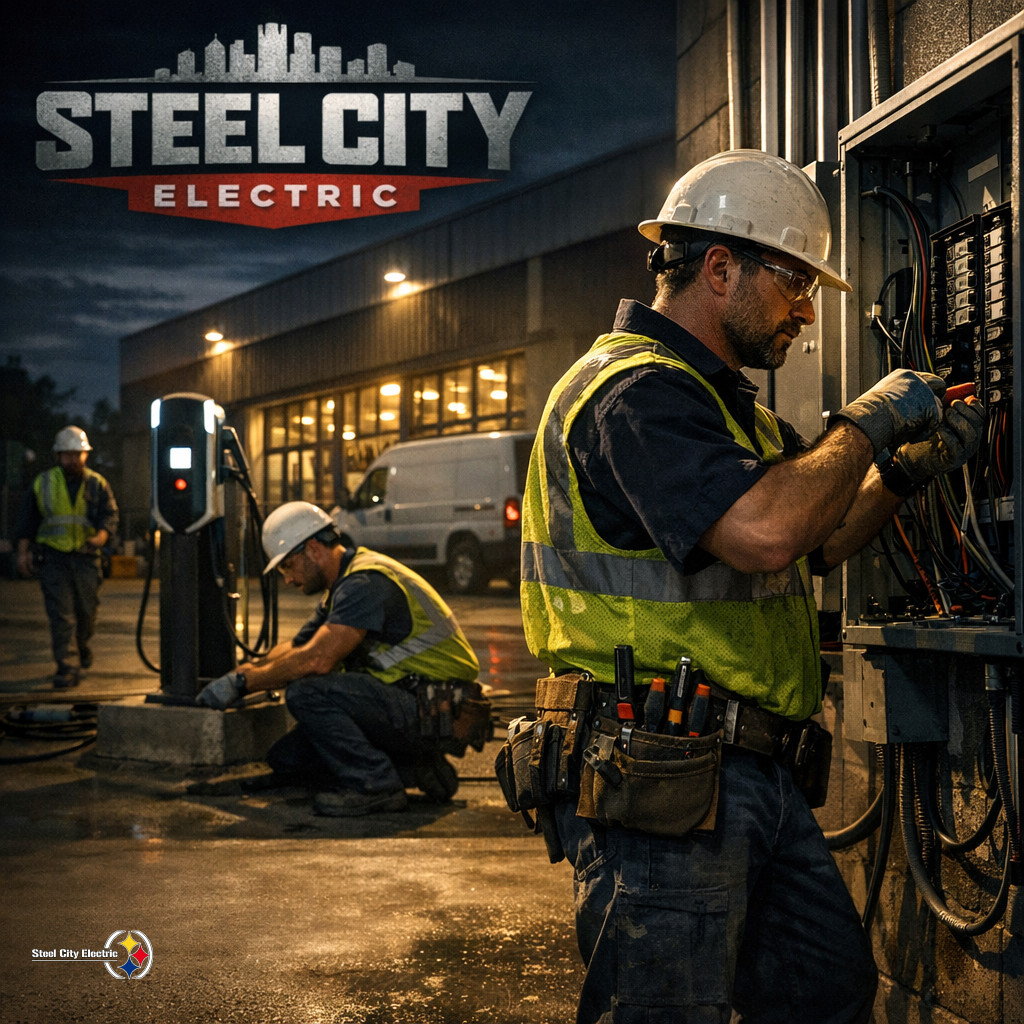
Most delays on EV charger installs are not caused by the charger itself. They show up in the service calculation, the switchgear, the feeder route, or the underground work. A manager may ask for four charging ports near the front entrance. On site, that can mean a utility call, transformer questions, concrete cuts, trenching around irrigation, and a night cutover so tenants stay open.
Steel City Electric has dealt with the same kind of real-world electrical pressure on Foot Locker Sarasota, where the interior electrical buildout had to support the tenant’s actual use, not a clean assumption on paper.
Good commercial EV charger installation starts with the building. Not the charger brochure. The crew needs to know available capacity, permitting expectations, breaker space, trench paths, mounting locations, vehicle movement, and whether future chargers are likely. Retail sites, offices, multifamily properties, fleet yards, and mixed-use buildings all have different headaches. Sometimes the best charger location from a customer view is the worst one electrically.
For Apollo Beach commercial properties, the smart move is a site walk before the schedule is boxed in. Steel City Electric can review capacity, check practical charger placement, and plan the work around the business instead of forcing the business around the work. Start with the service details here: Commercial EV Charger Installation.