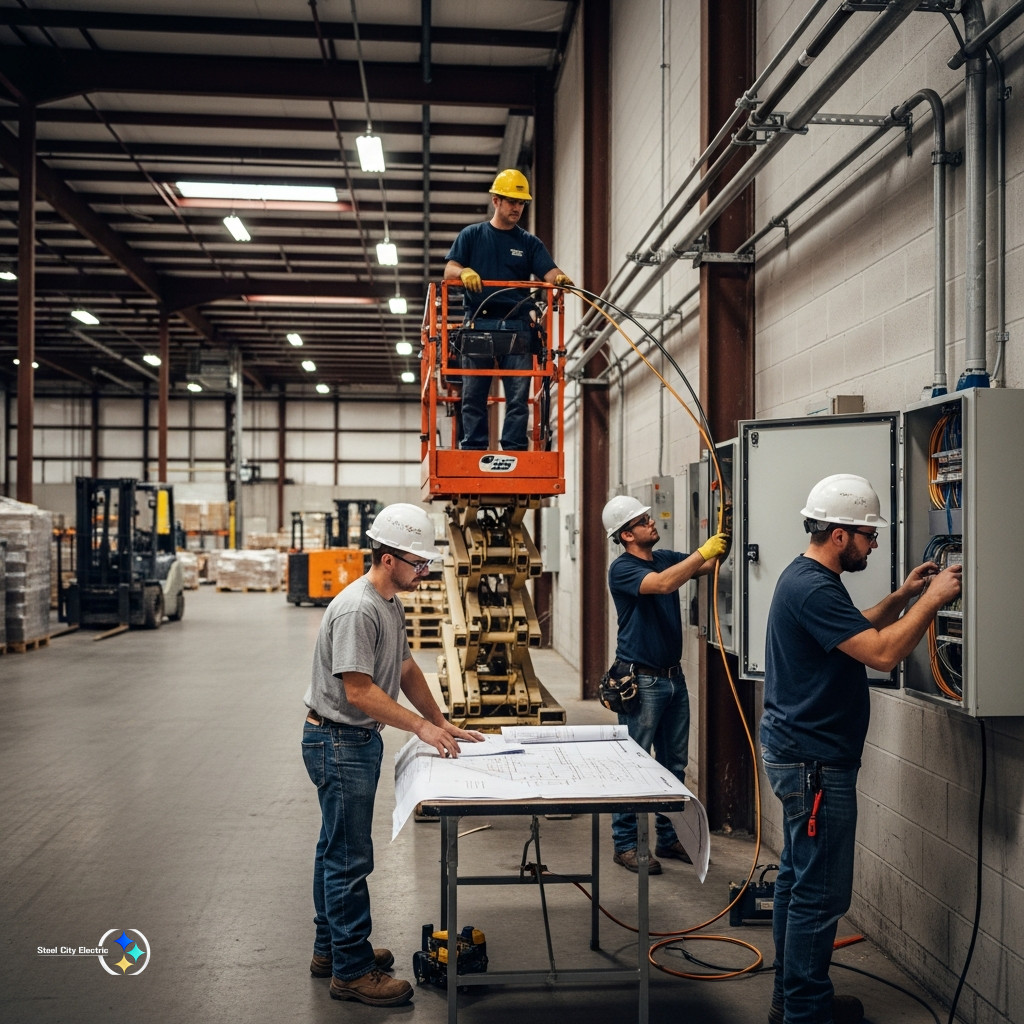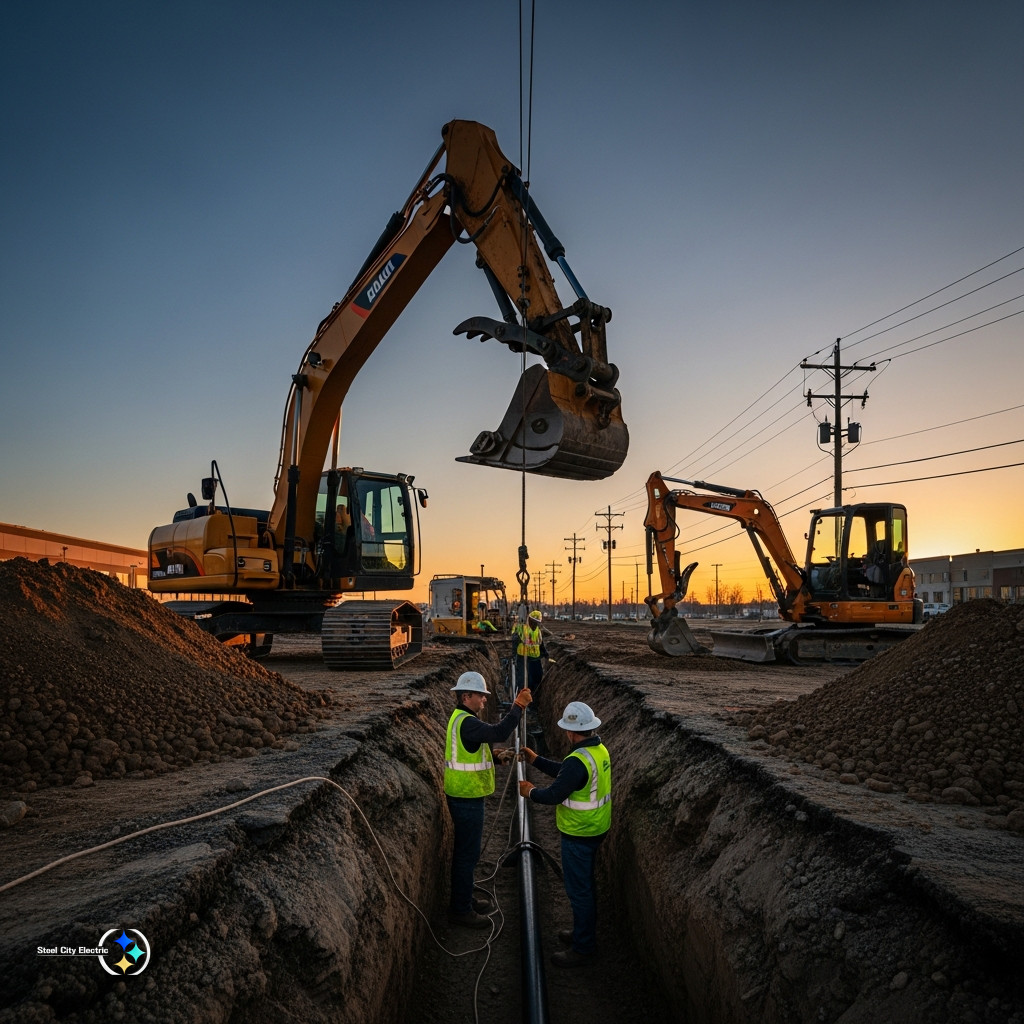
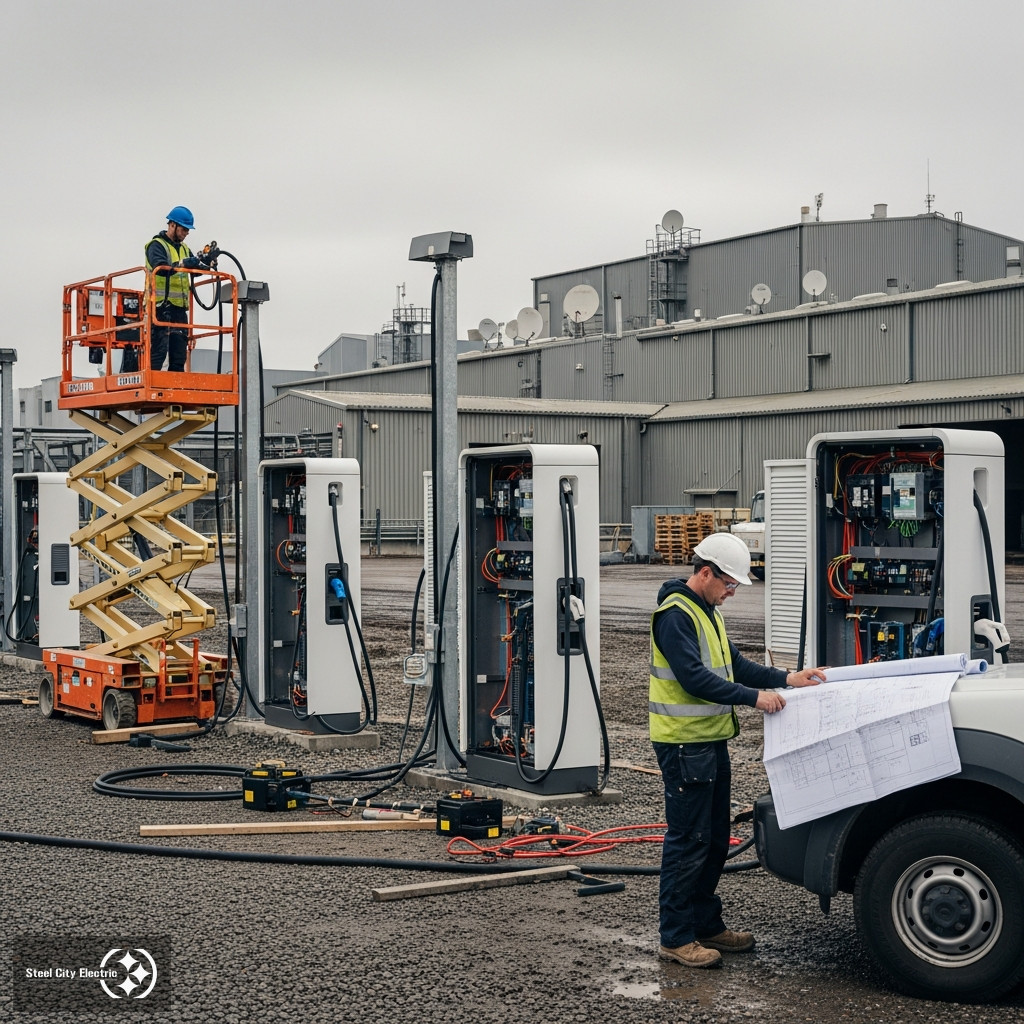
EV chargers sound simple until somebody opens the gear. Then the parking lot idea turns into a building load question. Older commercial panels may already be carrying HVAC, kitchen equipment, elevators, pumps, lighting controls, and whatever past tenants added over the years. The print may show a straight conduit run. Out in the field, that same run might hit concrete, landscape islands, drainage, full panels, or service equipment with no room left. That is why commercial EV charger installation needs to be checked against the site’s real electrical system before anyone promises locations or dates.
A recent Reuters report noted that ISS A/S is still pushing a facilities services model for large corporate and public-sector customers. That tracks with what contractors are seeing. Bigger facility programs mean more fleet vehicles, more visitor parking needs, more staff charging requests, and more pressure to add equipment without interrupting operations. Chargers pull real power. They can affect switchgear, panels, transformers, disconnect locations, trench paths, protection, and utility involvement. On an occupied property, even a small miss can turn into night work, cutovers, temporary shutdowns, or a change order nobody budgeted for.
Steel City Electric has dealt with that kind of site reality before, including work at Suntide Island Beach Club in Sarasota where crews had to work around damaged life safety systems after storm conditions. Jobs like that are a reminder that buildings do not behave like clean drawings. You find the old repair, the buried feed, the crowded room, the equipment that was “temporary” ten years ago.
The concern is not only whether the charger lights up when it is commissioned. The question is what happens after that. Nuisance trips, hot equipment, blocked service access, weak mounting, poor bollard placement, and overloaded panels all create problems for facility staff. Some properties will need commercial panel upgrades before chargers make sense. Others may need load studies, new feeders, dedicated disconnects, concrete work, trenching, or coordination with existing commercial electrical services that are already keeping the building running.
Charger planning should start before the parking layout is treated as final. Steel City Electric can look at available capacity, walk the path, flag conflicts, and lay out a workable install plan. If the building is already showing signs of electrical stress, it is better to find that now than after vehicles are plugged in and tenants are asking why something tripped.