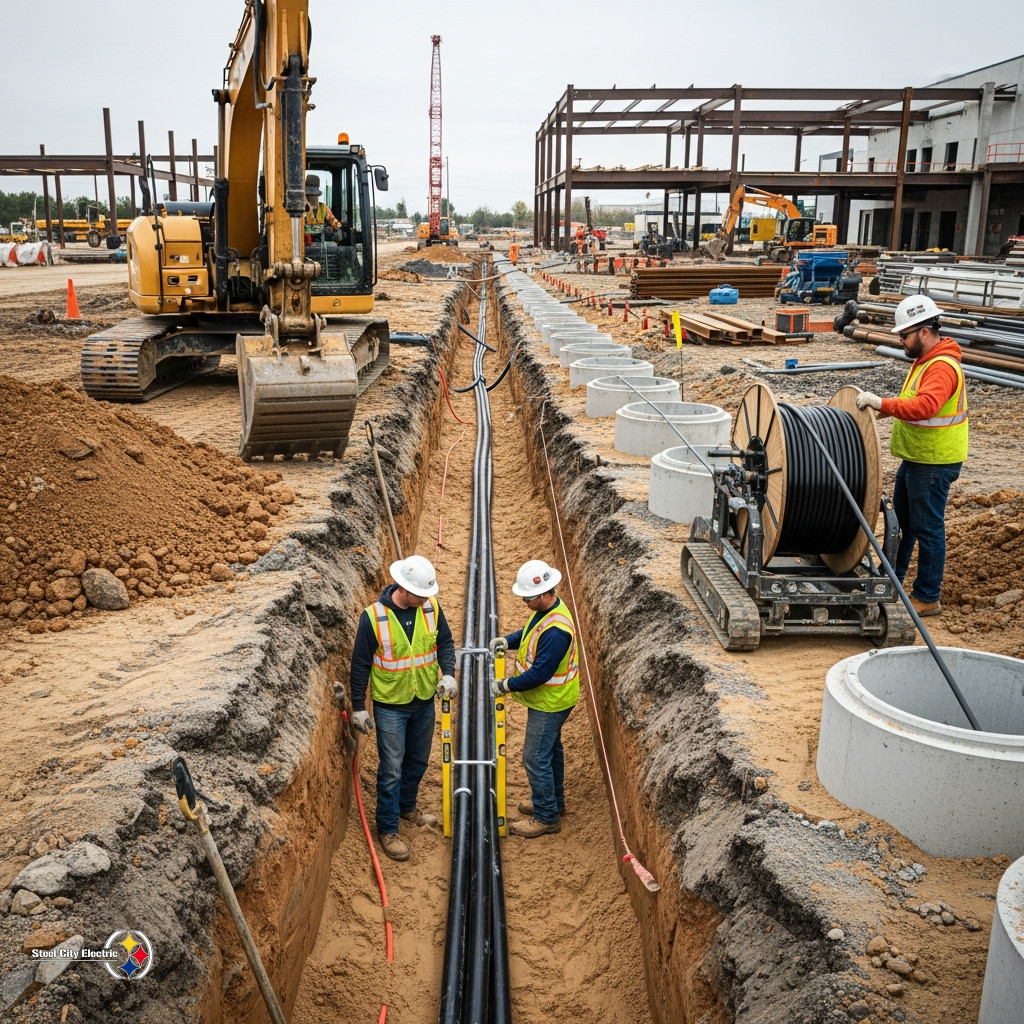
Underground utility work usually looks simple after the pavement is back down and the gear is energized. It is not simple while the job is open. There are trench bottoms holding water, sleeves that do not land where the drawings said they would, old utilities crossing the run, and crews trying to keep traffic, tenants, and active services out of trouble. Around Fruitville, Florida, that shows up on retail sites, condo properties, medical offices, and commercial buildouts where there is very little room for a bad layout decision. One missed pull point or a feeder route that fights the building layout can cost days. Commercial underground electrical utility installation has to be treated as more than digging a trench and dropping conduit. The work ties into access, loads, switchgear location, utility rules, and what can actually be built in the field.
According to a recent report from inspenet.com titled Aker Solutions will design Bellrock’s electrical system, Aker Solutions will study the electrical infrastructure for Bellrock, a 1.8 GW floating wind farm, including cables, substations, and grid connection. That is offshore power, not a local parking-lot trench, but the lesson is the same. Big electrical systems still come down to the route. Cable length matters. Bend radius matters. Splices, access points, equipment pads, and the connection back to the grid all have to work before anyone talks about the finished system. The larger the load, the less room there is for guessing.
Commercial sites run into a smaller version of that problem all the time. More HVAC equipment gets added. Tenants want more panels. EV chargers show up late in the plan. Backup power, fire pumps, elevators, refrigeration, security, site lighting. It stacks up. The underground work has to be ready before the concrete, landscaping, and finished drives lock everything in place. Steel City Electric has dealt with that kind of field pressure on underground feeder repair work at Stoneybrooke Clubside Condominiums in Sarasota, where the repair had to be handled around occupied buildings and real site limits, not perfect conditions on paper.
For owners, builders, and property managers in Fruitville, Florida, the issue is usually found too late. Service equipment arrives and the route is not right. A trench has to be opened again. Temporary power stays longer than planned. Tenants start calling. Steel City Electric approaches underground commercial utility installation with that in mind. Conduit routing, feeder installation, utility coordination, pull access, and field adjustments all have to line up. Buried electrical infrastructure is hard to fix once the site is finished, so it needs to be planned before it becomes an outage, a delay, or a costly rework item.
For commercial properties dealing with this kind of issue, Steel City Electric can help evaluate the right service path for the building.