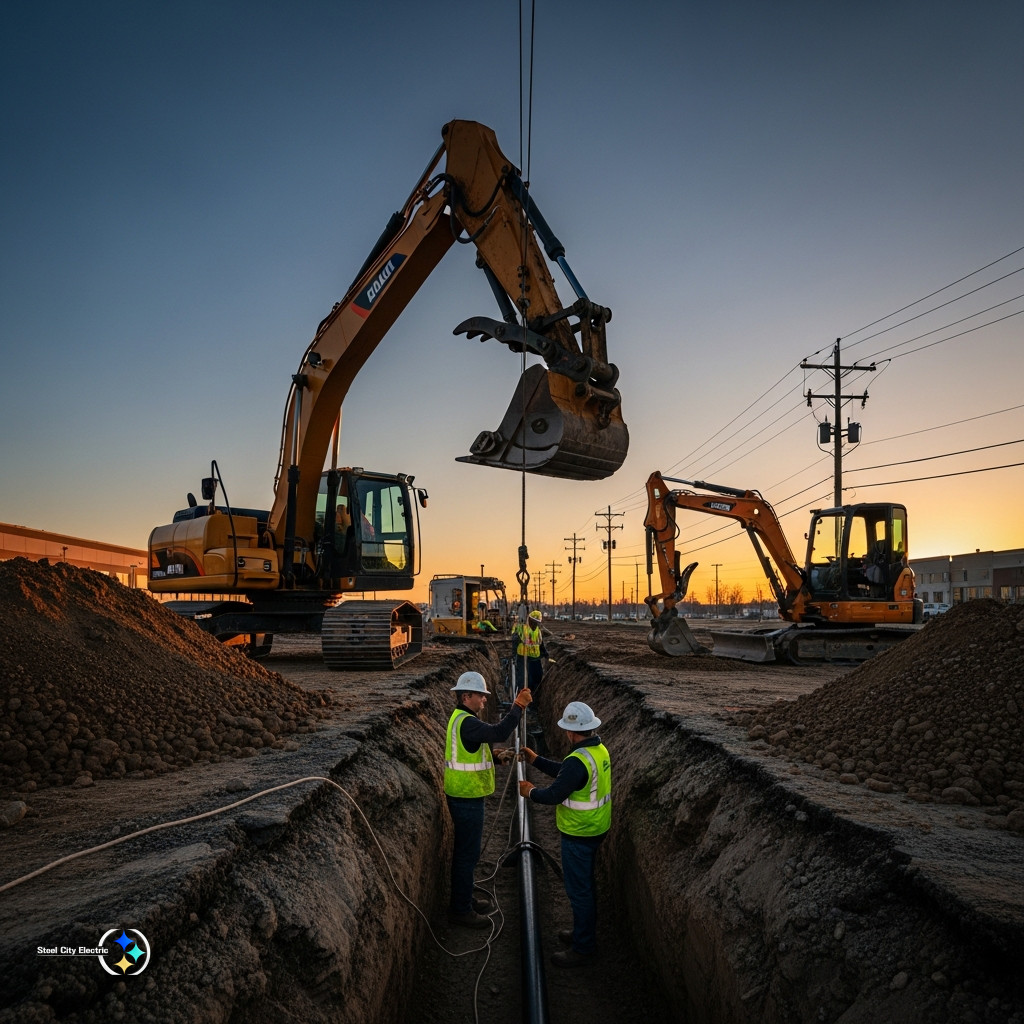
Commercial properties do not have much spare electrical room anymore. We see it all the time. A restaurant swaps in new cooking equipment. A grocery space adds refrigeration. A retail plaza gets a tenant change. Then someone wants chargers out front for customers, employees, or fleet trucks. Sounds simple until the covers come off the gear. Then it is panel capacity, feeder size, conduit runs, trench locations, bollards, disconnect placement, utility access, and whether the service is already running close to the edge on a busy day.
Commercial EV charger installation is not just a parking lot job. Not on most sites. Level 2 chargers and commercial charging stations sit on the building load for hours at a time. If the same property has kitchen equipment, refrigeration compressors, air handlers, lighting controls, and tenant panels already stacked into the system, there is not much room for guessing. Steel City Electric saw similar panel-capacity concerns on the Foot Locker Tampa work in Sarasota, where clean distribution had to fit into a tight retail buildout without creating problems for the rest of the space.
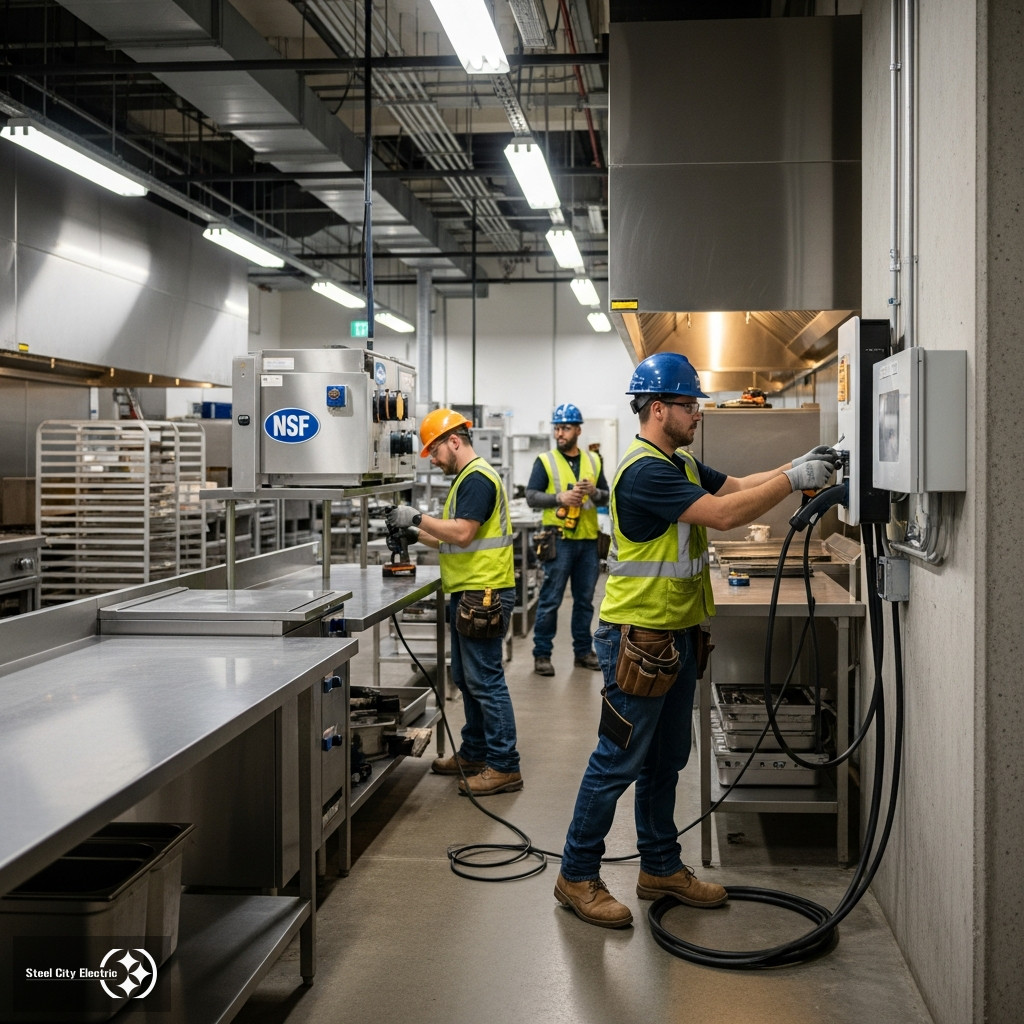
Business Wire recently reported that NSF expanded its food equipment services with electrical safety testing and certification. That may sound separate from EV work, but on a real job site it connects. Once food equipment, prep areas, or refrigeration systems are being looked at harder for electrical safety, the rest of the facility gets pulled into the same conversation. Inspectors and facility managers start asking better questions. Where is the load coming from? What else is on that panel? Is the equipment listed correctly? Is the outdoor charger protected and supplied the right way?
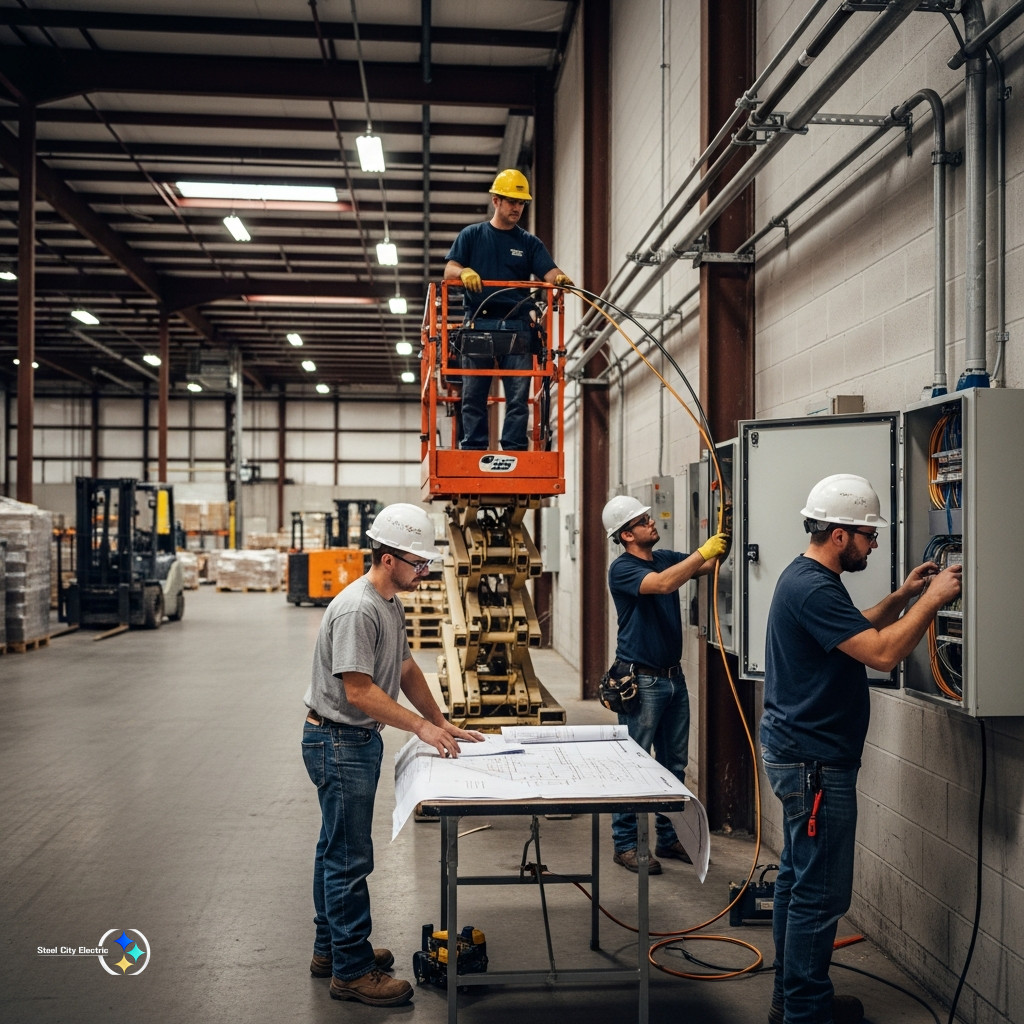
The first visit matters. Existing switchgear needs to be opened and checked. Old drawings help, but they are not always right. Load calculations need to match how the business actually runs, not just what is printed on a plan sheet. Peak kitchen hours, tenant schedules, cooler loads, lighting, HVAC, and charger use all matter. Sometimes a dedicated circuit is enough. Sometimes the panel is full. Sometimes service work has to happen before the charger gets ordered. Steel City Electric handles commercial EV charging station installation with those field details included, from routing and protection to equipment placement and coordination with daily operations.
The part that gets missed is disruption. A charger install can block parking, tie up an electrical room, affect entrances, or require shutdown windows that a tenant cannot handle at the last minute. Poor planning turns a clean install into a fight with the building. If EV charging is being added near food service, retail, or mixed-use electrical loads, get the site checked before buying equipment. Steel City Electric can review the electrical conditions and plan the commercial EV charger installation so it fits the property instead of becoming another load problem later.