On a large commercial job, power planning gets ugly when it is treated like a later item. The site gets cut, trailers roll in, pumps need circuits, temp lighting starts moving, and somebody is still waiting on utility dates. That is usually when the holes in the plan show up. Commercial generator installation belongs in that first site conversation, before crews are parked and asking why nothing is live.
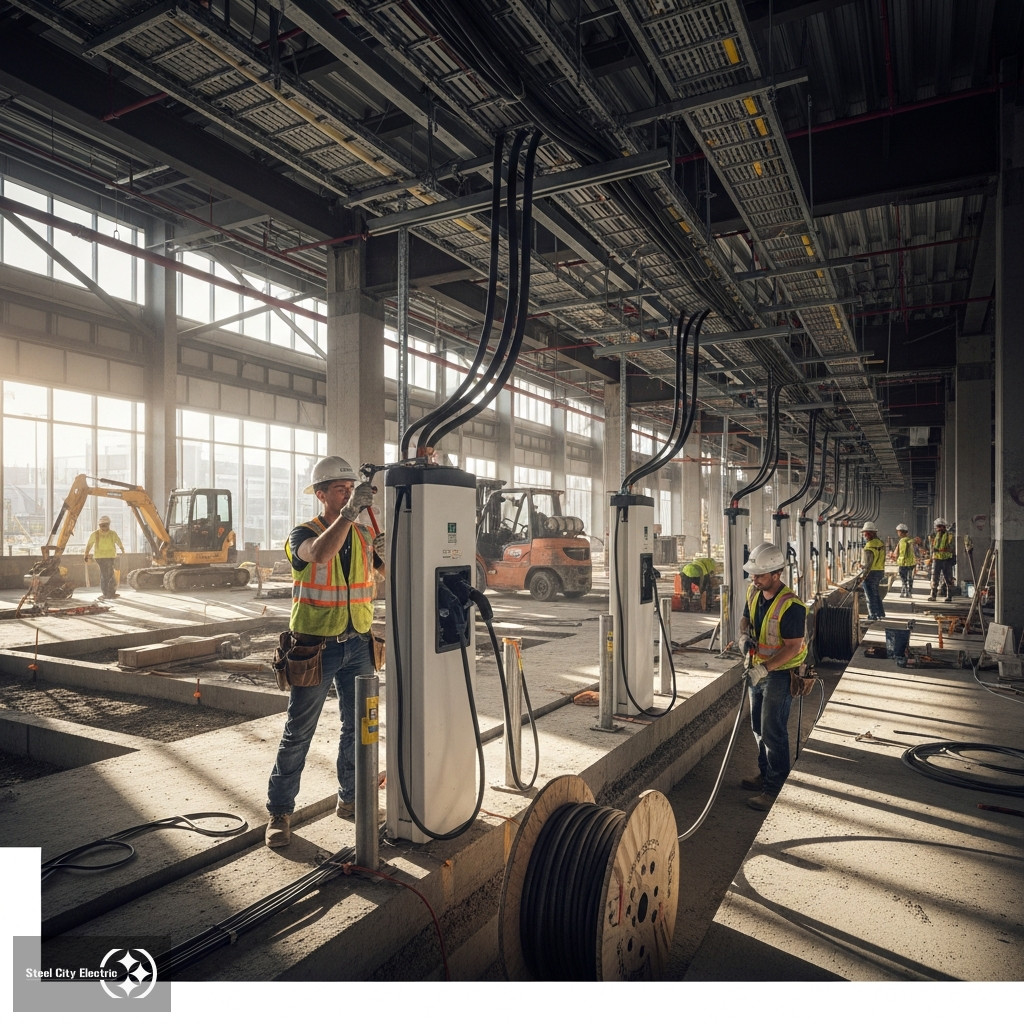
Transit facilities make it even less forgiving. A maintenance yard is not just a building with a panel in it. There are shop loads, yard power, fueling equipment, controls, security, fire alarm tie-ins, service gear, and backup loads that have to be separated the right way. Construction Dive recently reported that PCL Construction received the site and foundation package for Calgary’s Green Line LRT Maintenance and Storage Facility. That is the stage where generator pad location, feeder runs, fuel access, transfer equipment, grounding, and truck access should already be on the drawings. Waiting until walls are up makes a simple decision expensive.
Once underground is covered and concrete is down, nobody wants to hear that the generator needs to move twelve feet. Clearances matter. Exhaust direction matters. So does the fuel source, load bank access, service space, and how it ties into commercial electrical services. A standby unit that cannot pick up the right equipment during an outage is not backup power. It is a loud box taking up space.
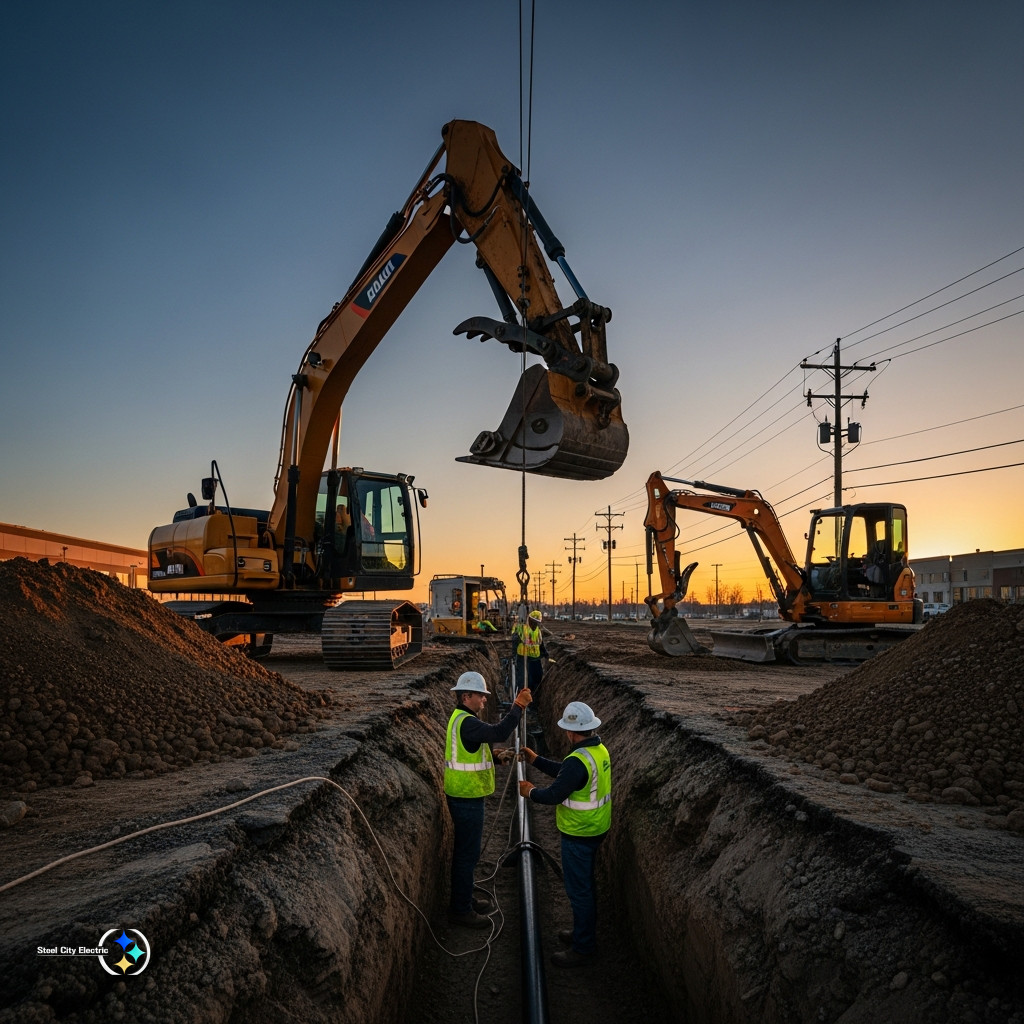
Steel City Electric has dealt with the same sort of pressure on active properties. During underground restoration work at Stoneybrooke Clubside Condominiums in Sarasota, generator deployment had to be handled around occupied buildings, existing site limits, and real field conditions. Paper plans only went so far. Access, timing, noise, and keeping power available were the work.
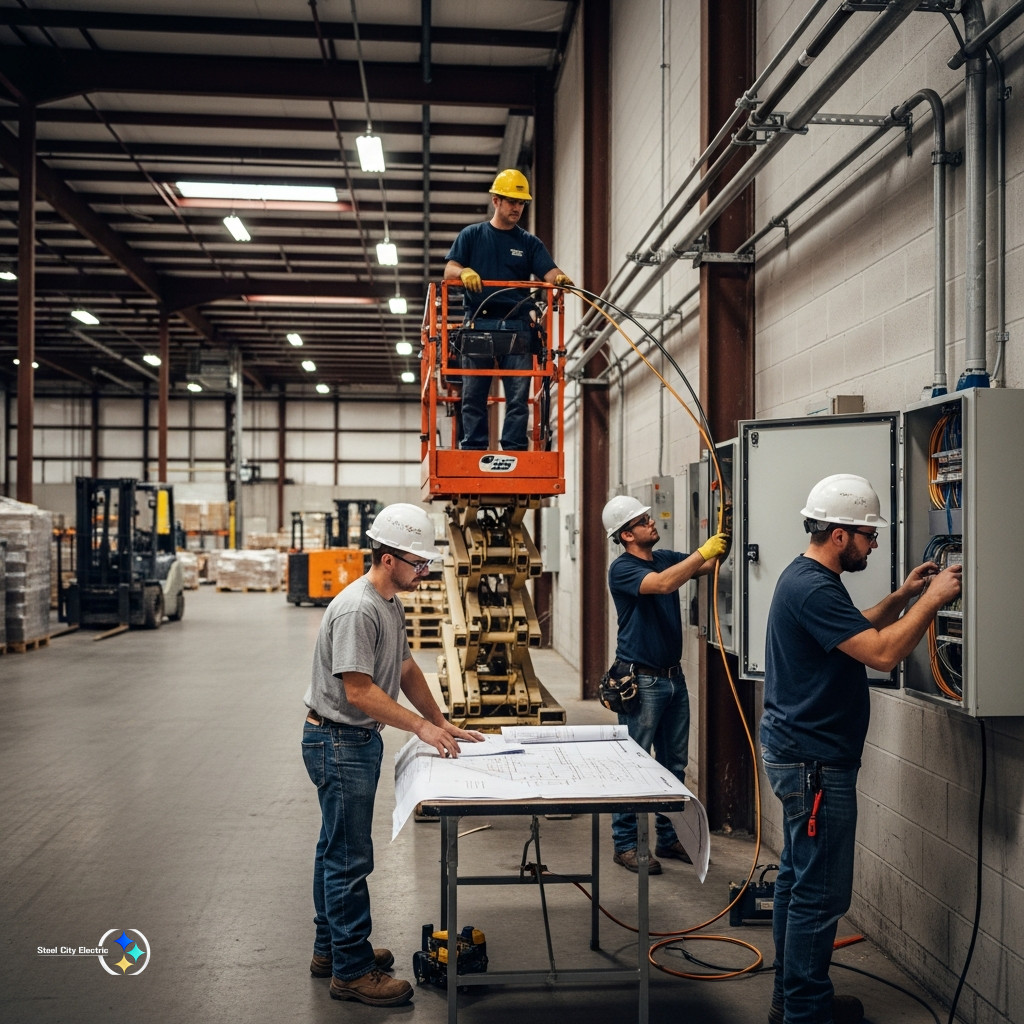
For phased construction, public-use buildings, maintenance yards, and occupied commercial sites, standby power has to be part of the electrical layout early. Switchgear, emergency circuits, utility coordination, future service access, and repair needs all connect to the generator decision. If old gear or service changes are part of the job, pairing the plan with commercial electrical repair work can keep a small outage from turning into a shutdown.
Steel City Electric plans and installs generator systems for commercial properties where guessing is not good enough. For an expansion, renovation, or new build, get the backup power scope checked before slabs, feeders, and equipment locations lock the site into a bad layout. Start with the commercial generator installation service before the project gets ahead of the power plan.