
Nuclear power barge work at the port exposes the load planning commercial EV charger installation needs before operations get squeezed
EV chargers look clean once they are bolted down, striped off, and turned on. That is the easy part to see. The part that causes trouble is usually back at the gear. Service size. Real panel capacity. The conduit run nobody wanted to price right. Voltage drop across a long parking lot. Utility lead time. What the building is already pulling in the middle of a hot afternoon. Around Parrish, Florida, those details decide whether a charger project works or becomes another load problem.
On commercial jobs, the first plan is often too optimistic. The owner wants charging for employees, vans, tenants, or customers. Then the cover comes off the panel and the spare space is not really usable. The transformer may be light. The drawings may be old. Sometimes the service has been added onto for years and nobody has a clean picture anymore. That is why commercial EV charger installation cannot be handled like setting a sign in a parking stall.
According to a recent report from www.workboat.com titled Bluecore Energy developing nuclear power barge at Port of Long Beach, major power planning is being built around a working port environment. Big equipment, strict demand, no room for casual electrical guesses. Different scale, same lesson. Electrical capacity has to be planned before the operation leans on it.
A port project is not the same thing as a fleet yard or shopping center in Manatee County. Nobody is saying that. But once vehicles need to charge every day, on schedule, the chargers become part of the business. If they nuisance trip, slow down, or make staff work around other loads, the planning missed something. Usually it was found too late.
Steel City Electric has seen that same pressure on tenant power work, including Insomnia Cookies in Florida, where service upgrade coordination was tied directly to getting the space ready for use. Different equipment, same field reality. The electrical load has to match how the site actually runs.
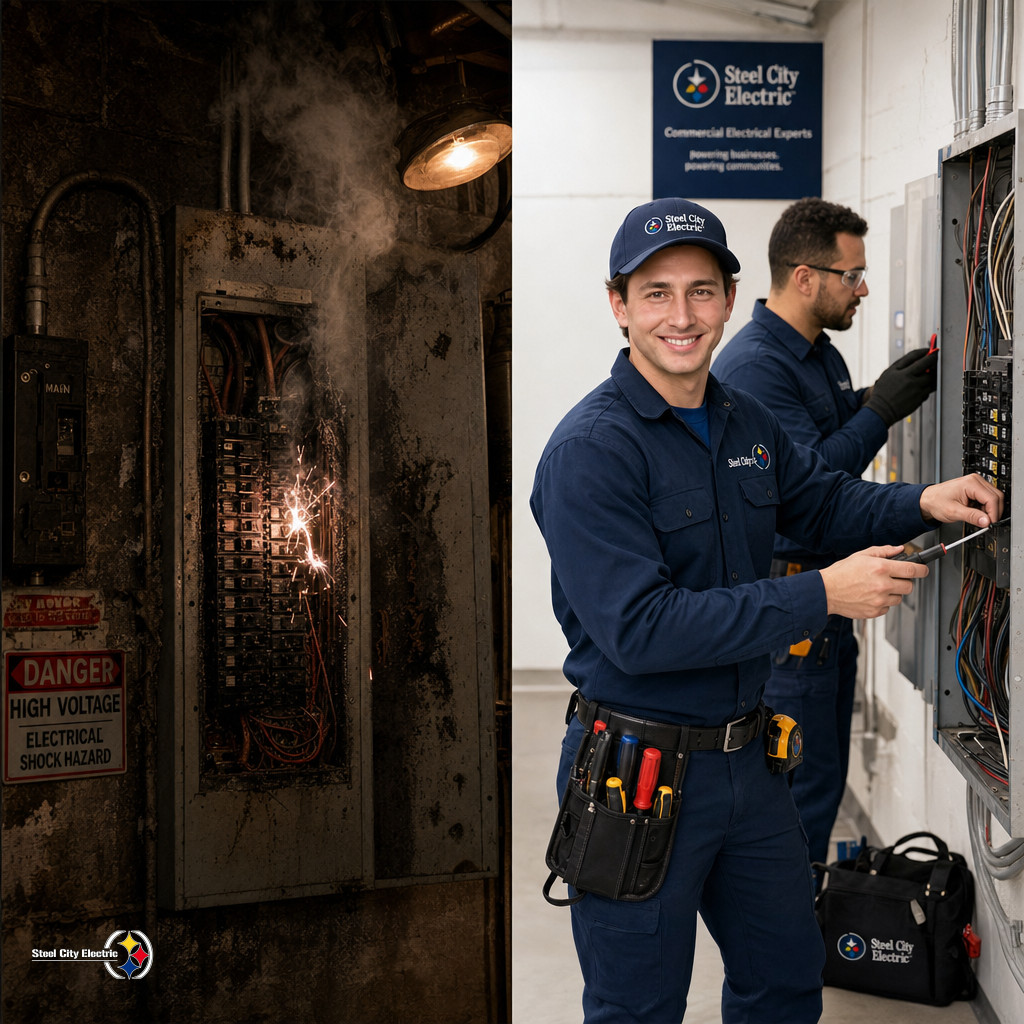
For Parrish commercial properties looking at EV charging, the weak spot needs to be found before saw cutting, trenching, and equipment orders. Steel City Electric checks the existing service, charger demand, panel room, conduit routes, utility issues, and future expansion before laying out the install. Fleet charging, customer charging, or tenant charging all start in the same place: confirm the capacity first, then build the plan through proper commercial EV charging infrastructure.