Commercial backup power is not something to pick off a spec sheet and bolt behind the building. Not if the business actually needs it to work. Out in the field, the questions get plain fast. What loads stay on? How quick does the transfer need to happen? Is there room for the pad? Can fuel get to it? Are the panels already crowded or worn out? Around Parrish, Florida, Steel City Electric sees this on retail spaces, offices, shops, and service buildings. One short outage can knock out registers, coolers, card readers, door controls, alarms, phones, servers, and half the lighting. The generator has to match the building as it sits, not the clean version someone imagined during budgeting.
A recent report from www.newindianexpress.com titled Odisha government pushes renewable energy, smart meter rollout at DISCOMs review pointed to pressure on distribution companies to move faster with renewable energy work and smart meter rollout. Different country, different utility setup, same kind of reality for a commercial customer. Power systems are being watched closer. Loads are being shifted. More generation is coming from sources that do not behave like the old steady supply model. That does not mean every outage gets solved. It means a business needs to know what happens when the line power drops, flickers, sags, or comes back rough.
That is why commercial generator installation has to be treated like part of the site’s electrical backbone. A smart meter may tell you exactly what the building used at 2:15 in the afternoon. Helpful, sure. It will not keep a walk-in cooler cold. It will not keep the POS system alive during a feeder problem. Solar and other renewable pieces can help the grid overall, but they do not replace a properly planned standby system for loads that cannot sit there waiting.
Steel City Electric has dealt with these jobsite limits on commercial buildouts before, including Foot Locker Sarasota, where the wiring plan had to work inside real tenant improvement conditions, not a perfect drawing.
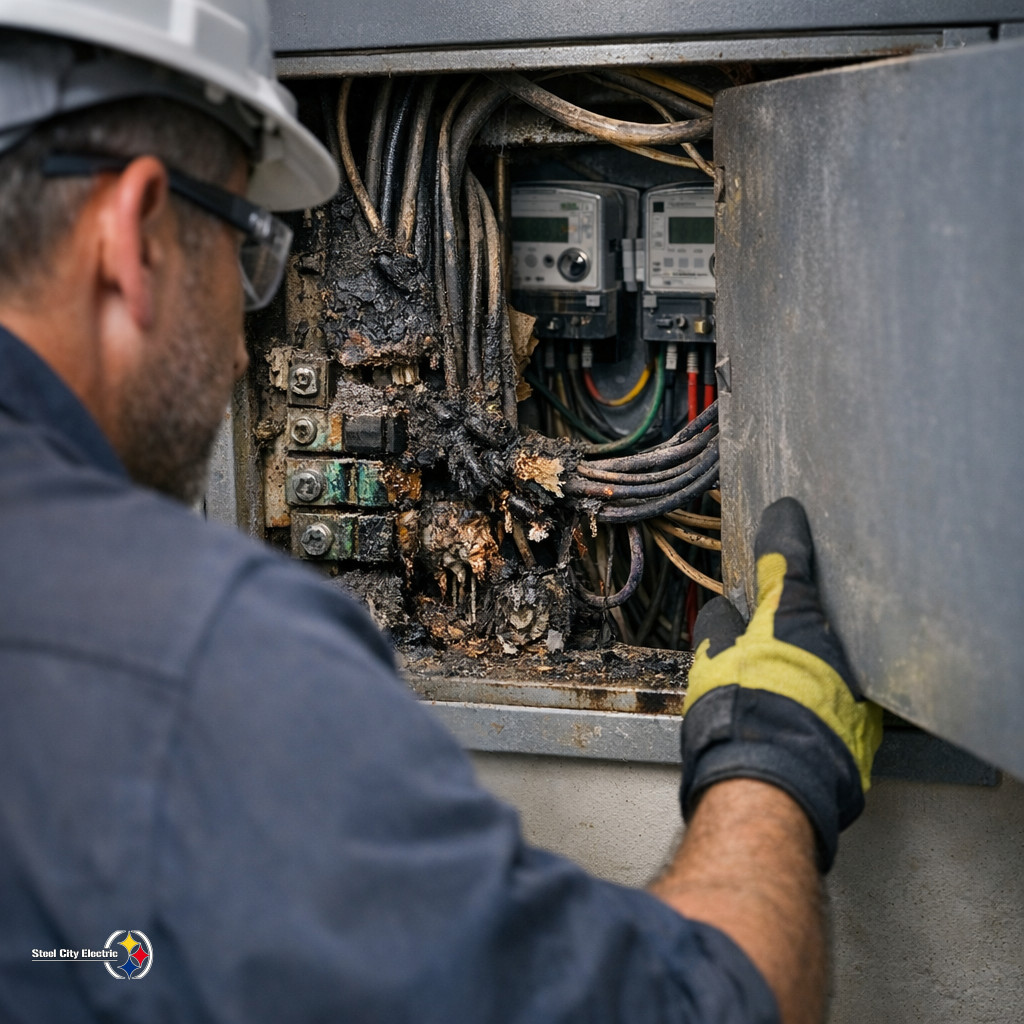
On a Parrish commercial property, the first part of generator work is usually the unglamorous part. Load calculation. Transfer switch location. Existing service condition. Panel capacity. Pad placement. Clearances. Fuel route. Shutdown timing. Access for service later. Miss those details and the problems show up after everyone thinks the job is done. Nuisance trips, undersized equipment, awkward maintenance access, or a generator that cannot carry the loads the owner assumed it would carry.
If downtime is not something your facility can absorb, Steel City Electric can walk the site, look at the actual electrical setup, and help plan a right-sized commercial generator installation before the next outage points out the weak spots for you.