Commercial panels are taking more punishment now. It is not always one big machine that changes the whole service. A store adds coolers. A gym adds HVAC. A tenant wants EV charging. Someone brings in office equipment, new lighting controls, security gear, or a server rack after the rough plan is already set. By the time the walkthrough happens, the spare spaces are gone and the old panel schedule is not much help.
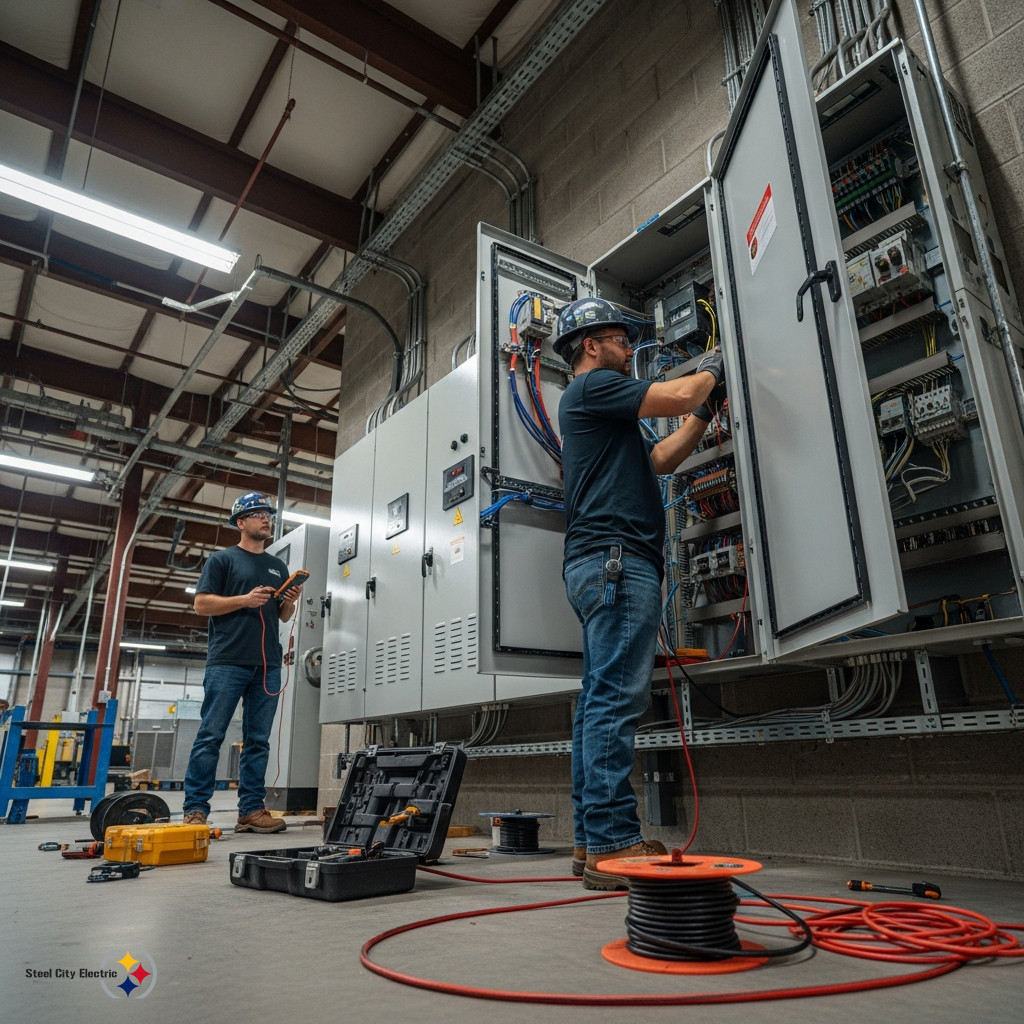
That is when commercial electrical panel installation and upgrades move out of the “later” column. Now it affects opening hours, tenant work, permits, shutdowns, and whether the new equipment can even be fed safely. A panel change is rarely just changing a cabinet. The crew has to check feeder size, grounding, service gear condition, available fault current, load demand, labeling, and what has to stay live while the work is going on.
In the field, the problem usually shows up at the worst time. Breakers are doubled up. Old circuits are not marked right. A previous buildout left abandoned wiring in the room. The manager needs power kept on for registers, refrigeration, phones, or access control. Nobody wants to hear that the electrical room should have been looked at three weeks earlier, but that is usually the truth.
Steel City Electric has dealt with this kind of load pressure on commercial work like LA Fitness Tampa, where power distribution had to support real operating equipment. Fitness facilities are a good example. Motors, HVAC loads, lighting, controls, and tenant expectations all land back at the panel. If the gear is undersized or crowded, the problem does not stay on paper for long.
Owners usually find out during a remodel, tenant change, equipment swap, or inspection punch list. That is why early panel upgrade planning saves trouble. A quick look at the existing service, panel capacity, and routing can tell everyone if the job is clean, tight, or headed for a shutdown conversation.
Steel City Electric handles commercial panel upgrade work for buildings that need more capacity, safer distribution, better labeling, and a plan that works around business hours. If the panel is full, warm, outdated, badly marked, or holding up new equipment, it should be reviewed before crews are already standing there waiting.