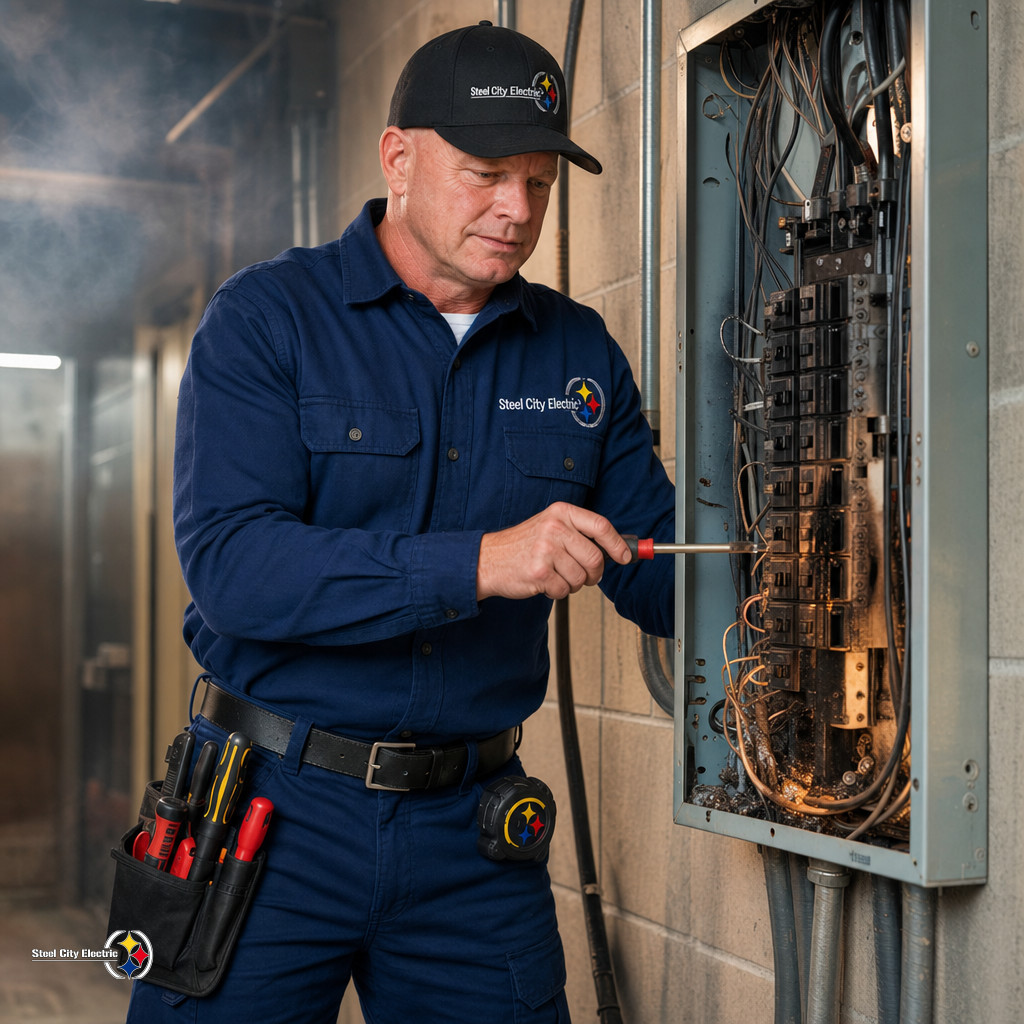
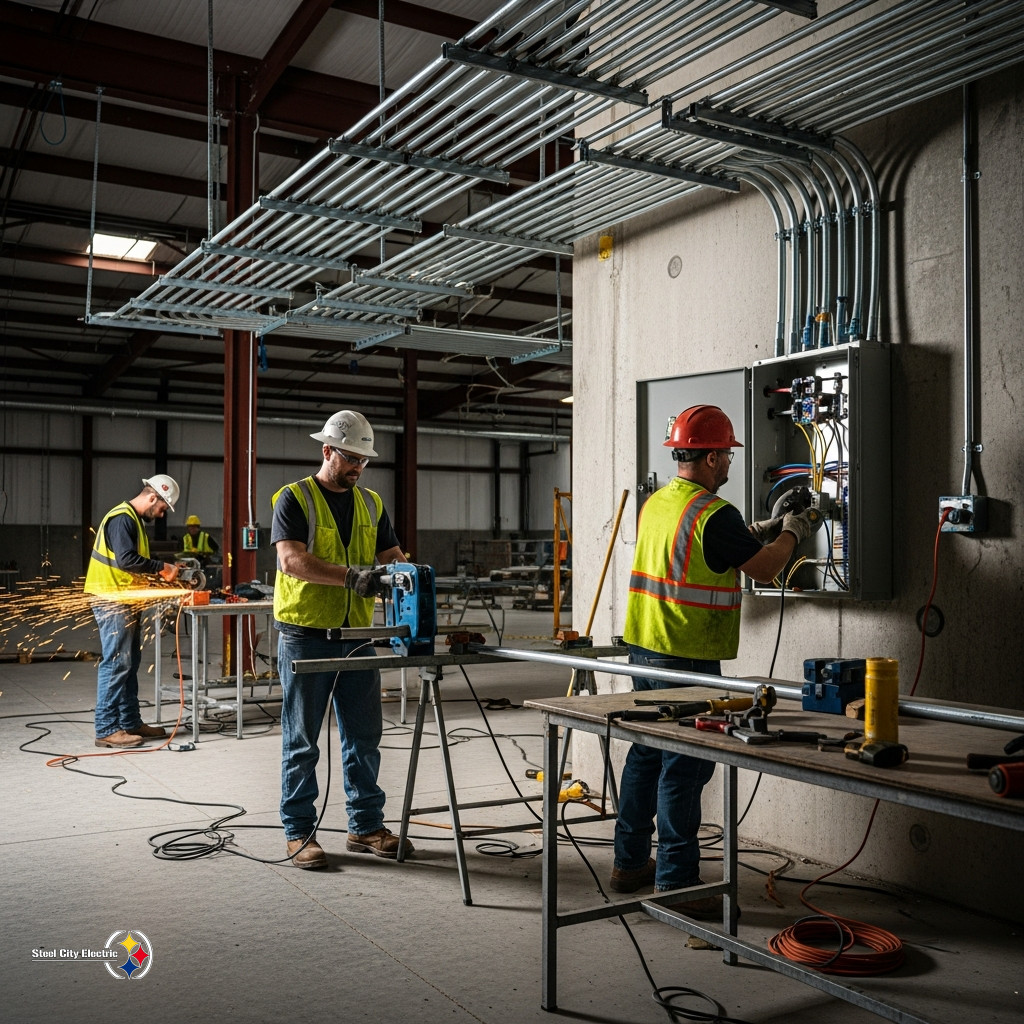
You see it a lot on commercial jobs now. Space looked fine during the first walk. Then the equipment list shows up. More treadmills. More coolers. More kitchen gear. Extra HVAC. Controls. Cameras. A server rack somebody forgot to mention. By the time the panel cover comes off, the job is already tighter than it looked on paper.
Older buildings are the worst for that. Not always bad buildings, just used hard over the years. A few tenant changes, a few “temporary” circuits that became permanent, conduits packed full, labels that do not match anything. That is when commercial and industrial electrical installation has to be treated like real planning work, not just something that happens after framing.
Fitness centers, warehouses, medical offices, restaurants, retail spaces, small production areas, they are all pulling more power than they used to. Lighting loads may be lower with LED, but the controls and added equipment make the whole setup more involved. Dedicated circuits stack up fast. Mechanical wants power. Low voltage needs pathways. Fire alarm has its own requirements. The service may be close to tapped out before anyone notices.
A rushed install usually shows itself at the worst time. Breakers start tripping during startup. Inspectors catch missing clearances or bad labeling. Gear runs hot. A shutdown takes longer than promised because nobody had good access. None of that helps when the owner is trying to open the doors or keep a facility running.
Steel City Electric dealt with that kind of coordination on LA Fitness Tampa, where renovation work had to fit around an active commercial fitness facility. Jobs like that are not just about getting wire from point A to point B. Crews have to think through lighting, existing loads, work windows, occupied areas, and what can actually be shut down without creating a mess.
The field work can be straightforward once the plan is right. The hard part is often finding out what is really there. Prints help, but they do not always tell the whole story. A solid industrial electrical installation needs load checks, clear labeling, room for future work, and coordination with the other trades before everyone is standing on top of each other.
Owners, GCs, and facility managers are better off bringing the electrician in early. If the project has new equipment, tenant improvements, heavier lighting demand, or limited shutdown hours, Steel City Electric can walk the site and plan the commercial electrical installation before electrical becomes the item that slows the whole job down.