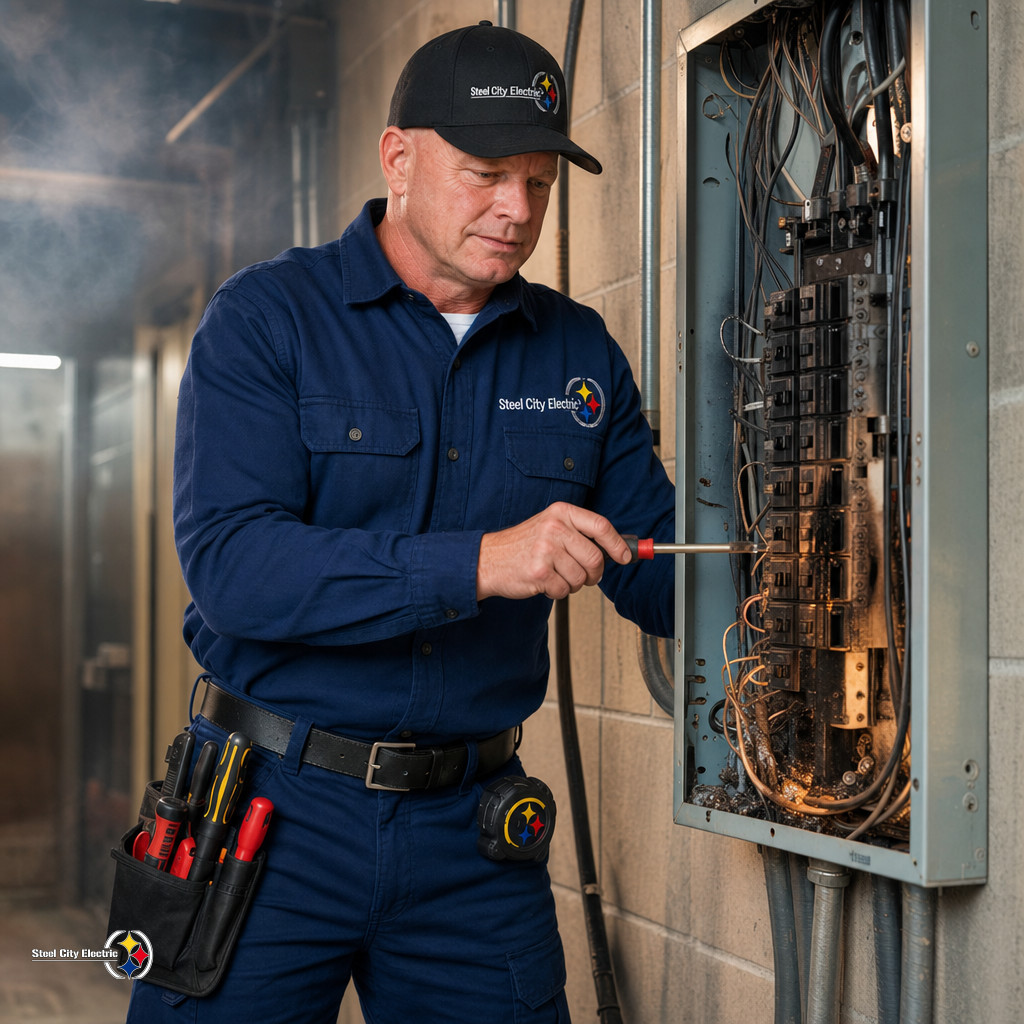
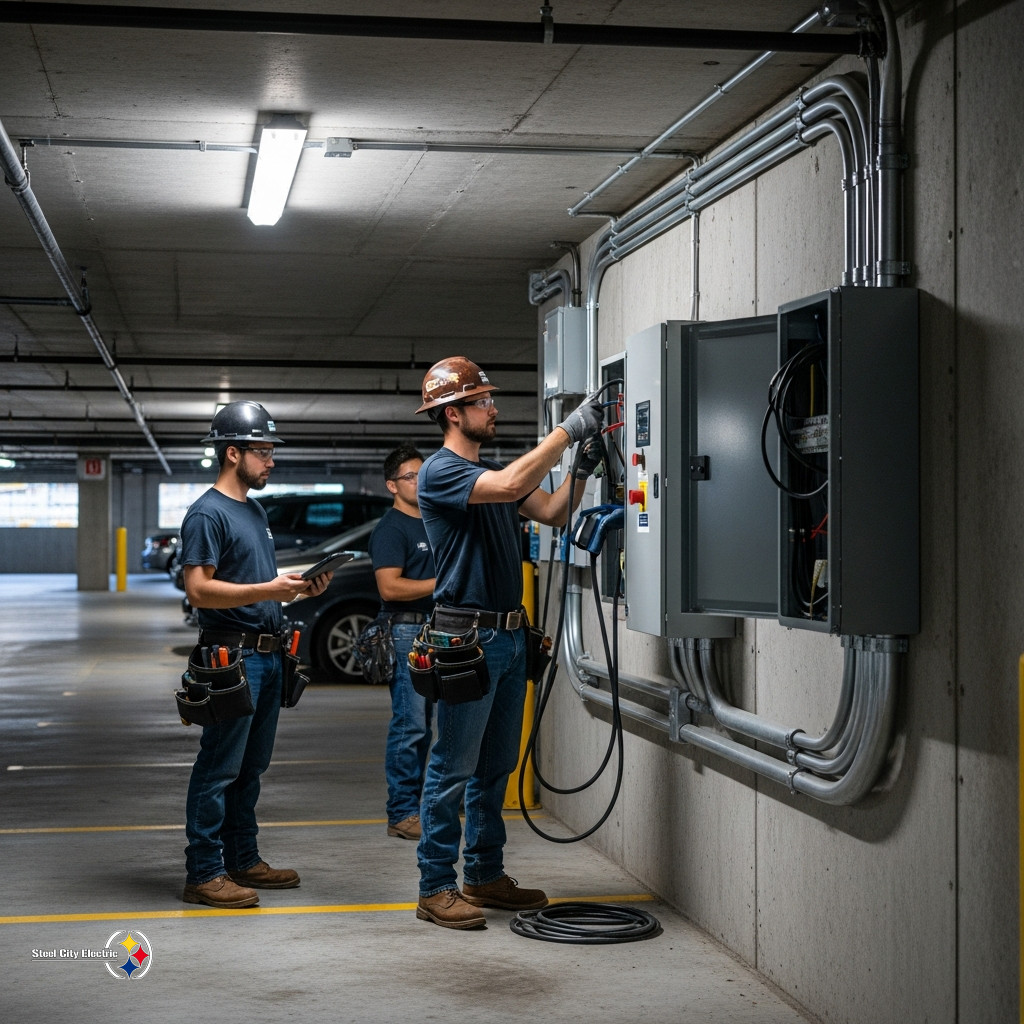
Most commercial lots in Parrish, Florida do not have much electrical room sitting around unused. By the time you count pole lights, signs, rooftop units, kitchen loads, tenant panels, irrigation clocks, and a few mystery circuits nobody has labeled in ten years, adding chargers is not just “find a breaker and go.” A proper Commercial EV Charger Installation starts with opening the gear, checking the load, and seeing what the service can really take.
The September HVAC GFCI deadline makes that check more important. A recent report from homepros.news titled A long-delayed GFCI requirement is set to hit outdoor HVAC equipment in September points to the delayed NEC rule for GFCI protection on outdoor air conditioners and heat pumps finally coming into play. On paper that sounds like an HVAC problem. In the field it usually ends up in the same panels, gutters, disconnect areas, and service rooms being reviewed for EV charger feeders.
That is where jobs get sideways. A property may have room for two chargers until the outdoor HVAC circuits need attention. Or the breaker space is there but the panel rating is not. Sometimes the issue is nuisance tripping. Sometimes it is old equipment that does not like newer protection. Sometimes the available fault current label is missing and nobody wants to guess. None of that is hard to solve when it is found early. It gets expensive when the parking lot is already cut open.
Steel City Electric has dealt with similar coordination pressure on retail work at Foot Locker Sarasota, where tenant wiring had to be worked around existing electrical infrastructure instead of pretending the building was brand new.
Owners looking at commercial EV charging stations should have the outdoor electrical loads reviewed together. Chargers, HVAC disconnects, grounding, surge protection, spare spaces, service capacity, trench routes, bollard locations, and future code work all affect the same job. If one trade plans in a vacuum, the next crew usually pays for it.
Steel City Electric handles EV charger installation for commercial properties with that kind of field planning in mind. If chargers are already being discussed for a Parrish property, it is worth checking the outdoor HVAC circuits now too. Better to catch the conflict at the panel than after customers are dodging cones and half the lot is torn up.