
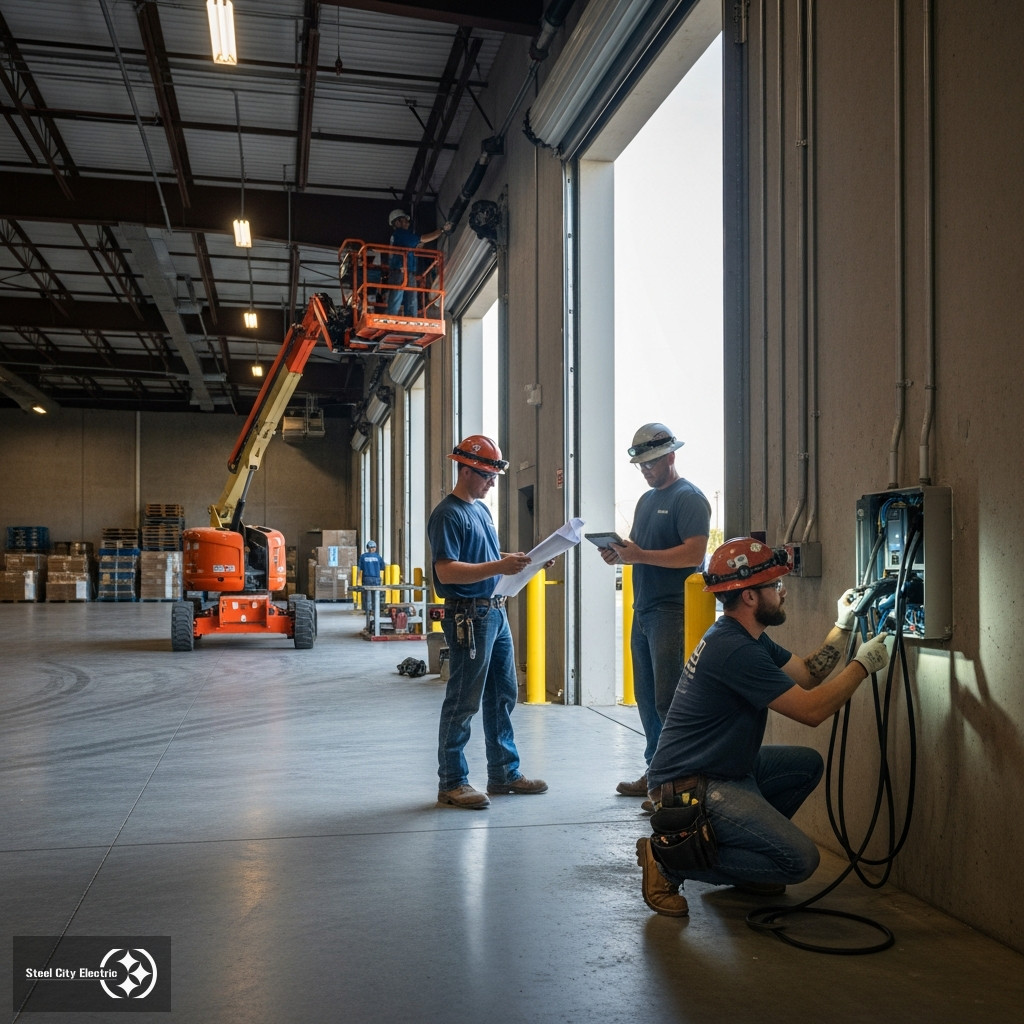
On a commercial job, the EV charger is not usually what slows things down. It is the gear feeding it. Somebody marks off two or four spaces near the front, figures it should be simple, and then the electrical room has other plans. Full panels. Long feeder runs. Old breakers with no room left. Transformer load already high. Maybe the trench has to cross drive lanes or cut through concrete that was poured years ago with no thought of future charging. Summer does not help. Air conditioning is running hard, refrigeration is steady, lights stay on, tenants are using what they use, and the building is already carrying a heavy day.
Commercial EV Charger Installation needs to be looked at like a load and infrastructure job first. The charger gets mounted at the end, after the hard questions are answered. PressAdvantage recently reported that Holton Electric is helping Minnesota commercial facilities get ready for higher summer electrical demand with maintenance, troubleshooting, panel work, generator support, and load inspections. Minnesota is not Florida, but the electrical problem is familiar. If the service is already close to its limit, adding charging can bring nuisance trips, hot equipment, failed breakers, or a shutdown that lands at the worst time.
Florida sites have their own headaches. Heat hangs around. Cooling cycles run long. Storm season changes schedules. Parking lots still have to stay open enough for residents, customers, employees, or deliveries. Steel City Electric has dealt with that type of pressure before, including underground feeder repair at Stoneybrooke Clubside Condominiums in Sarasota, where crews had to work around occupied buildings and keep the site usable. That matters on charger work. Underground pathways, new circuits, service changes, saw cutting, conduit runs, inspections. All of it has to fit the property, not just the drawing.
The better time to plan is before the chargers are bought and sitting on a pallet. Load calculations, panel checks, feeder routes, utility requirements, permits, disconnect locations, bollards, spare capacity, and room for later expansion should be sorted out early. A fast first phase can turn expensive if it blocks the next phase or forces the same area to be opened twice.
Steel City Electric handles commercial EV charger installation planning and installation for properties that need the work fitted around real operating conditions. If a facility is adding chargers, upgrading parking amenities, or trying to avoid electrical trouble during peak load months, the service review should happen before equipment gets ordered.
For commercial properties dealing with this kind of issue, Steel City Electric can help evaluate the right service path for the building.