
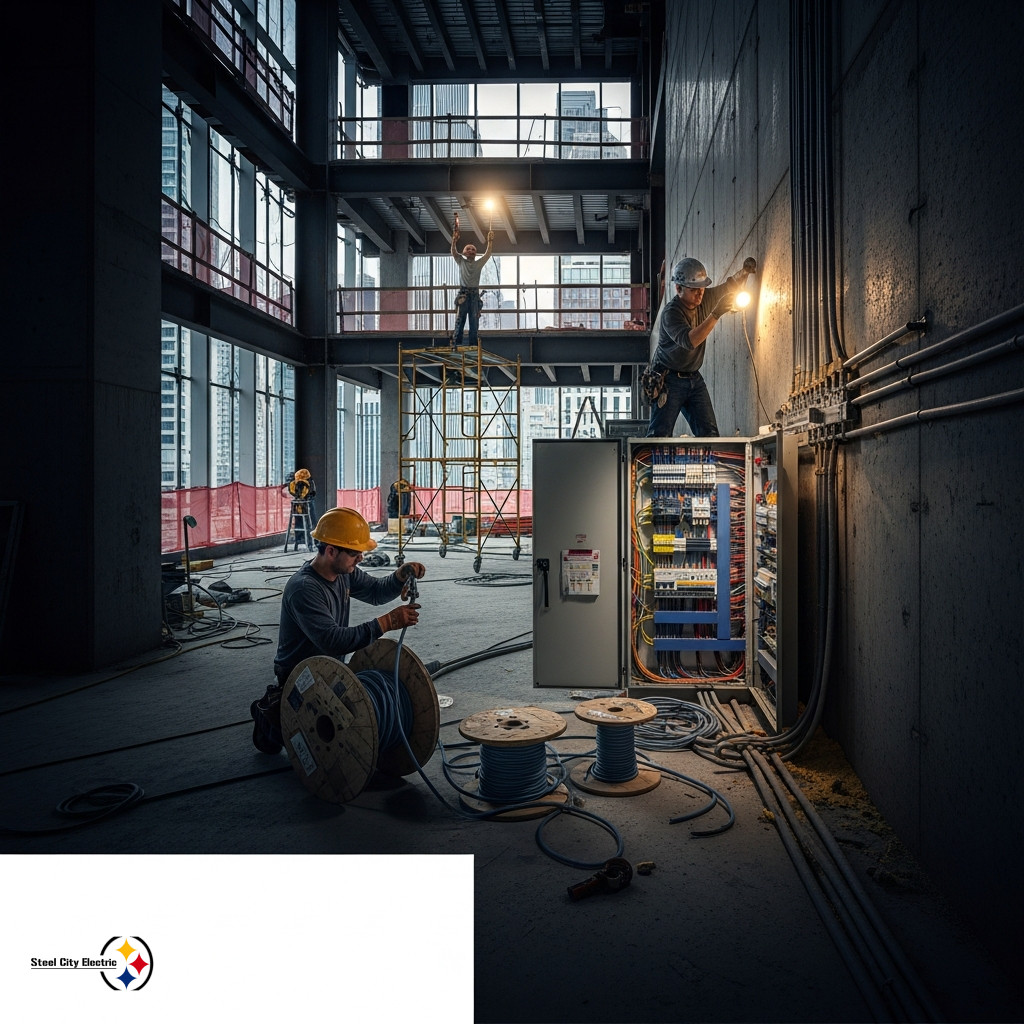
On a commercial job, the electrical room gets tight a lot sooner than people think. Slab goes in. Block starts. Pads get laid out. Somebody frames a wall a little different than the drawing showed. By the time everyone is asking about the main gear, half the routes are already getting crowded. If the switchgear is still months out, the job is not really waiting. It is guessing. That is where money gets burned. Steel City Electric runs into this when service equipment is treated like something to buy later, instead of something that drives layout, utility work, inspection dates, and access for the crews who actually have to install it.
Planning for commercial new construction electrical work needs to happen early on bigger builds. Restaurants, gyms, medical spaces, retail shells, elevators, big rooftop units, refrigeration, site lighting, tenant meters. All of that changes the service picture. Long switchgear lead times are not just a purchasing problem anymore. They can hold the schedule the same way steel or roofing can. Late gear means longer temporary power, more workarounds in the electrical room, and a final energizing date that keeps sliding every time the owner asks for an update.
The plans usually look cleaner than the jobsite. In the field, conduit routes get blocked. Transformer locations move after a utility review. Meter layouts change. A concrete crew forms a pad where a feeder bank was supposed to pass. Then the electrical contractor gets asked to “just make it work.” Sometimes there is a clean fix. Other times the gear size, AIC rating, meter stack, clearance, or available fault current puts a hard stop on the idea. That is not being difficult. That is how the system has to be built if it is going to pass inspection and stay serviceable after the building opens.
Steel City Electric has seen the same pressure on existing commercial power work too, including LA Fitness Tampa, where power upgrades had to be coordinated around real facility needs, not just a neat schedule on paper. That experience carries straight into new construction. Load planning, shutdown timing, utility coordination, and room to work all matter before the first rough-in crew shows up.
For developers and GCs, the better move is getting the electrical contractor involved before procurement is already in trouble. A practical commercial new construction plan can catch service conflicts, long-lead equipment issues, feeder access problems, and inspection headaches while there is still time to adjust. Steel City Electric helps Florida commercial teams plan and install electrical systems around the real build sequence, not just the first clean set of drawings.