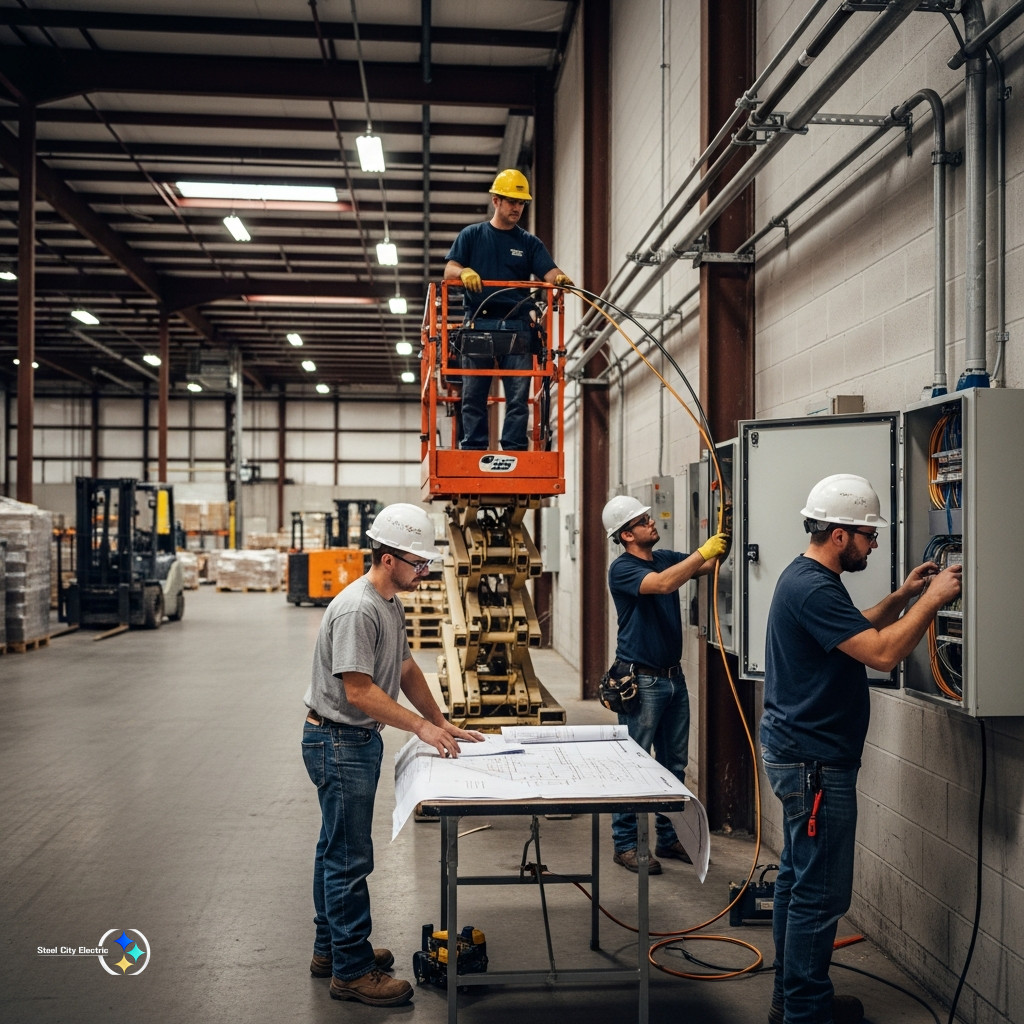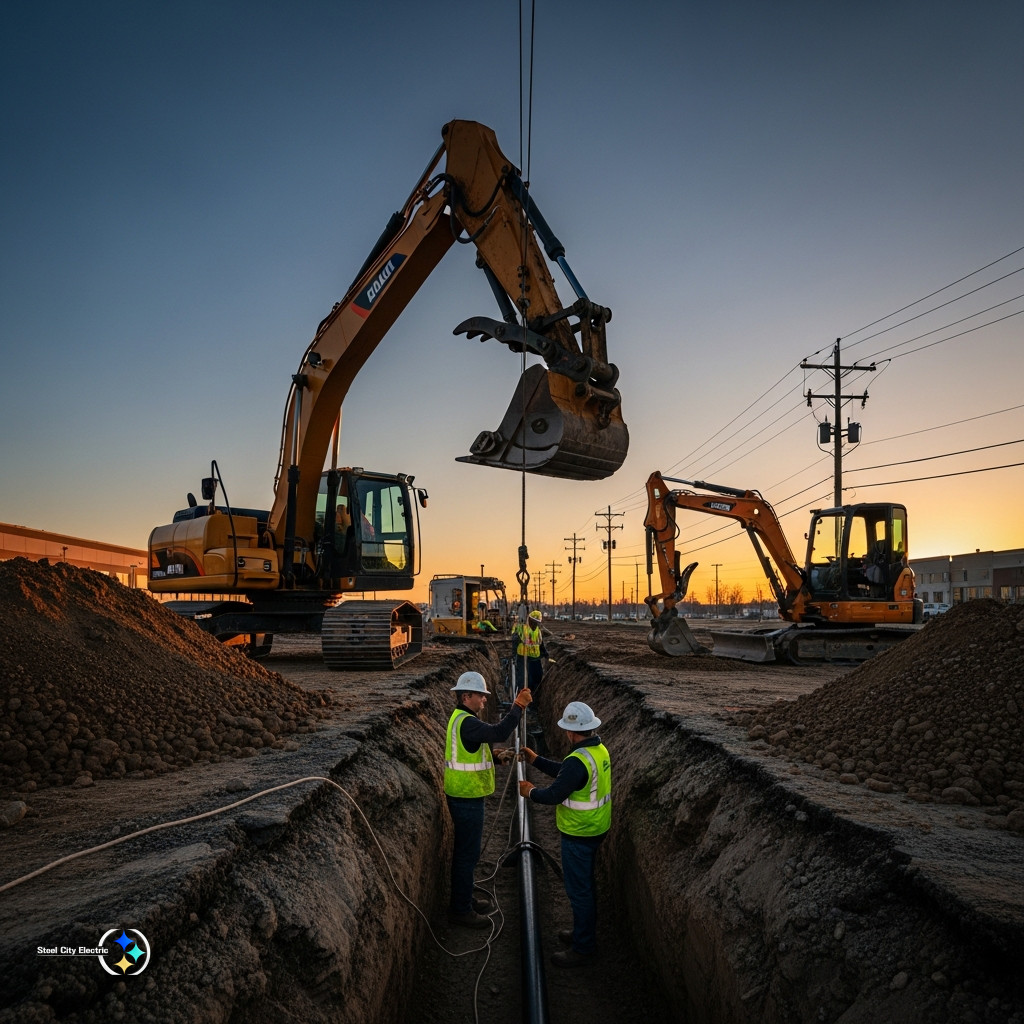
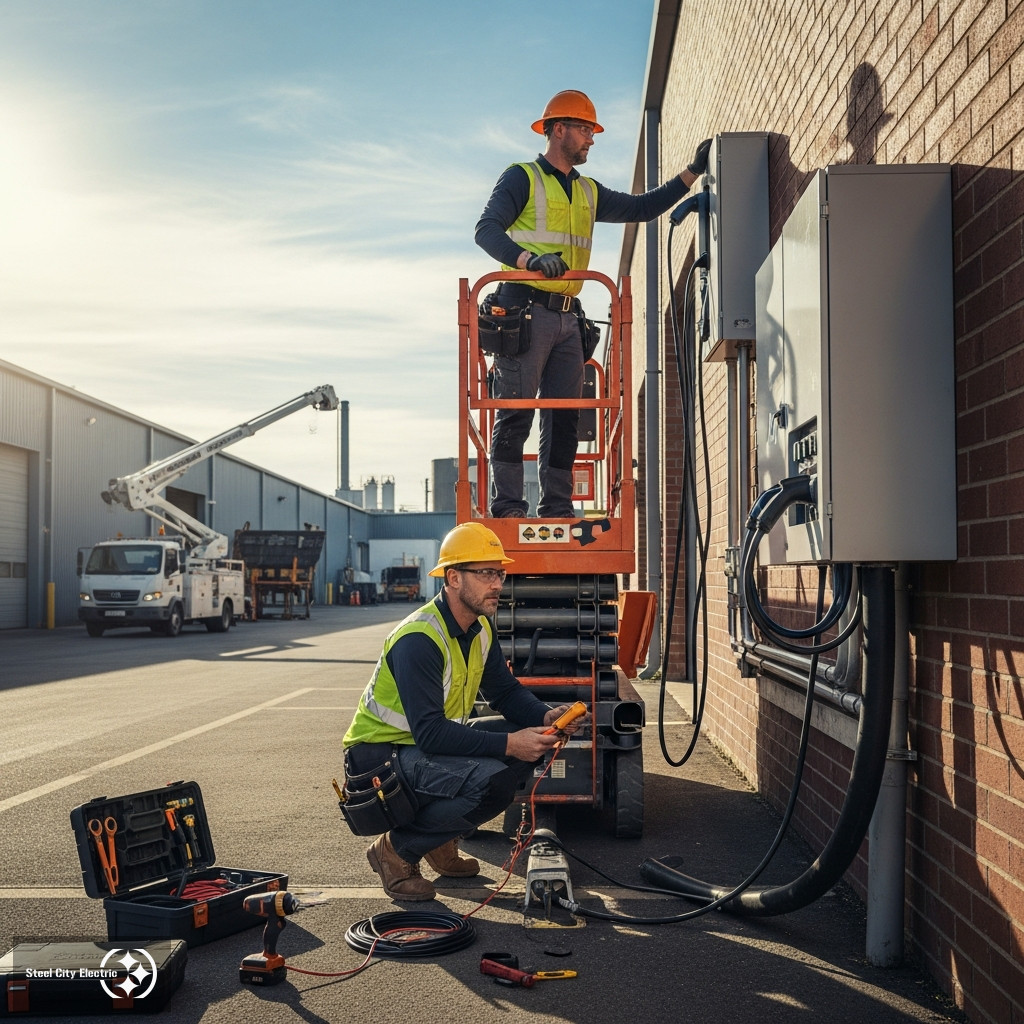
EV chargers look clean when the job is finished. Posts set. Spaces striped. Screens lit up. The part nobody sees is the part that usually decides whether the project goes smooth or turns into a mess. On commercial properties, the hard work is often in the panel room, below the asphalt, through old conduit runs, or tied up with the utility before anyone has even ordered the chargers. Two stations can sound simple in a meeting. Then the load gets checked and the service gear tells a different story.
The Reuters report on the UK moving toward electric vehicles made that pretty clear. More EVs means more pressure on charging access, and the planning window keeps getting smaller. Florida is not the UK, but the same problem shows up here. A property owner wants a couple of chargers now. Six months later, tenants ask for more. Fleet vehicles get added. Guests expect charging. Delivery vans need a place to plug in after hours. Steel City Electric runs into this during commercial EV charger installation when the building electrical was never set up for that kind of use.
That is where delays start. Sometimes it is not a huge shutdown. Sometimes it is just enough disruption to irritate everybody on site. Parking stalls blocked off longer than planned. Concrete opened up. A feeder that has to be upsized. Disconnects added. Bollards moved. Network wiring missed on the first pass. Utility coordination sitting in limbo. If customers, residents, employees, or tenants are using the property every day, the order of work matters. Bad phasing leads to blocked access, inspection problems, nuisance trips, or chargers that are mounted but not actually dependable.
Steel City Electric has dealt with that kind of field reality on other commercial work too. At Suntide Island Beach Club in Sarasota, crews were working around damaged life safety systems. Different job, different equipment, but the lesson is the same. Existing buildings rarely match the neat version people expect from drawings or old records.
Property managers, dealerships, offices, multifamily sites, hotels, and fleet operators are usually better off checking capacity before picking hardware. Charger speed matters. So does the user schedule, panel condition, conduit path, parking layout, and whether more stations may be added later. Employee Level 2 charging is not the same setup as public charging or a fleet rotation plan. If chargers are coming to your site, start with the electrical side first, then build the equipment plan around it with commercial EV charger installation from Steel City Electric.