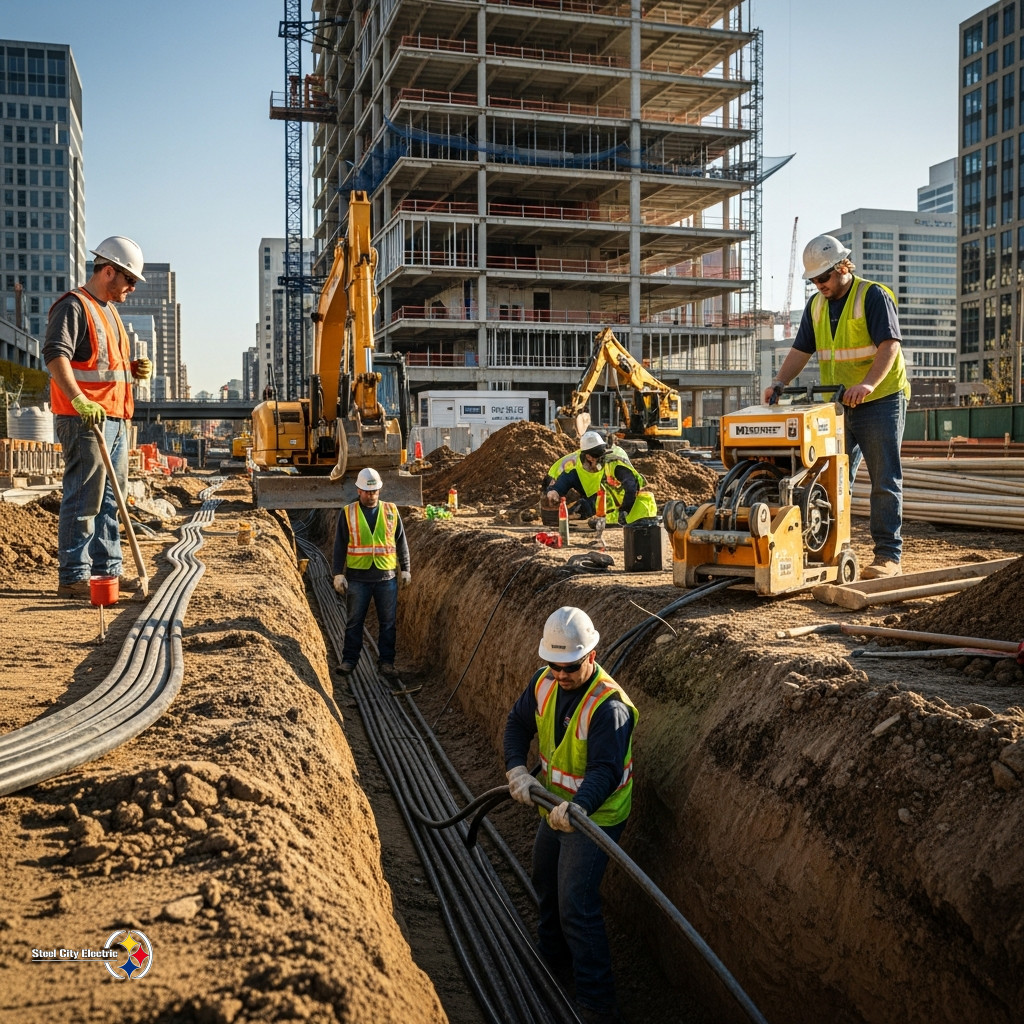
Underground electrical on a commercial job can look quiet from the road. Usually it is anything but quiet. The trench is cut, paint marks are everywhere, the pad is formed up, and now the job is waiting on utility dates, conduit inspection, transformer status, and the exact point where utility work stops and the electrical contractor’s work starts. If that window slips, it can hold paving, site lighting, permanent power, refrigeration, elevators, security, tenant work, and final turnover. That is why commercial underground electrical utility installation has to be treated like real site coordination, not just another line on a schedule.
The pain point right now is that every part of the process seems to move on a different clock. Gear may be late. The utility may be backed up. The trench route may be clear on the drawings but blocked in the field by another trade, stored material, fencing, or finished grade that nobody wants disturbed. A crew can install duct banks and then sit while approvals catch up. Other days the utility is ready and the site is not. That is where money gets burned.
No news article available is about how it feels on a lot of jobs. No big warning. Just calls, pushed dates, another meeting by the trailer, and a superintendent trying to keep the schedule from sliding. Then excavation finds storm pipe, old conduit, unsuitable soil, or an abandoned feeder that never made it onto the as-builts. What looked like a clean underground pull turns into re-routing, rework, and a new inspection plan.
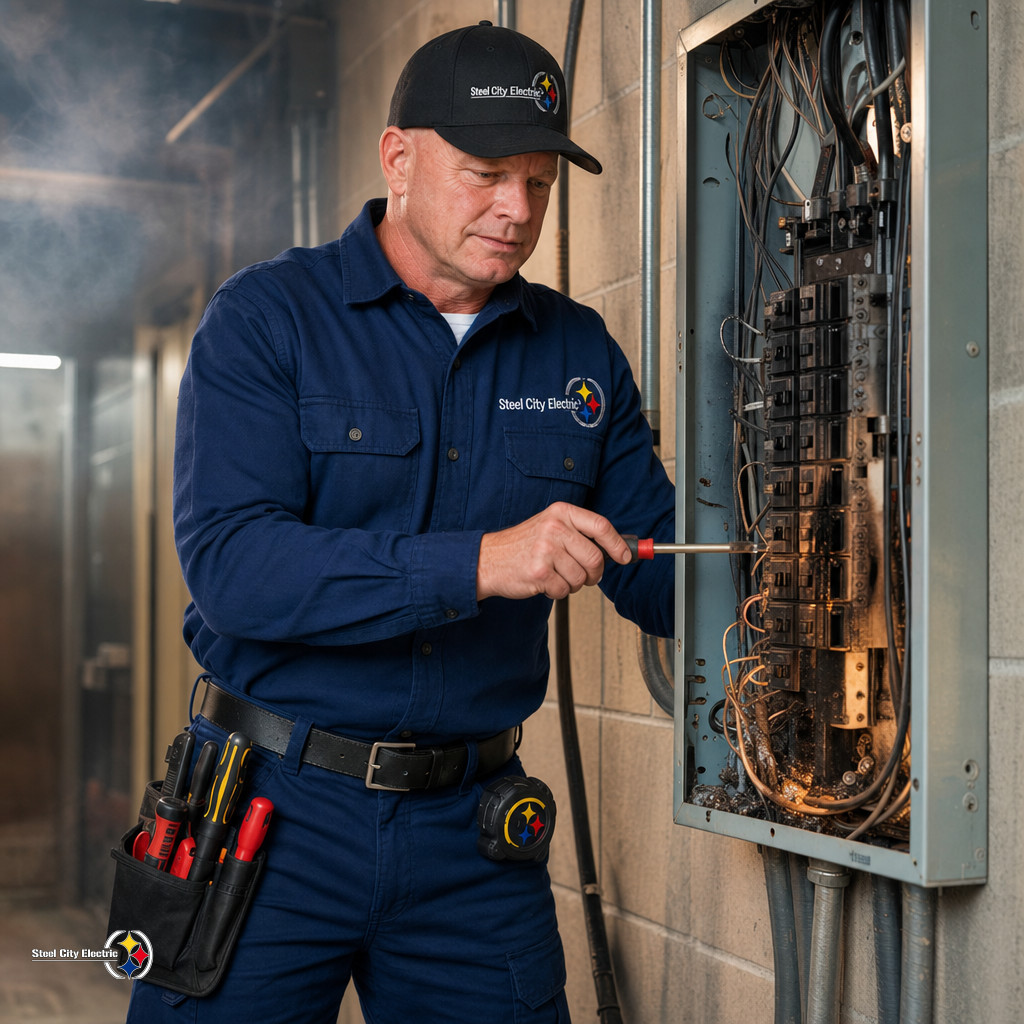
Steel City Electric checks those details before calling a trench ready. Route, depth, conduit size, sweeps, pull points, grounding, service entrance gear, utility clearance, and equipment access all matter. Once asphalt, curbs, landscaping, or a slab is in place, even a small miss becomes a bigger repair. Nobody wants to open a finished site twice.
That same kind of pressure shows up on live properties too. Steel City Electric has handled commercial power work in active spaces, including LA Fitness Tampa, where the work had to fit around an operating fitness facility and existing electrical demand.
For owners, GCs, and property managers, the conduit itself is only one piece. The real problem starts when permanent power misses the date. Temporary power stays on site longer. Generators get ordered. Interior trades work around limits. Lighting and life-safety items get tight near inspection. A properly planned underground utility electrical system helps keep that from turning into a job-wide slowdown.
If a Florida commercial project is waiting on underground power, service upgrades, new utility infrastructure, or a utility release, bring the electrical contractor in early. Before the parking lot is graded. Before the route gets buried under other work. Field layout, utility coordination, and access planning are much cheaper before the deadline is already on top of the job.
For commercial properties dealing with this kind of issue, Steel City Electric can help evaluate the right service path for the building.