On commercial and industrial jobs, the electrical room gets crowded fast. It is not just panels on a wall. It is pipe runs, slab sleeves, emergency circuits, controls, low-voltage, lighting contactors, mechanical feeds, spare conduits someone forgot to show, and whatever the tenant added after the first walk-through. In Bradenton, Florida, many buildings have been changed more than once. Old warehouse space becomes retail. Retail gets cut into smaller suites. A slab that looks ordinary can still create problems once vapor mitigation is brought into the job. At that point, Commercial & Industrial Electrical Installation cannot be treated like a simple buildout with a few extra circuits.
A recent report from facilityexecutive.com titled The Emerging Threat To Indoor Air Quality points out how vapor intrusion is getting more attention from facility managers, buyers, owners, and maintenance teams. For an electrical crew, that shows up in the field before the work even starts. Where is the mitigation piping going? Which slab penetrations are allowed? Which ones need sealing? Is there room above the ceiling for conduit and exhaust equipment? Can monitors, fans, alarms, or ventilation controls be fed from the existing gear, or is the panel already out of space?
That is not office talk. It changes the install. Sometimes conduit has to move to a wall nobody wanted to use. Sometimes sealed fittings are needed. A mitigation fan may need its own circuit. Controls may need space left in a panel that was already planned tight. Emergency power may come into the discussion if the system is tied to life safety or required building operation. If nobody coordinates it early, the job can turn into cut slab, move pipe, patch wall, reschedule inspection, then explain the delay to the tenant.
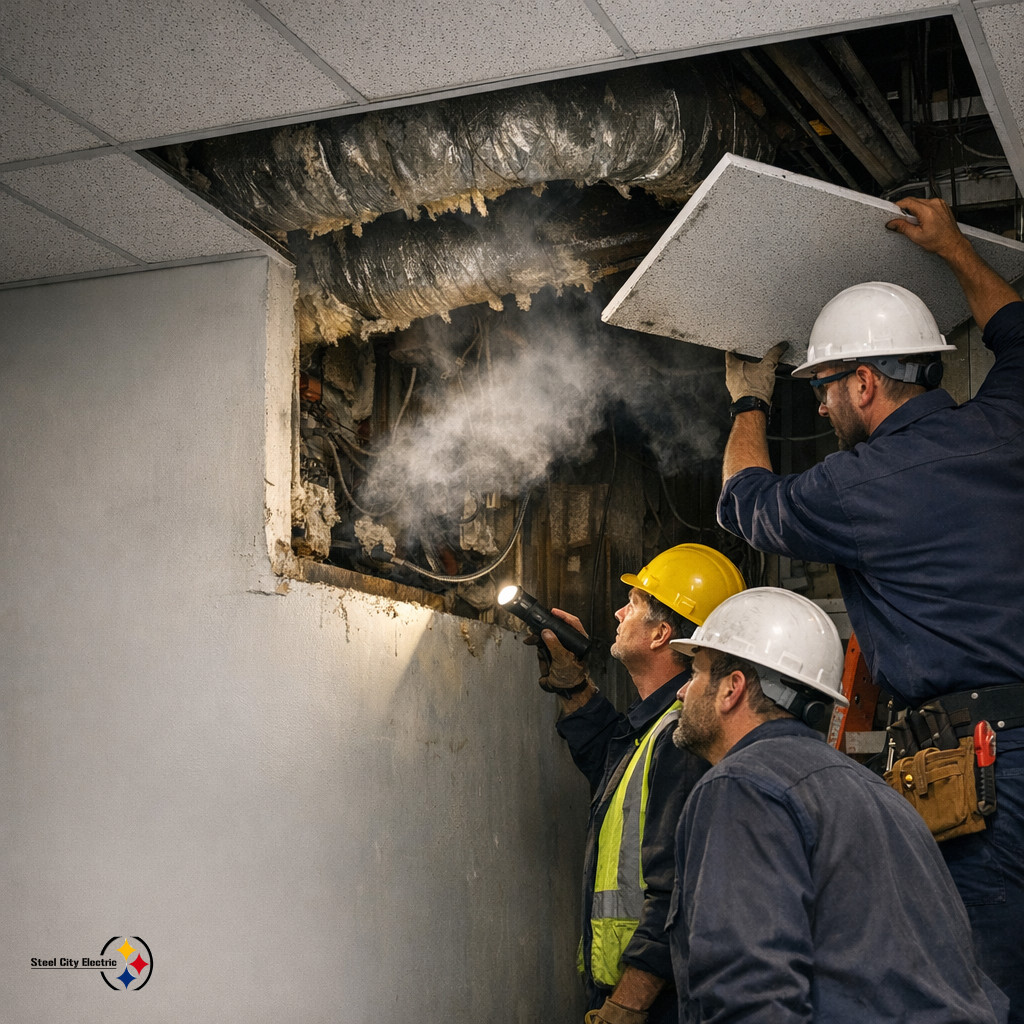
Steel City Electric has dealt with tight commercial conditions before on Foot Locker Tampa, where crews handled power distribution inside an active commercial buildout setting. Jobs like that teach a simple lesson. Space disappears quickly, and what looks fine on a drawing can get ugly when the ceiling is open and every trade is standing in the same corner.
For commercial and industrial properties around Bradenton, vapor intrusion adds another item that has to be worked into the electrical scope, not pushed off until the end. Panels, feeders, lighting, equipment power, monitoring, controls, and future access all need to make sense with the building’s environmental systems. Steel City Electric helps owners, general contractors, and facility teams plan commercial and industrial electrical installation work around actual site conditions so the project does not lose time to avoidable conflicts after crews are already on site.