
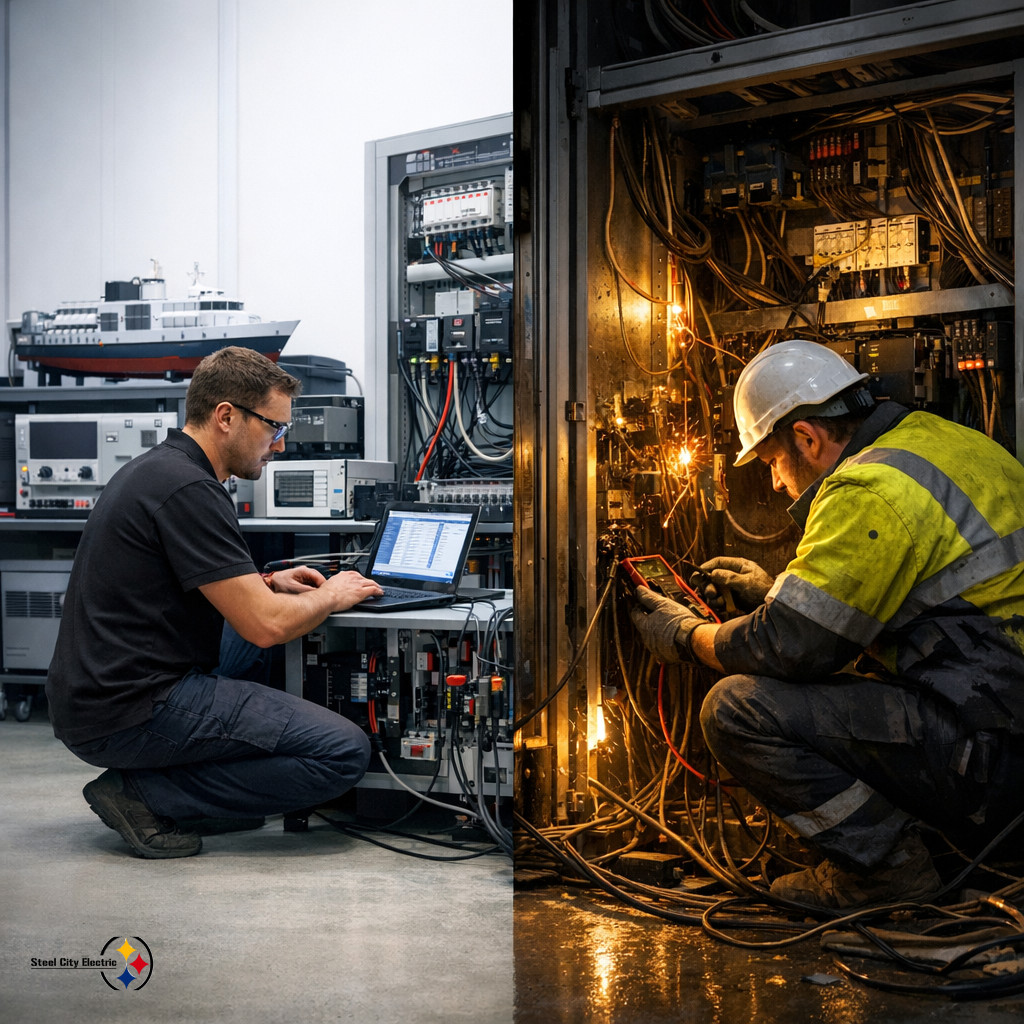
On new commercial jobs around Tampa, Florida, the electrical problems usually show up on site, but they were created weeks or months earlier. Somebody adds equipment. A tenant changes the fixture package. HVAC comes in heavier than expected. Refrigeration grows. Data racks need more room. EV charging gets mentioned after the service gear is already ordered. By then the electrical room is framed, underground is in place, and the crew is trying to make clean work out of a plan that no longer matches the building. That is where commercial new construction electrical planning either keeps the job moving or turns into change orders and lost time.
An industry item from splash247.com titled Alewijnse and University of Twente team up on vessel electrification testing was about ships, not storefronts or office space. Still, the point lands. They are testing electrical behavior before the real equipment is out in the field. That matters because power systems do not forgive much guessing. Commercial buildings have the same problem, just with a different set of loads and a superintendent asking why the gear will not fit.
On a vessel, propulsion, batteries, converters, and controls all have to behave together. In a new building, it is HVAC startup, lighting controls, life safety, tenant panels, kitchen equipment, signage, low voltage pathways, and whatever got added after permit drawings. A panel schedule can look fine in the office. Then feeder routing gets tight. Voltage drop becomes real. Clearances get crowded. Future capacity disappears because nobody wanted to talk about it early.
Steel City Electric has dealt with that pressure on retail work, including Foot Locker Sarasota, where the work came down to coordinating interior electrical systems around tenant buildout changes without making a mess of the schedule.
For ground-up commercial work, the answer is not just buying bigger gear and hoping for the best. That can waste plenty of money. The better move is getting an electrical contractor involved before the hard decisions are buried in concrete, walls, and lead times. Service sizing, panel locations, conduit runs, lighting layouts, tenant infrastructure, and real installation access all need field-level review. When owners, GCs, and developers bring Steel City Electric into commercial new construction early, there is a better shot at avoiding late rework, shutdowns, gear conflicts, and surprises nobody carried in the budget.