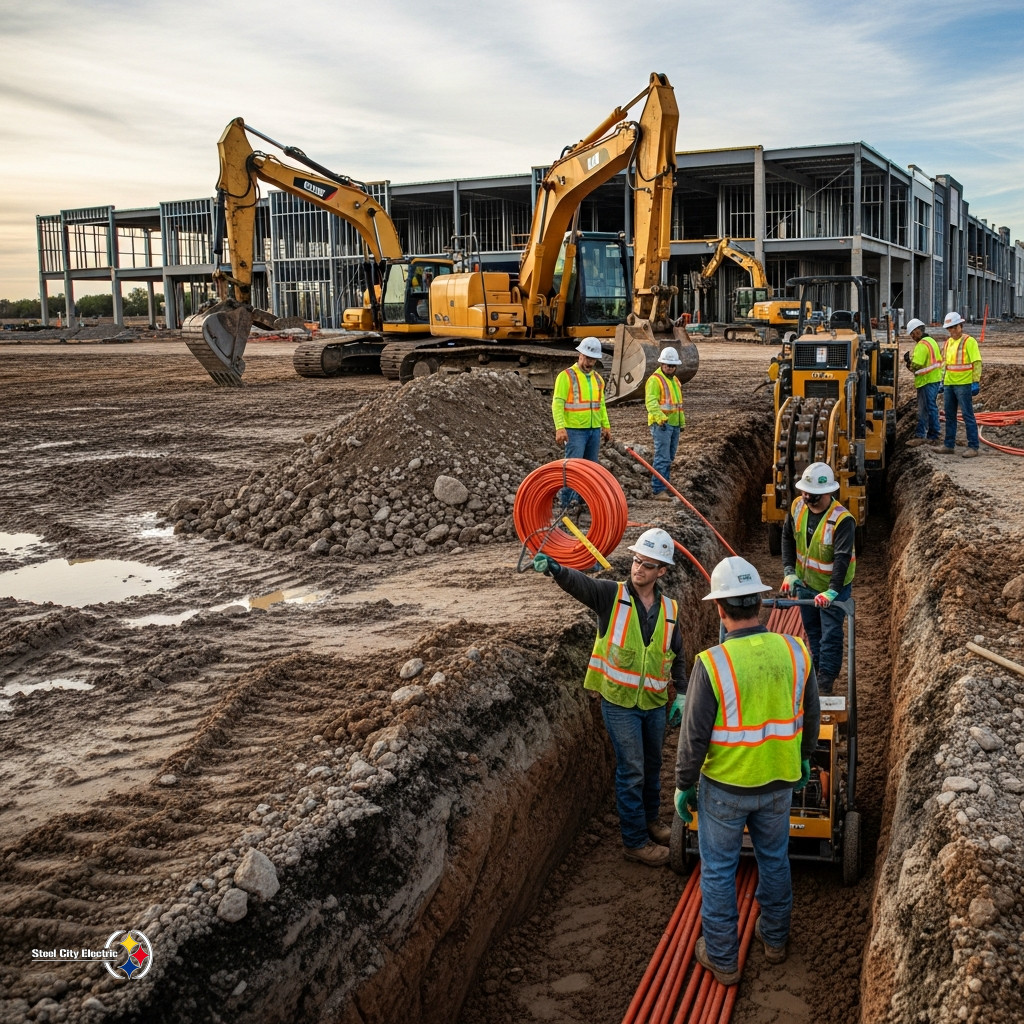
Underground electrical on a commercial job is one of those scopes that looks quiet until it is not. Dirt crew is there. Sleeves are laid out. Paving date is already on the board. If the conduit bank is not ready when that window opens, everybody feels it. For commercial underground electrical utility installation, a missed day can push service feeds, transformer work, pull boxes, inspections, site lighting, asphalt, landscaping, and turnover. The office may see a line item. Out in the field, it is a trench sitting open and a superintendent asking who is coming tomorrow.
A Chapter 11 filing brings a different kind of problem. Not just lawyers and notices. Crews get thin. Suppliers start asking questions. Bonding can get tight. Material that was supposed to be released may sit somewhere. Half-finished duct banks do not come with perfect notes taped to the side of the trench. According to a recent report from whatnow.com titled North Texas-Based WBE-Certified Electrical Contractor Files for Chapter 11 Bankruptcy, Allied Electrical Group of Texas, Inc. is seeking Chapter 11 protection. On commercial sites, that kind of news matters because underground utility work is usually tied to the first hard dates on the schedule.
Once the site is cut open, nobody wants to dig twice. Bad timing on feeders, duct banks, service laterals, grounding, or stub-ups can spill into everything behind it. Temporary power gets dragged out longer than planned. Other trades start working around missing service. Inspectors get moved. Then moved again. A small miss underground can become a very visible delay by the time switchgear is ready and the building still does not have the service path it needs.
Steel City Electric has dealt with that kind of pressure on retail schedules, including Foot Locker Sarasota, where the electrical work had to stay lined up with tenant buildout dates and site conditions already in motion.
General contractors, developers, and property teams should not wait until the trench is open to find out the underground scope is weak. Check conduit routes. Verify utility requirements. Look at transformer location, pull distance, grounding, risers, stub-ups, vaults, and inspection timing before the site gets boxed in. If a contractor cannot staff the work or finish what was started, the next crew has to be able to read the ground fast and keep the job moving. Steel City Electric supports commercial underground electrical utility installation for commercial projects that need practical coordination, steady field execution, and fewer surprises after the dirt is closed.
For commercial properties dealing with this kind of issue, Steel City Electric can help evaluate the right service path for the building.