Walk onto a commercial site early in the morning, before the noise picks up, and you can usually tell which jobs were planned and which ones weren’t. The quiet ones have markings on the ground, paint lines that actually mean something, a foreman who knows where every conduit is supposed to land. The other kind has an excavator idling next to a patch of dirt nobody’s quite sure about. That second kind is where the trouble starts.
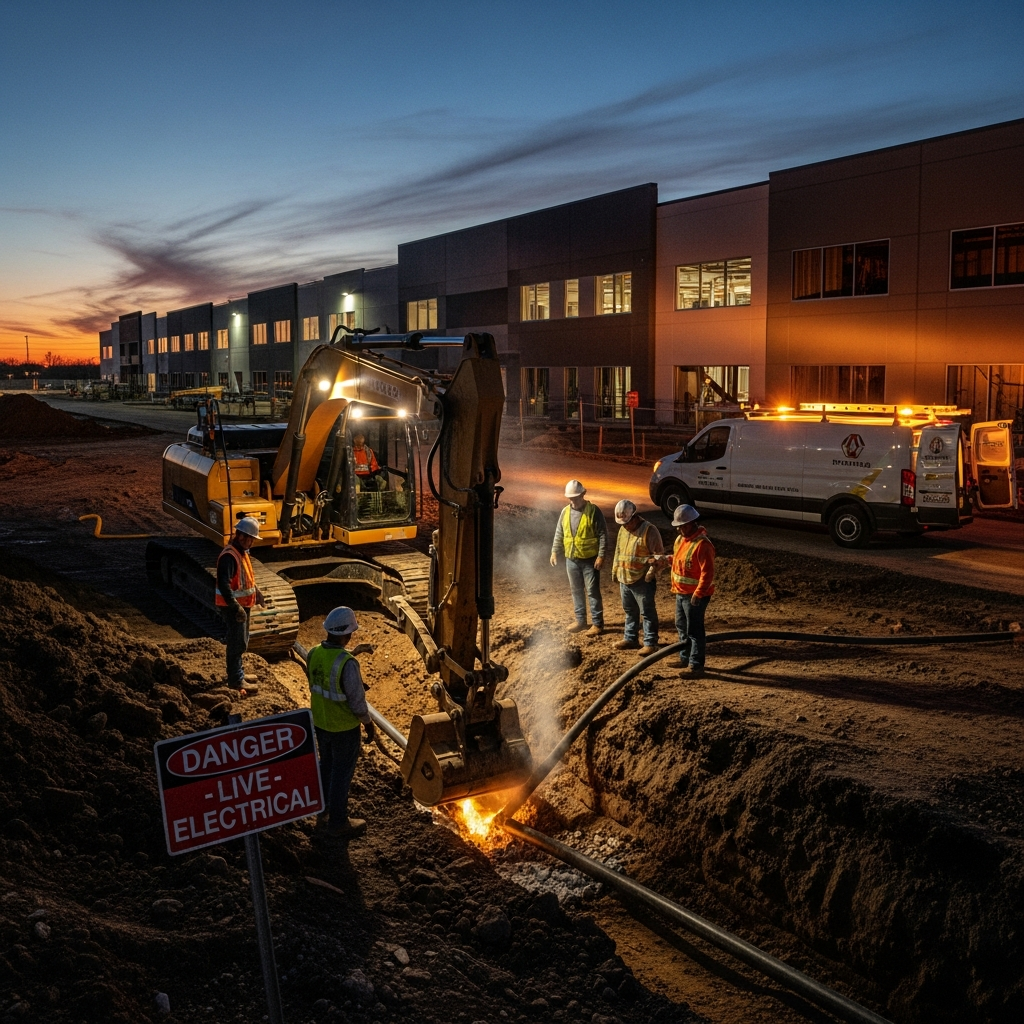
Every contractor who has spent enough time on a commercial site has a story like this. Somebody fires up an excavator, breaks ground, and a few minutes later hits something they were never supposed to touch. A water line, a fiber run, or worse, a live feeder. It happens more than people want to admit and most of the time it traces back to one thing: nobody mapped the site before the dig started.
A recent Construction Dive, “Utility strikes remain a top jobsite hazard as commercial builds accelerate” lines up with what many business owners are starting to experience in their own buildings.
Underground work is unforgiving. With proper underground electrical utility installation, the planning happens before a single shovel moves. Trench paths get marked, conduit depths get verified, and existing utilities get located so the crew is not guessing. Skip that step to save a day and you usually lose a week, sometimes more if a strike knocks out service to neighboring tenants.
Honestly, the biggest mistake I see on commercial jobs is treating underground like an afterthought instead of part of the new construction plan from day one. Tie it into the new electrical service design early and the trenching, conduit and routing all line up. Wait until the slab is poured and you are paying for problems you could have avoided with a couple of phone calls.
steelcityelectricfl.com/underground electrical