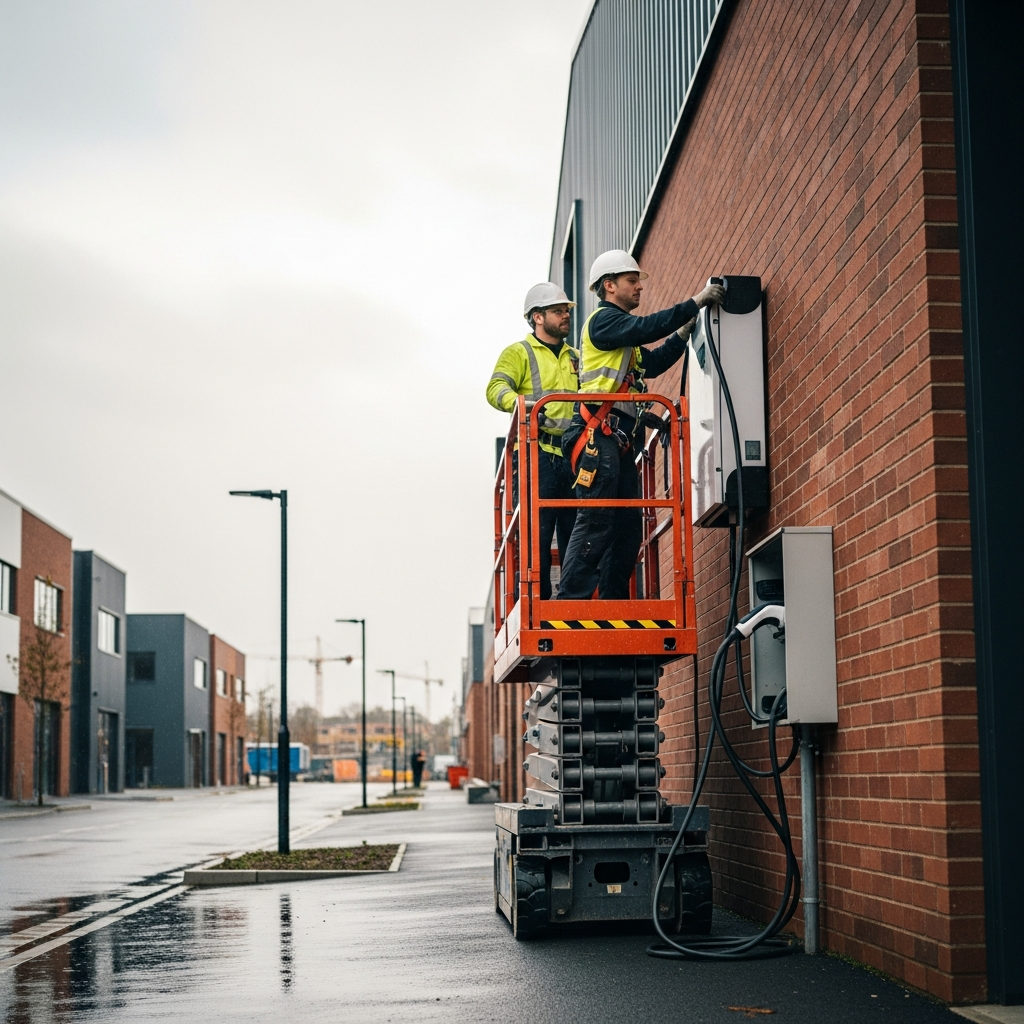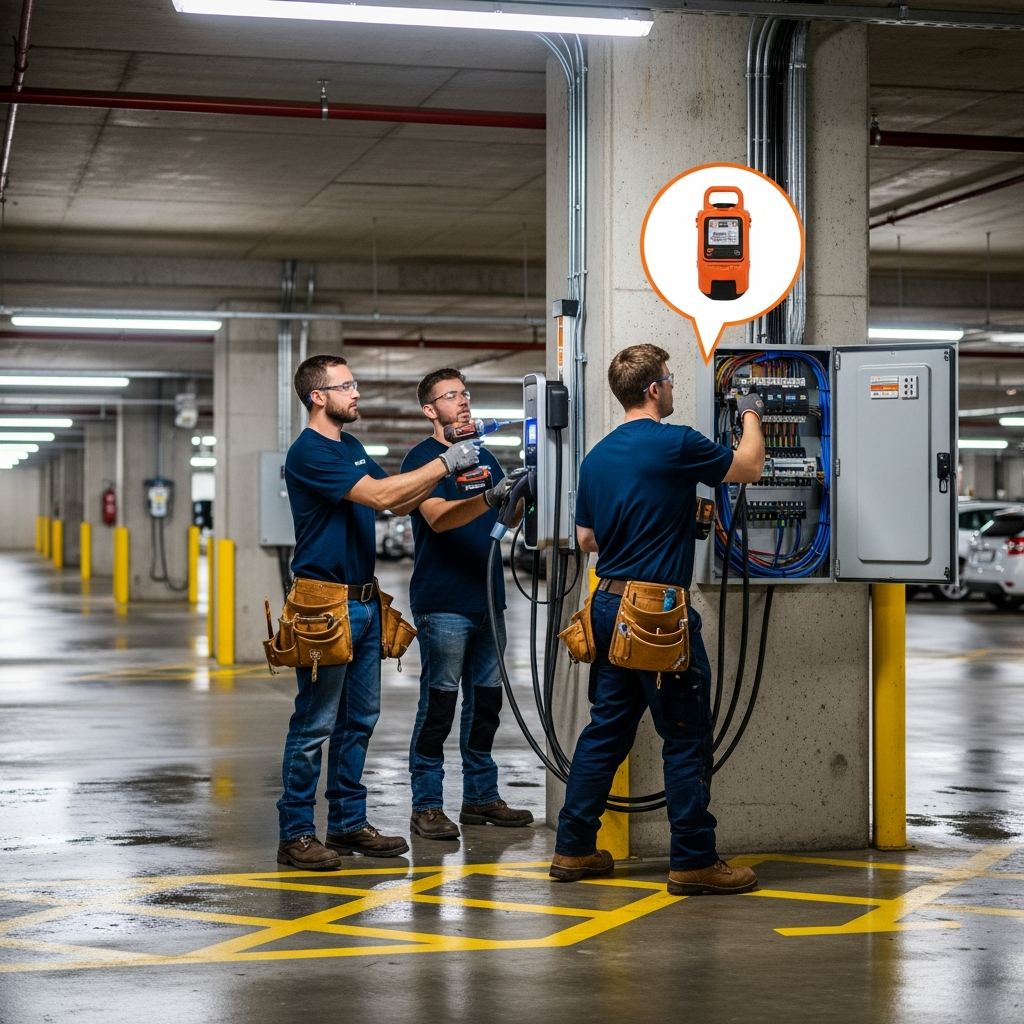
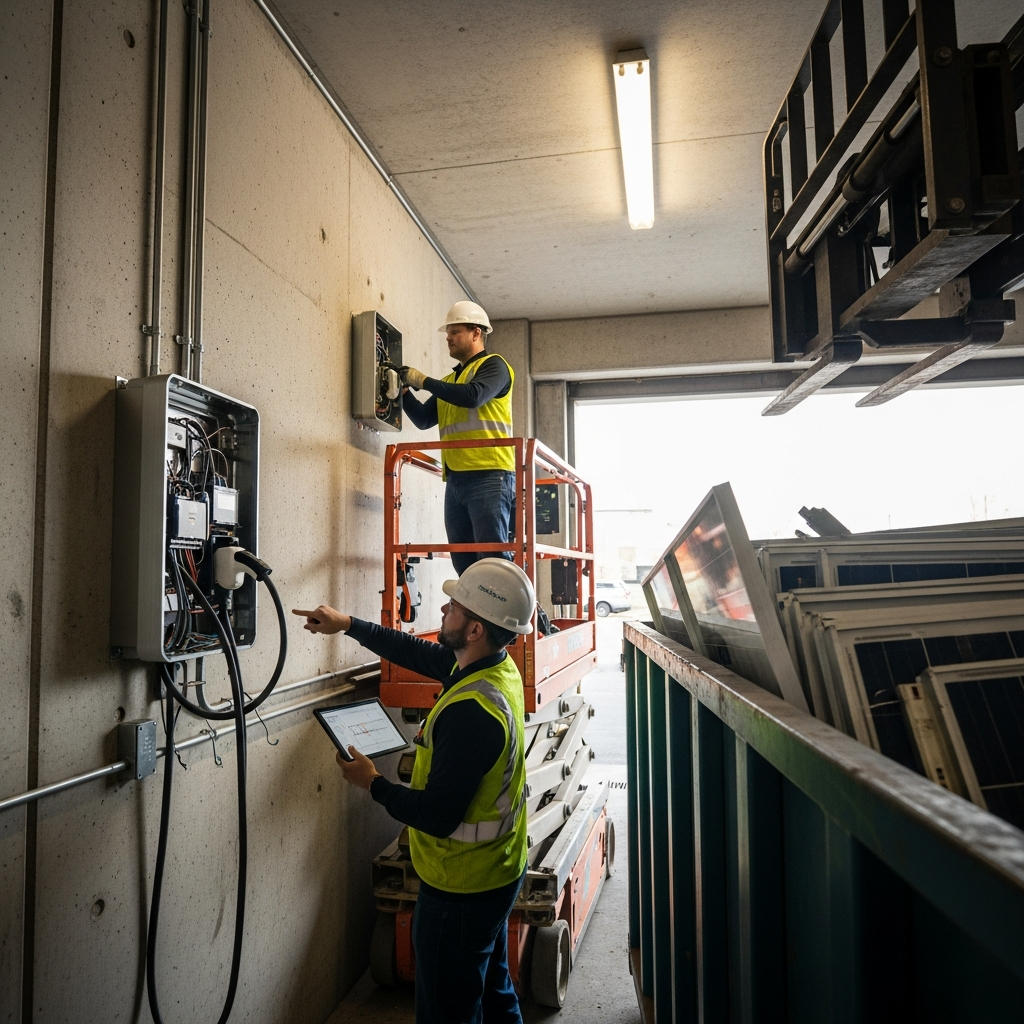
A charger in a parking lot looks simple after it is mounted. Getting power to it is usually where the job gets expensive. On a commercial property that can mean opening ceilings, checking old switchgear, finding a feeder route that does not wreck a storefront, cutting concrete, scheduling shutdowns, and dealing with the utility if the service is already tight. Two or four stalls can turn into a real electrical project fast. That is the part of commercial EV charger installation owners do not always see on the first walkthrough.
The solar panel waste warning out of Australia is a different issue, but it hits the same nerve for contractors. Reuters reported that a federal government hearing was told Australia could be sending 90,000 tonnes of solar panel waste to disposal each year by 2030. Big number. It is not about chargers directly. It is a reminder that clean energy equipment still has equipment problems. It ages. It gets replaced. It needs space, access, wiring, service capacity, and a plan for what happens after the first install.
That matters when owners start stacking projects together. EV charging this year. Solar canopy later. Maybe battery storage after that. If the first crew runs conduit through the only clean path, or sets gear where future equipment needs to land, everybody pays for it twice. Same goes for panels with no room left, weak grounding, tight transformer capacity, or a trench route that made sense on paper but not in the field. Steel City Electric ran into that kind of retail power planning on the Insomnia Cookies buildout in Florida, where the important work was not flashy. It was service upgrade planning and making the space usable.
Downtime is usually the thing that burns the owner. Tenants still need lights. Customers still need parking. Deliveries still come in. A poor charger layout can create problems with bollards, ADA clearance, parking flow, maintenance access, and future expansion. A rushed feeder path can turn phase two into sawcutting, patching, and after-hours shutdowns that should have been avoided.
Before chargers get ordered, the site needs a hard look. Existing panels, available load, transformer condition, trenching, permitting, grounding, utility timing, and where the next project might go. Steel City Electric can walk the property, check the real conditions, and build the work around how the facility actually operates through EV charging installation work for commercial facilities.