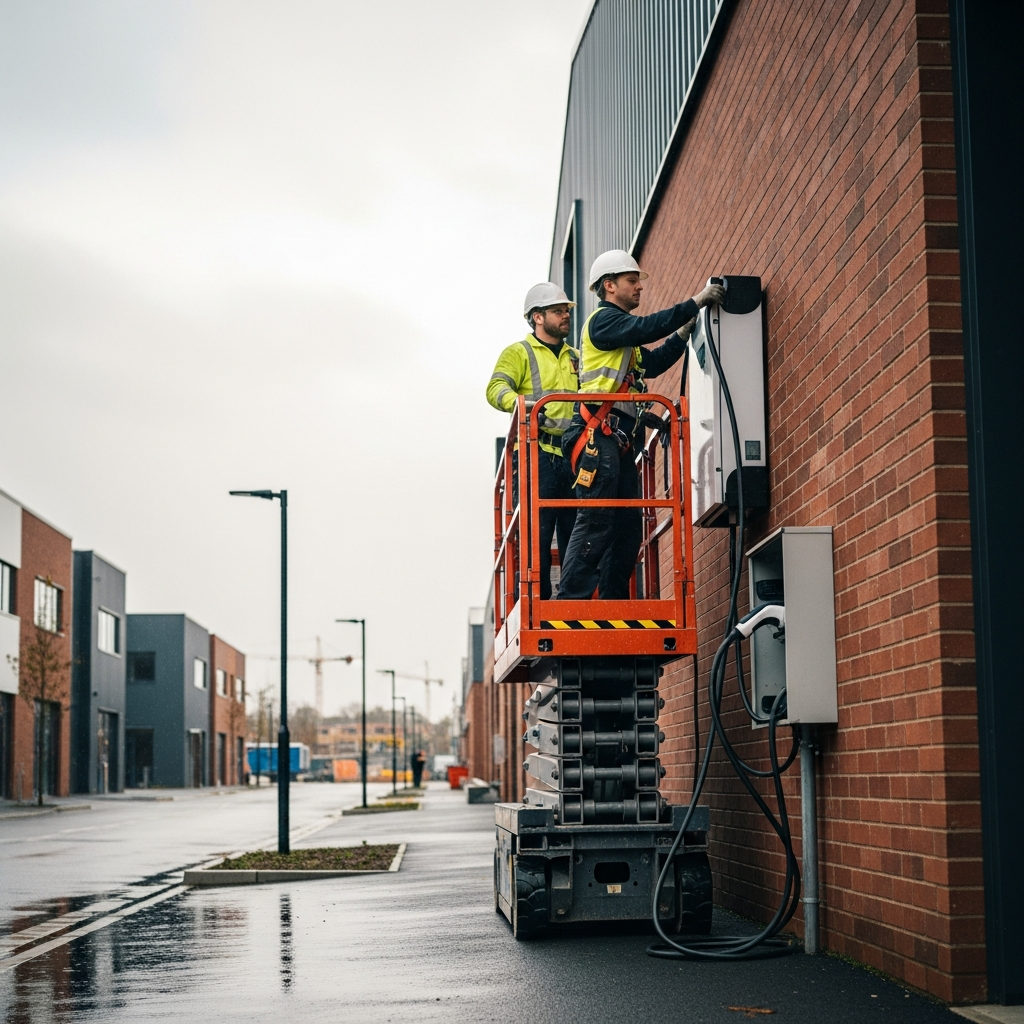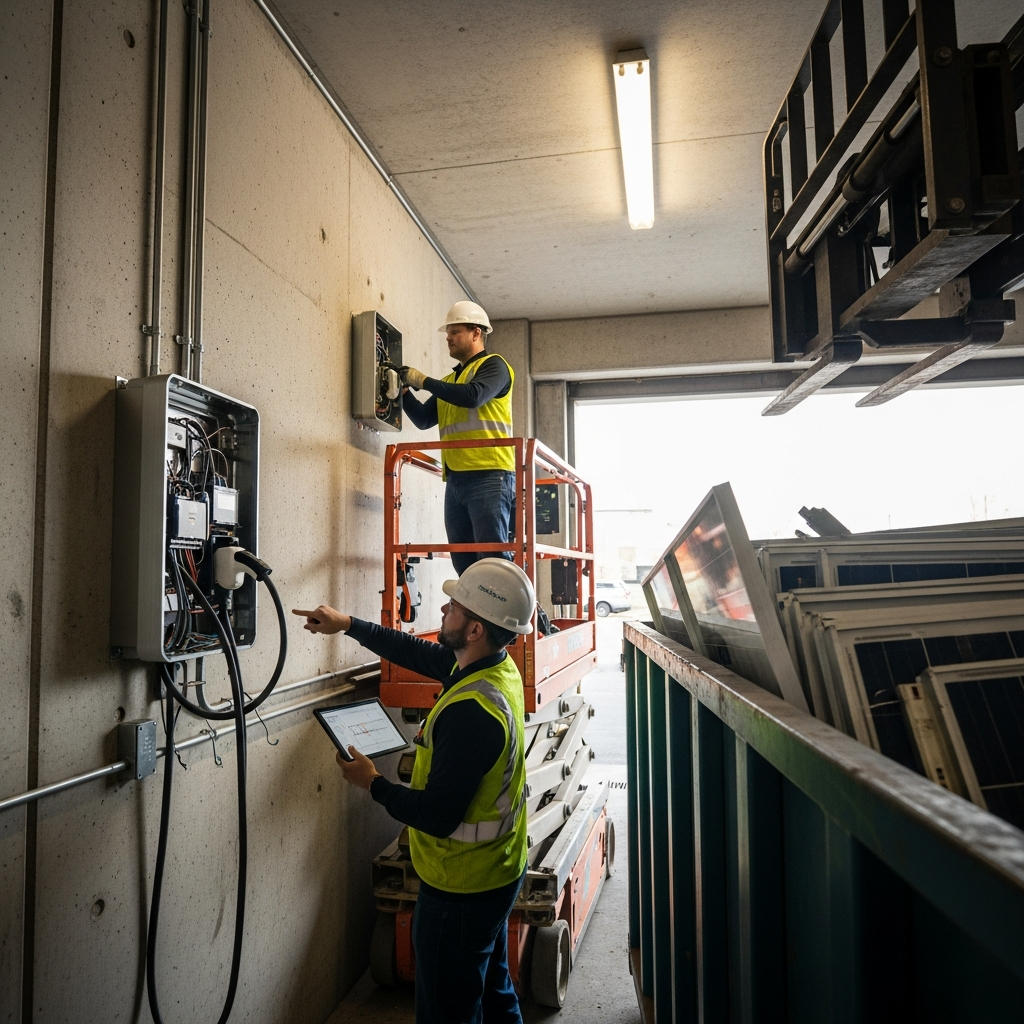
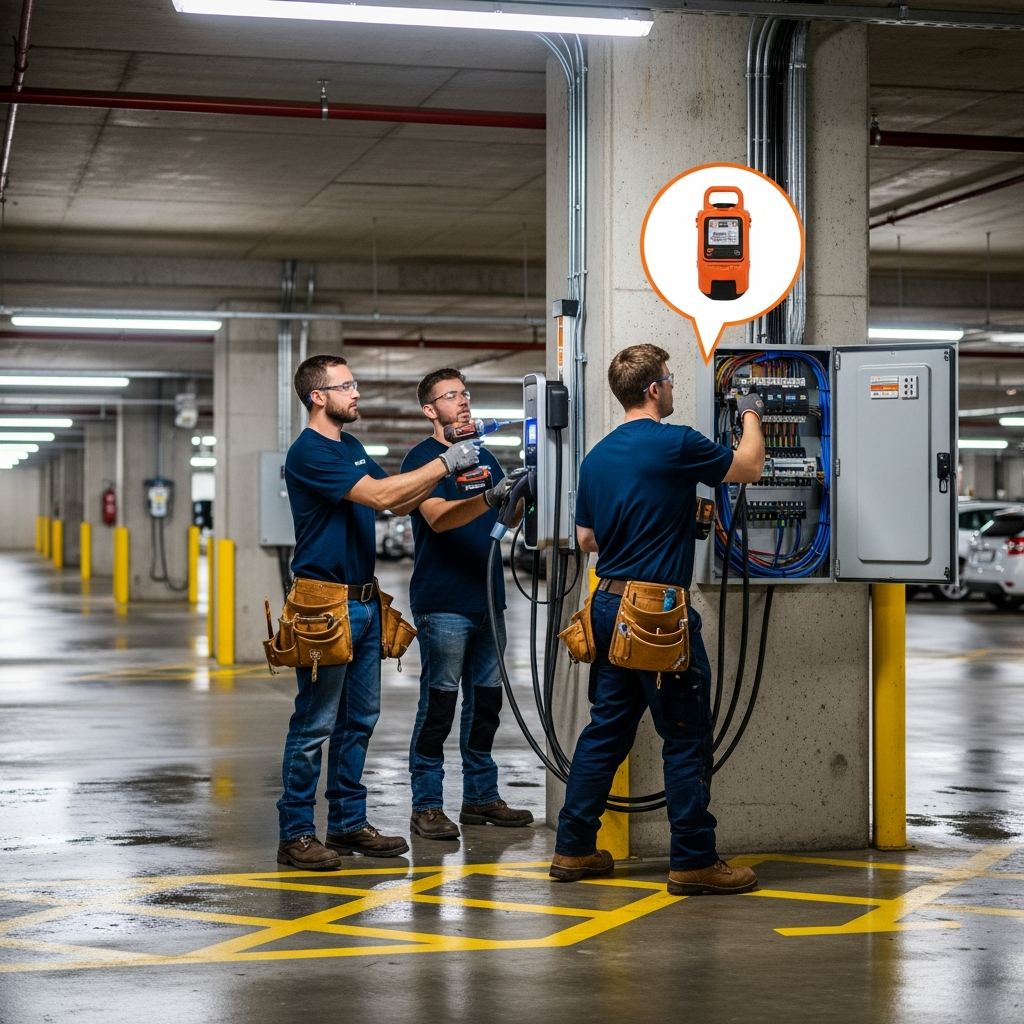
From the lot, an EV charger does not look like much. Post in the ground, cord on the hook, maybe a screen that works if the sun is not blasting it. The work is behind that. Panels, feeders, grounding, disconnects, breaker sizing, utility room space, voltage drop, and whether the existing service has any room left in it. On a commercial job, commercial EV charger installation is not a bolt-it-down-and-leave item. Not if it is expected to run every day without cooking something upstream.
Arc faults are the kind of problem that hide well. A lug that was never landed right. A conductor nicked during a pull. Old gear that has been opened too many times. A receptacle or connection point that looks fine until load sits on it for hours. EV charging does that. Long run time. Steady draw. No mercy for weak spots. One bad termination can sit quiet for a while, then start heating under normal use.
Reuters recently reported on the Ting Fire sensor, a small plug-in device being used to pick up signs of arcing and other electrical fire warnings early. Useful tool. It is not a substitute for clean installation or proper service planning. Still, it says something about where things are headed. Owners want earlier warning before there is a smell, a tripped main, or a hot panel cover somebody finally notices.
That comes up fast on commercial properties. A charger may be added to a service already carrying lighting, HVAC, refrigeration, kitchen equipment, signage, office loads, or tenant panels that have been changed over the years. The drawings say one thing. The field usually says another. Add charging without checking the real conditions and the site can end up with nuisance trips, heat issues, failed gear, or a shutdown nobody planned for. Steel City Electric has run into related service capacity concerns on retail work like the Insomnia Cookies buildout in Florida, where the closest technical match was service upgrade work for a tenant space.
The better jobs start before the charger is ordered. Check the panel. Trace the route. Confirm load. Look at conductor sizing, trenching, bollards, emergency shutoff location, inspection requirements, and utility coordination if the service is tight. The charger is the visible part. The risk is usually in the infrastructure feeding it. For owners planning an EV charging buildout, Steel City Electric can review the existing service, point out the weak areas, and install a system made for daily commercial use, not just a clean plan set.