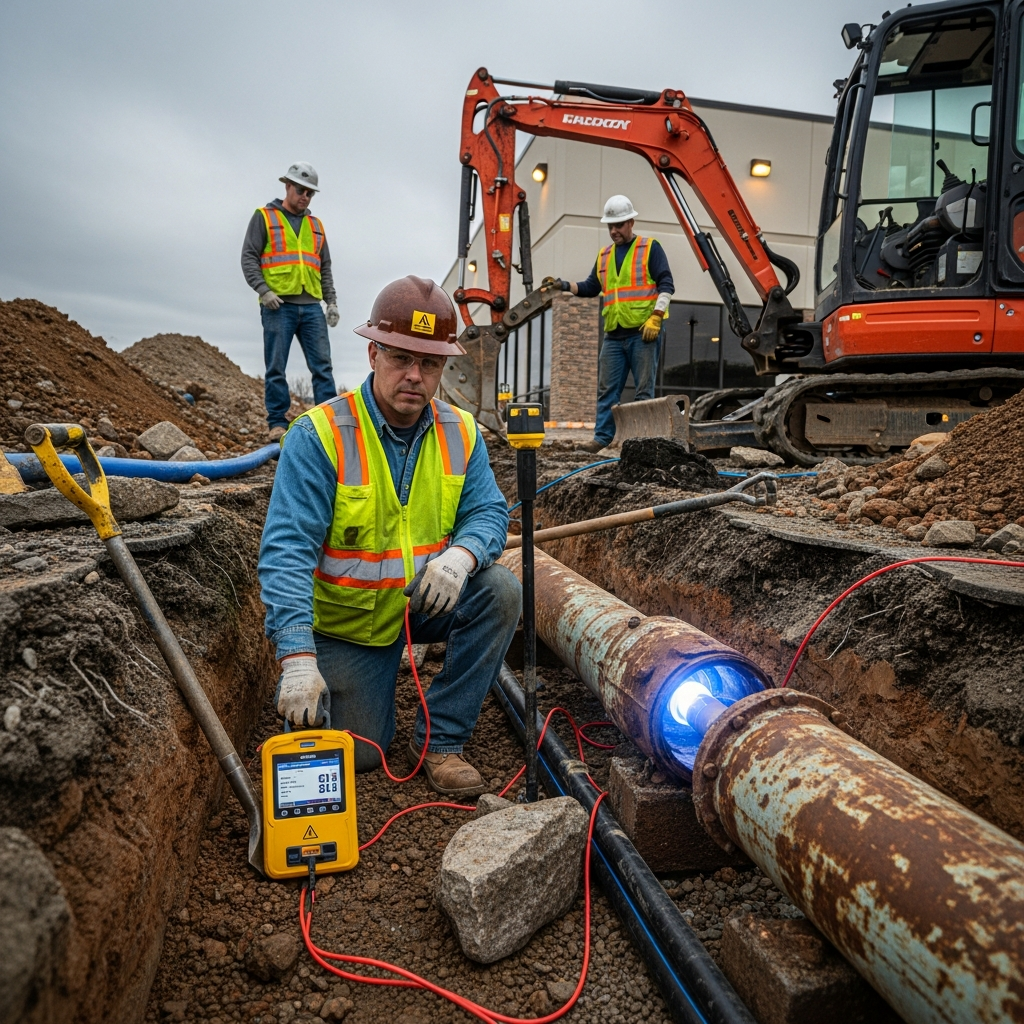
The crew was about a foot into the trench when the locator started screaming. Turns out the old feed everyone assumed was dead, the one marked abandoned on prints from 1987, was still carrying voltage. Nobody got hurt thankfully, but it stopped the job cold for two days. That kind of surprise is exactly why commercial underground utility work takes more planning than people give it credit for.
ECMweb, “Hidden Live Feeders Remain a Top Hazard on Commercial Excavation Sites” lines up with what a lot of business owners are starting to run into at their own buildings.
Here’s my honest opinion. Too many property owners treat underground as a “set it and forget it” thing. It isn’t. Old feeders, abandoned services, forgotten secondary runs, they all sit down there until somebody breaks ground. And the prints? Sometimes the prints are wrong. Sometimes there are no prints at all.
Before any trenching starts, we want clear utility tickets, private locating, potholing where it counts and a real conversation about what the conduit path needs to handle for the next 20 years. If the project also includes a new service entrance or capacity changes tied into a panel upgrade, that has to be coordinated up front, not patched in later.
Underground is permanent. Doing it right the first time is the only version that actually saves money.
steelcityelectricfl.com/underground electrical