A strip mall off the main road in Bradenton was running fine on a Tuesday afternoon. Lights on, registers open, AC humming through the heat. Then one tenant noticed the breaker panel felt warm to the touch, warmer than it should be. Nobody had tripped a breaker. Nothing had flickered. But something in the wall behind that panel was working harder than it was built to work, and the only sign of it was a temperature nobody would have checked if they hadn’t happened to lean against it.
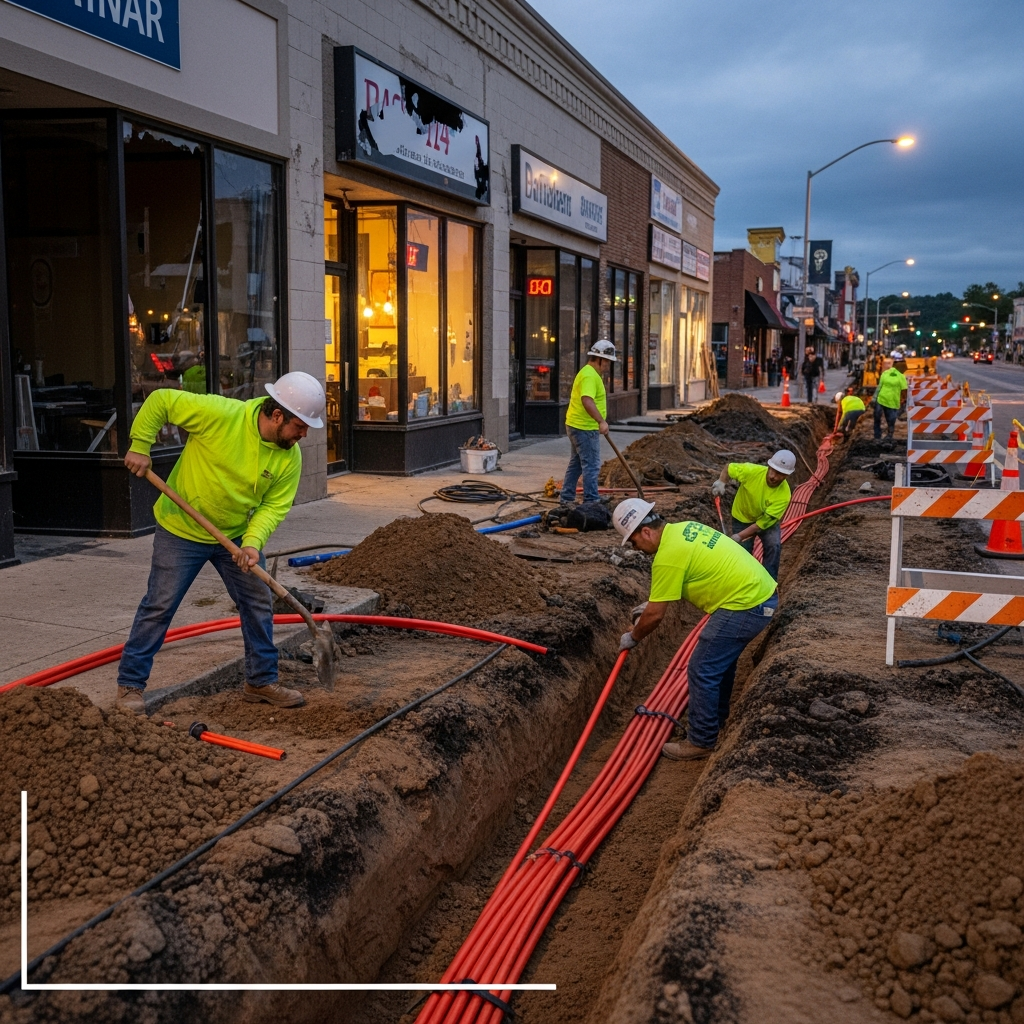
When a buried service feeder gives out, you don’t get a polite warning. One minute the block is running normal, the next minute half the businesses on the street are dark and nobody knows why because there’s nothing visible to point at. That’s the part owners hate most. The damage is underground, the fault is underground, and the fix means digging.
What happens when a system failure cuts power to dozens of operations at once with no warning? That’s the concern raised by seattlepi.com, “Passengers stranded in moving traffic after robotaxi outage in China’s Wuhan”. The robotaxi story is about software, sure, but the lesson translates directly to buried electrical feeders. Hidden infrastructure fails quietly until it doesn’t, and then everyone downstream feels it.
Most of the buried feeders we pull out around Manatee and Sarasota counties were never rated for the load the building carries today. Older direct-burial cable, shallow depth, no conduit protection. We’ve seen feeders chewed by roots, crushed by parking lot resurfacing, even cooked from the inside because nobody sized them for the new HVAC the tenant added years later. Honest opinion, if your underground utility run is older than fifteen years and the building has changed hands or expanded, you’re already on borrowed time. A proper trench, the right conduit and a feeder sized for what you actually run today is cheaper than emergency excavation at 2 a.m. with a generator truck idling out front.
steelcityelectricfl.com/underground electrical