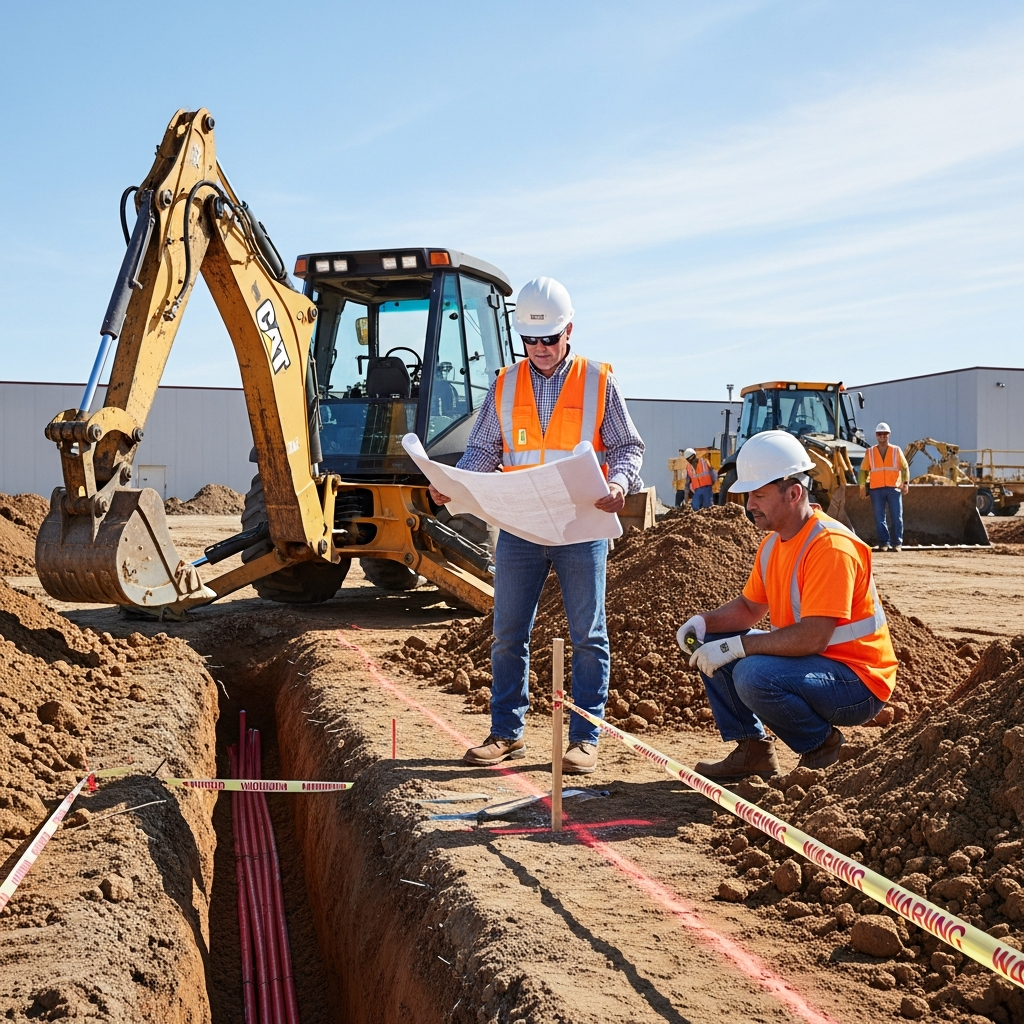
A crew rolls onto a half-acre lot at 6:30 in the morning, coffee still warm, drawings spread across the tailgate. The site looks clean. No markers out of place, no obvious surprises. Then the operator drops the bucket and something underneath doesn’t match the plan.
That’s the part nobody talks about. The riskiest moment of a commercial build isn’t the steel going up. It’s the first cut into the dirt. Crews break ground assuming the site drawings are accurate and half the time they aren’t. Abandoned conduit. Unmarked fiber. A gas service rerouted twenty years ago that never made it into a log. I’ve watched a backhoe clip a live primary feeder that wasn’t shown on a single sheet, and that turns a Tuesday morning into a full site shutdown.
New reporting from yankodesign.com, “These 4 Solar Pavilions Prove That Public Cooling Can Be Free” points to a bigger shift in how cities are rethinking public infrastructure. The same lesson applies below the surface. What you bury today shapes what your property can support five and ten years out.
That’s why proper underground electrical utility installation starts with locating, potholing and verifying before a single trench gets opened. Conduit routing, depth, separation from gas and water, sweep radius for future pulls. It all matters. Skip that work and you end up tearing finished asphalt back up a year later, paying twice for the same trench.
If you’re planning a new commercial build, treat the underground phase like the foundation of your electrical system because that’s what it actually is. Get it wrong once and the building pays for it for decades.
steelcityelectricfl.com/underground electrical