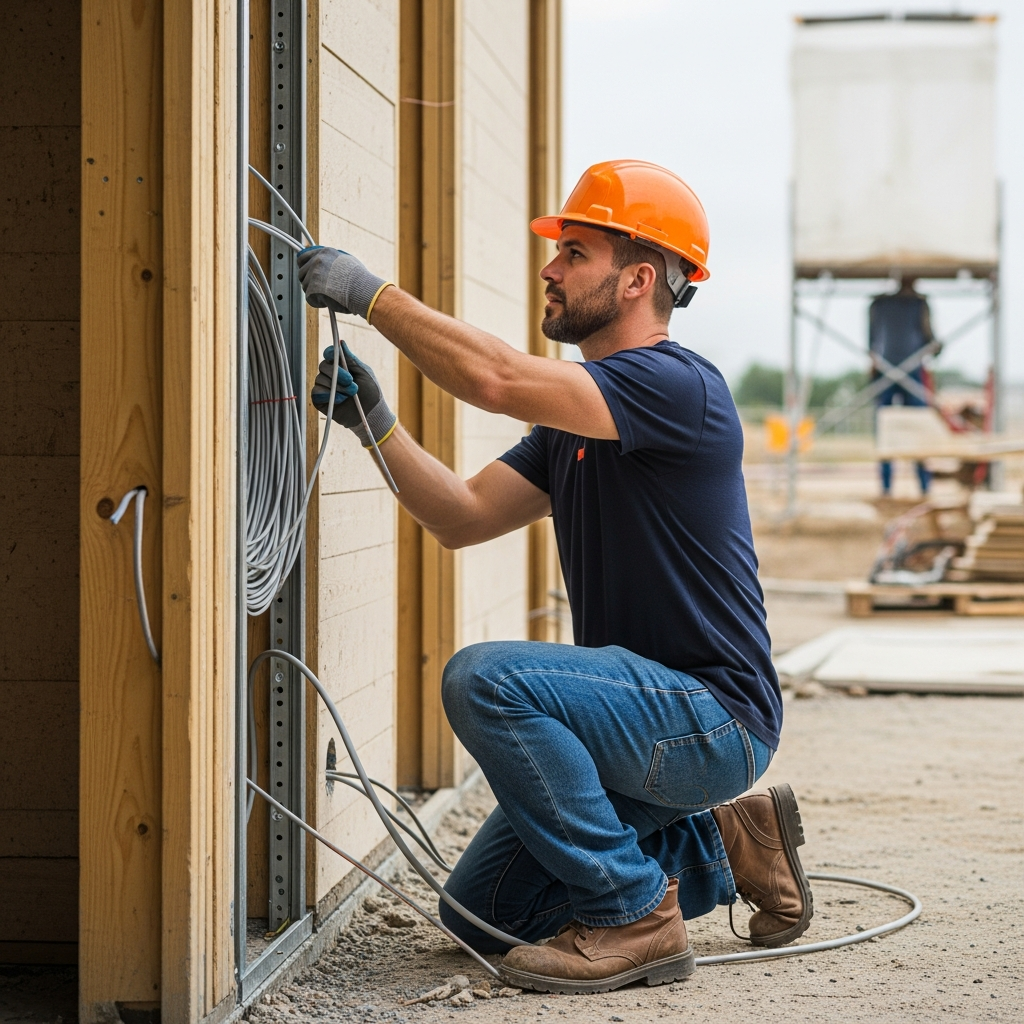
Showed up to a mid-size retail build last spring. Slab was still green in spots, you could smell the cure compound, and the GC was already asking when we’d start pulling conduit. Framing crews were working two zones ahead of where they should’ve been. Something about the whole site felt rushed in a way that usually shows up later as a problem.
The framing was halfway up in some zones and missing in others. Mechanical drawings had been revised twice already. That kind of setup almost guarantees you’re tearing out conduit a month later.
The issue raised in pypi.org, “power-grid-model 1.13.37” is simple. Power systems need accurate modeling before anything physical gets locked into the structure. For commercial properties that becomes a real problem when rough-in starts ahead of finalized plans and load calculations.
Here’s the honest take. Rough-in for commercial new construction is not something you push to “stay ahead of schedule.” If the building isn’t ready, every conduit run becomes a guess. We’ve had jobs where early decisions cascaded into rework for the crews handling underground utility runs and the team setting the service entrance gear. One trade jumping the gun pulls three others into the mess.
Maybe some shops will eat that cost to keep the GC happy. We won’t. If walls aren’t framed, if the panel locations haven’t been confirmed, if the structural drawings are still moving, we say so. Awkward schedule meetings beat ripping out boxes later.
The real cost of starting rough-in too early isn’t labor. It’s everything that gets buried wrong and quietly stays wrong until somebody trips over it.
steelcityelectricfl.com/new construction electrical