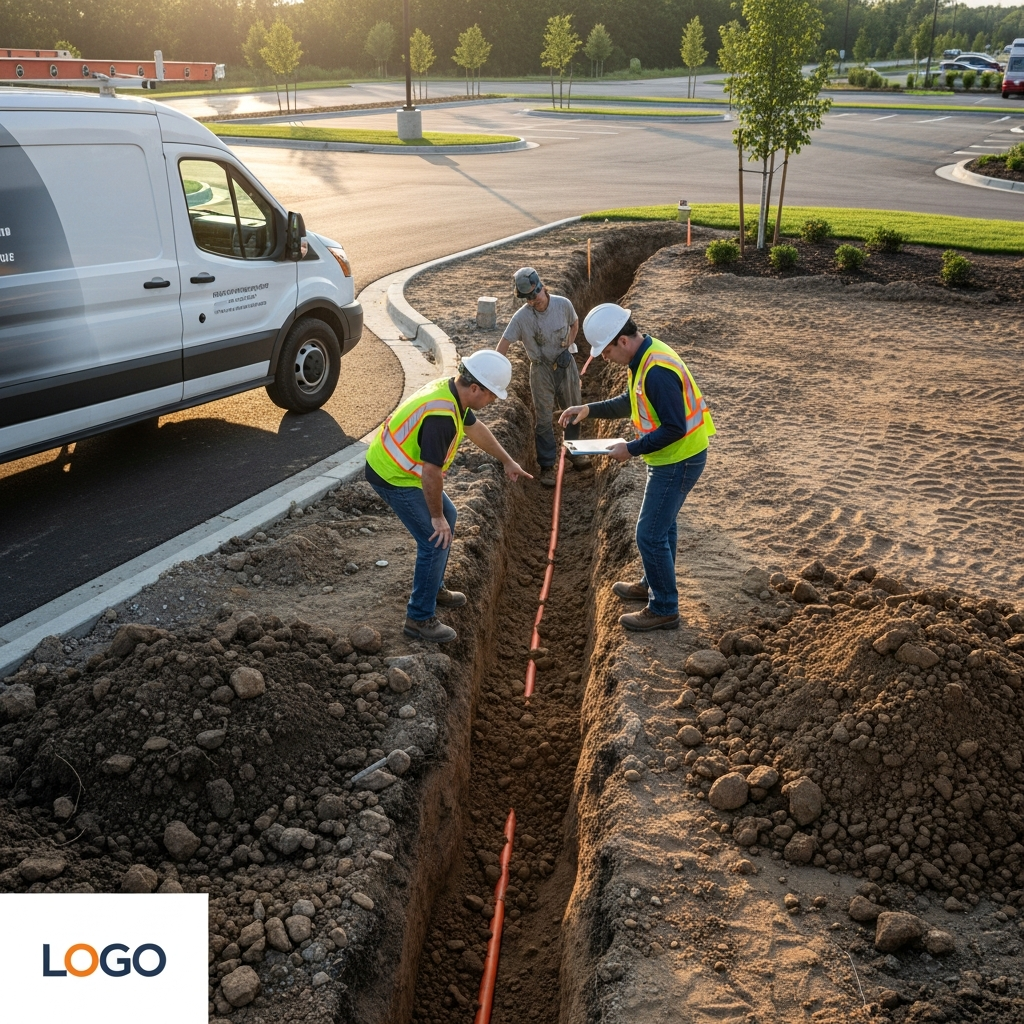
Pulled up to a commercial site off 301 last month and something felt off before I even stepped out of the truck. The trench looked clean from a distance. Crew was already staged, conduit ready to go. But the closer I got, the more the depth started to bother me — short by almost six inches in spots, and the conduit was already in the ground.
The utility inspector wasn’t going to sign off, and honestly he shouldn’t have. Cover requirements exist for a reason, especially on a property that’s going to see heavy parking traffic and future landscaping work.
New reporting from Fortune, “Hyperscalers often lack the ‘aptitude’ on power as the political push picks up to expedite grid connections and pipelines” points to a bigger shift in how fast power infrastructure is getting pushed forward. Federal and congressional efforts are moving to speed up generation, pipelines and grid interconnections. That pressure trickles down to the property level, where shortcuts on underground utility installation become more tempting. And more expensive when they fail.
Shallow trenches don’t just fail inspection. They invite future damage from rooters, pavers, even a deep tire rut after heavy rain. We’ve dug up conduit that sat too high and got crushed by a delivery truck three years later. Repair cost more than the original commercial install would have if it had been done right the first time.
Dig it once. Dig it deep. The utility already knows when you didn’t.
steelcityelectricfl.com/underground electrical