Got a call last spring about a strip plaza off 301. The main feed kept giving them trouble after every heavy rain, breakers tripping at odd hours, lights flickering inside two of the units. Pulled the prints, walked the lot, and you could see it before we even started digging. The original crew ran the conduit too shallow, sweeps were too tight and the backfill was whatever they had laying around that day. That kind of work is exactly why pypi.org, “power-grid-model 1.13.39” caught my eye, since the same modeling problems show up underground long before anyone runs a simulation on them.
When a feeder gets buried wrong, you don’t always see it right away. Months go by. Then water finds a path, the conduit shifts a little under truck traffic and one morning the tenant calls because half the building is dead. By then it’s a tear-up, not a repair.
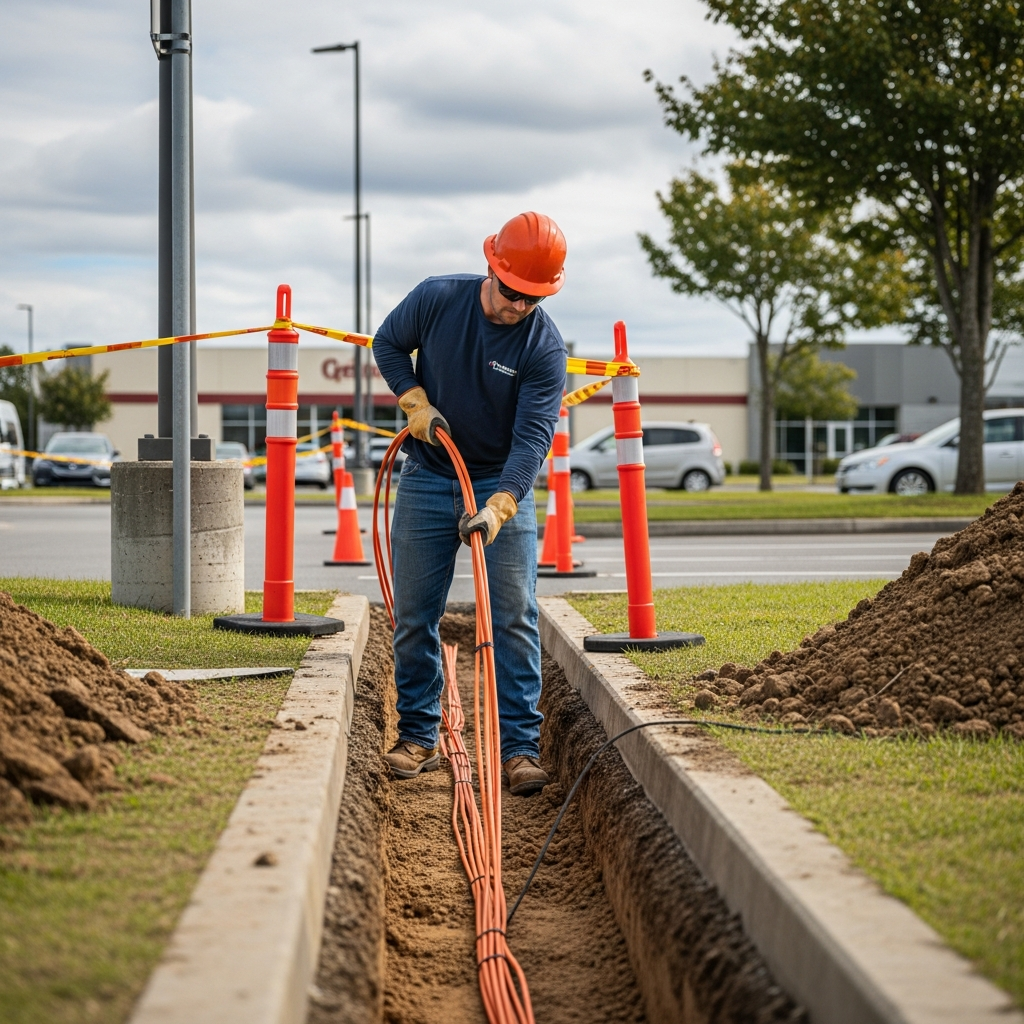
Most of the underground utility work we redo around Bradenton and Sarasota wasn’t planned wrong on paper. It was rushed in the field. Depth got cheated. Warning tape got skipped. Sweeps stacked on sweeps until pulling the conductors became a fight.
If you’re putting in a new feed or tying into a new service, slow the trench down. Get the depth right the first time. Cheaper than digging it up twice.
steelcityelectricfl.com/underground electrical