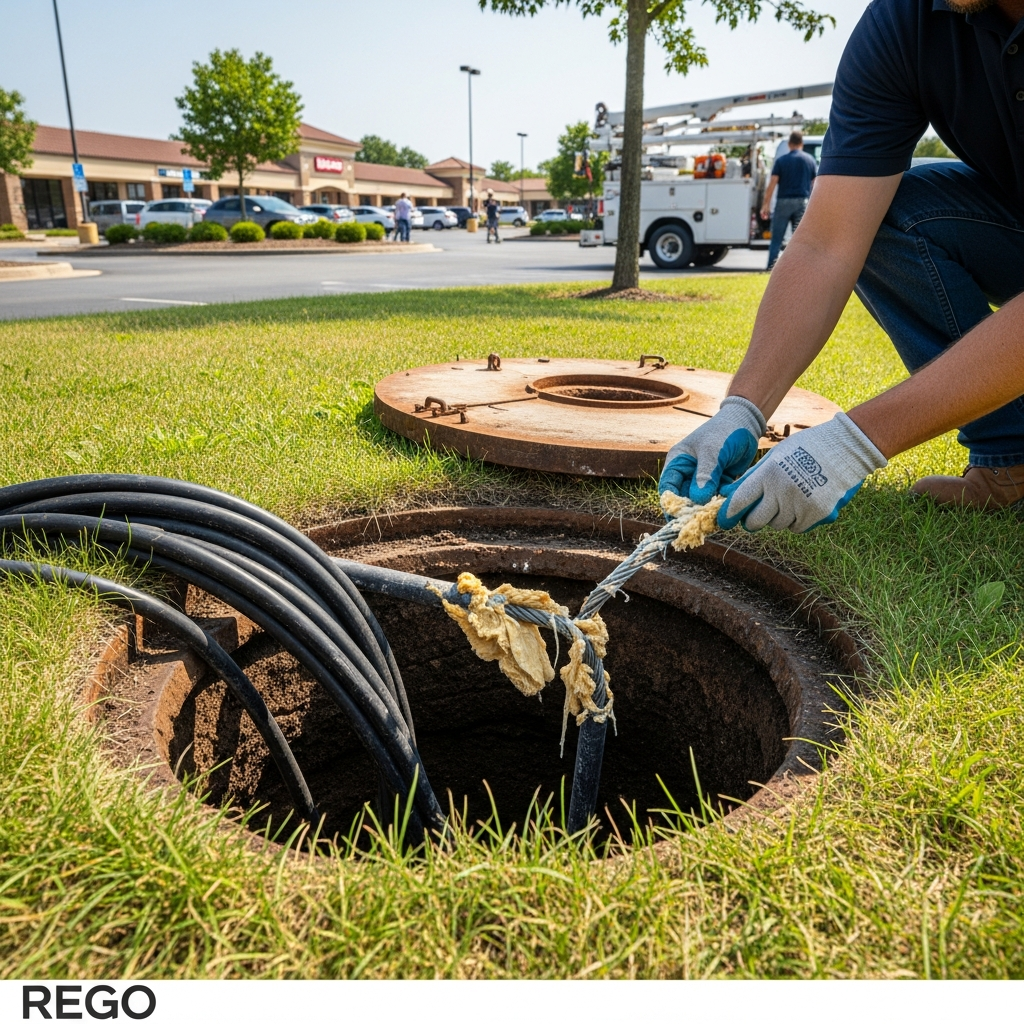
Rolled up to a strip plaza off 301 last spring and the property manager kept telling me the lights had been “acting weird” for months. Nobody had ever opened the handhole out by the parking island. The feed running from the transformer to the building was original. Probably late 80s. Conduit had shifted, water had been sitting in there who knows how long, and the insulation was chalky in spots you could crumble with a glove.
Pioneering Innovation in Telecom Power: Huawei Wins Global Best Practices Award 2025 talks about power infrastructure getting pushed harder than what it was originally rated for, and that same idea shows up on small commercial sites too. Buildings get new tenants, new HVAC, new kitchen loads, and the underground feed nobody ever sees is still the one from day one.
That’s the part owners forget. A commercial underground feed has a lifespan, and once moisture finds its way into a splice or a damaged jacket, you’re on borrowed time. Trenching it out, pulling new conductors, re-running conduit the right way, it’s not a small job. But it’s smaller than what happens when the feed finally lets go in August at 2pm.
Honestly, if your building is older than thirty years and nobody has touched the underground side, that’s the call to make before the next storm season. Cheaper now than emergency later.
steelcityelectricfl.com/underground electrical