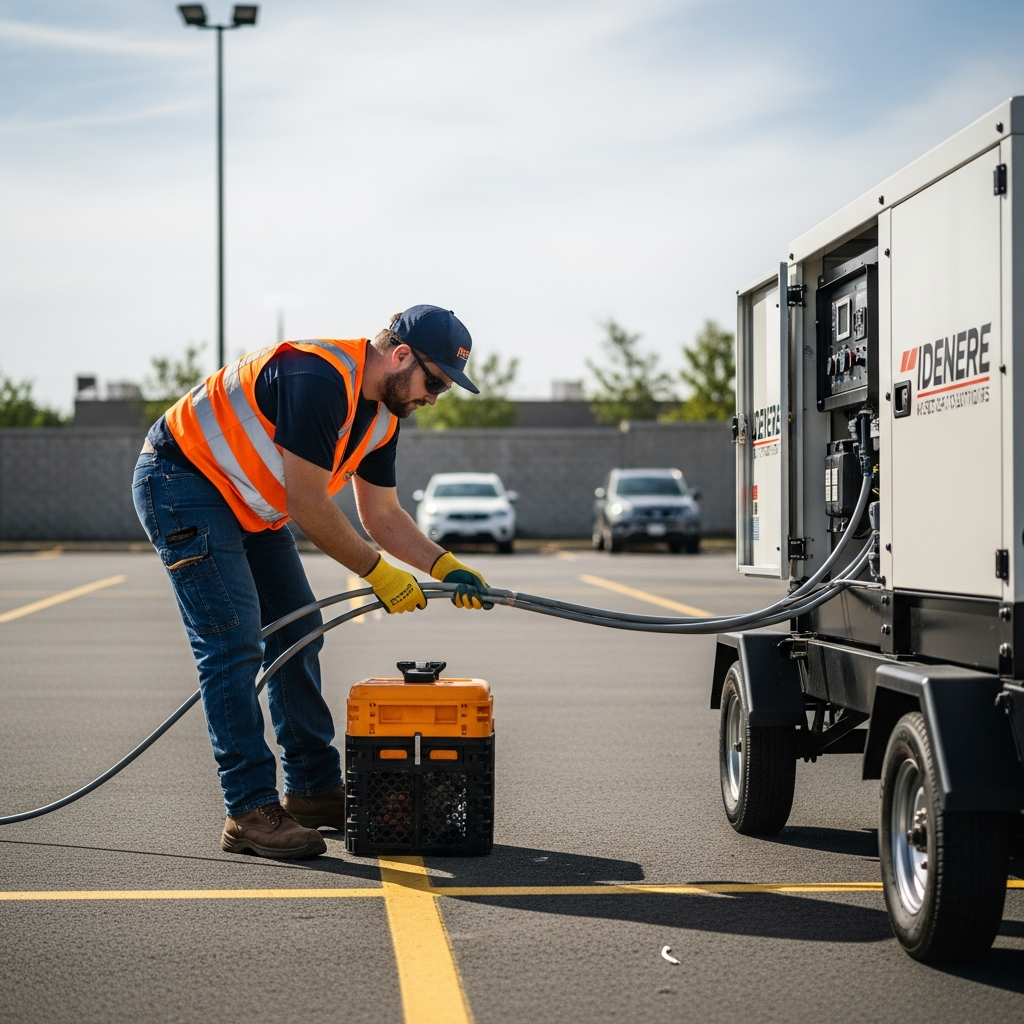
The shift manager at a strip center off 14th Street West called us on a Tuesday because the outlet behind the register felt warm to the touch. Not hot. Just warm enough that someone noticed when they reached behind the counter to grab a charger. The breaker hadn’t tripped. Nothing smelled off. But the receptacle was running a few degrees warmer than it should, and that was enough to make somebody pick up the phone.
A warm outlet sounds like a small thing. It almost never is. In commercial buildings the trail back to that warmth doesn’t always end at the wall. Sometimes it ends out in the parking lot, six feet underground, where the original feed was run twenty years ago and nobody has looked at it since.
bgr.com, “This Tiny Plug-In Gadget Can Stop Electrical Fires Before They Start” talks about arcing between wires and devices being the start of most electrical fires. That part is true. What the article doesn’t really get into is how often the arcing problem traces back to the supply side of the building. The underground feeders. The conduit runs from the transformer. The splice that got wet in 2014 and has been slowly degrading ever since.
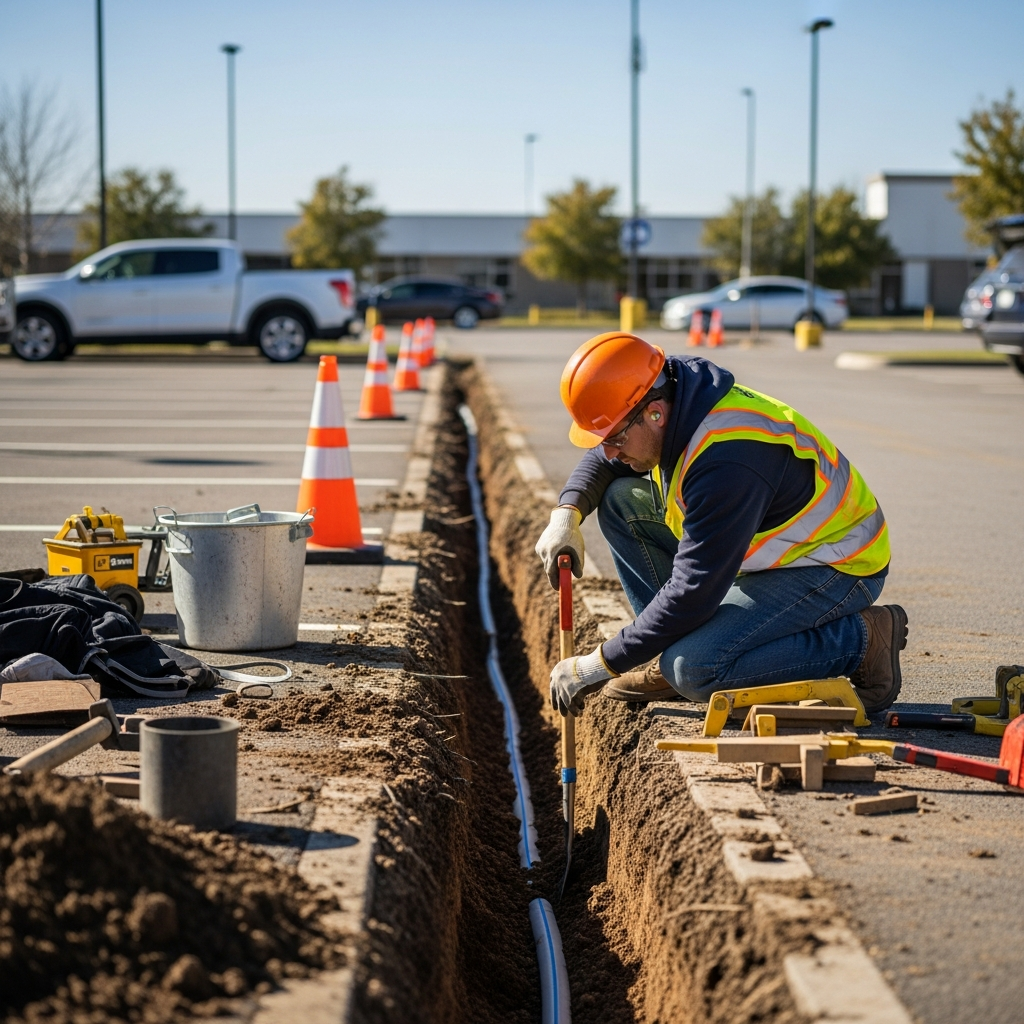
We pull a lot of these jobs in Bradenton and out toward east Sarasota. Older plazas mostly. Strip centers where somebody added a restaurant in unit 4 and now unit 6 has an outlet that runs hot for weeks before anyone calls. By the time we open up the [underground utility run](https://steelcityelectricfl.com/commercial-underground-electrical-utility-installation/), the conduit is half full of groundwater and the insulation on the conductors looks chalky.
Here’s the part most owners don’t want to hear. A warm outlet on the inside is sometimes the symptom of a feeder problem on the outside. The breaker is doing its job. The receptacle is doing its job. The cable buried in dirt is the one quietly failing.
Florida soil doesn’t help. Sandy in some spots, heavy clay in others, water table sitting closer to the surface than people think. Direct-buried cable from the 80s and 90s was never going to last forever down there. PVC conduit with bad joints lets in moisture. Once moisture gets to a splice, resistance creeps up, heat creeps up and the warmth eventually shows up at the closest point of use inside the building.
Trenching it out properly the second time is the part owners push back on. I get it. Nobody wants to tear up a parking lot they just sealcoated. But running new conduit, pulling fresh conductors and getting the splice points up into accessible pull boxes is the only real fix. Patching the outlet is treating a symptom.
We’ve had two jobs this year where the warm outlet was the last warning sign before something worse. One of them, the tenant kept unplugging and replugging the same cord for a month. Thought it was the cord. Wasn’t the cord.
Not every warm outlet is an underground issue. Sometimes it really is just a loose backstab or a tired receptacle. But if you have an older commercial property, multiple tenants, a parking lot or landscape area between your service and your building and you’re seeing heat where there shouldn’t be heat, the wiring under the asphalt deserves a look before you keep replacing devices.
FAQs
How do I know if my warm outlet is an underground problem and not just a bad receptacle?
You usually don’t, not without testing. A good sign it’s deeper is when multiple outlets on the same feed start showing heat, voltage drop or flicker. If a brand new receptacle gets warm in a week, the issue is upstream.
Can you replace underground feeders without tearing up the whole parking lot?
Sometimes. Directional boring lets us go under driveways and landscape without open trenching. It depends on the run, the depth and what’s already buried out there. We walk the site before promising anything.
How long does commercial underground utility installation usually take?
Small runs can be a couple of days. Larger ones with permitting, utility coordination and concrete restoration can run a few weeks. Florida permitting timelines vary by county too. Manatee and Sarasota don’t move at the same speed.
Is direct-buried cable still allowed?
In some cases yes, but for commercial work we almost always run it in conduit. It costs more upfront. It saves you from doing this exact job again in fifteen years.
Why does this keep happening to older plazas in Bradenton and Sarasota?
Age, soil, water and additions. Buildings that were wired for one use got loaded up over the years. The underground infrastructure was sized for what existed in 1988. It wasn’t sized for what’s plugged in today.
steelcityelectricfl.com/Electrical Outlet Repair