There’s an outlet in the back corner of a suite off State Road 64 that’s been acting funny for months. The tenant before this one mentioned it too, apparently. Nothing dramatic. Just a little warm to the touch some afternoons, a flicker when the copier kicks on, the kind of thing you write down and forget until the next time it happens. Most people assume it’s the receptacle. Or maybe the wiring in the wall. Sometimes it is.
But on a few commercial properties around Bradenton, the real story started much further out, past the slab, past the parking lot, somewhere under the grass where the service feed runs in from the utility.
What happens when a system malfunction takes down power for over 100 vehicles in a single afternoon? That’s the concern raised by ABC News, “Passengers stranded in moving traffic after robotaxi outage in China’s Wuhan”. The Baidu robotaxi story is about software, sure, but the underlying lesson is the same one we run into on commercial sites here: when the infrastructure feeding the system isn’t sized or routed right, small symptoms turn into bigger problems fast. An underperforming outlet inside a unit can be the building’s way of telling you the feed coming in from the street isn’t doing what it used to.
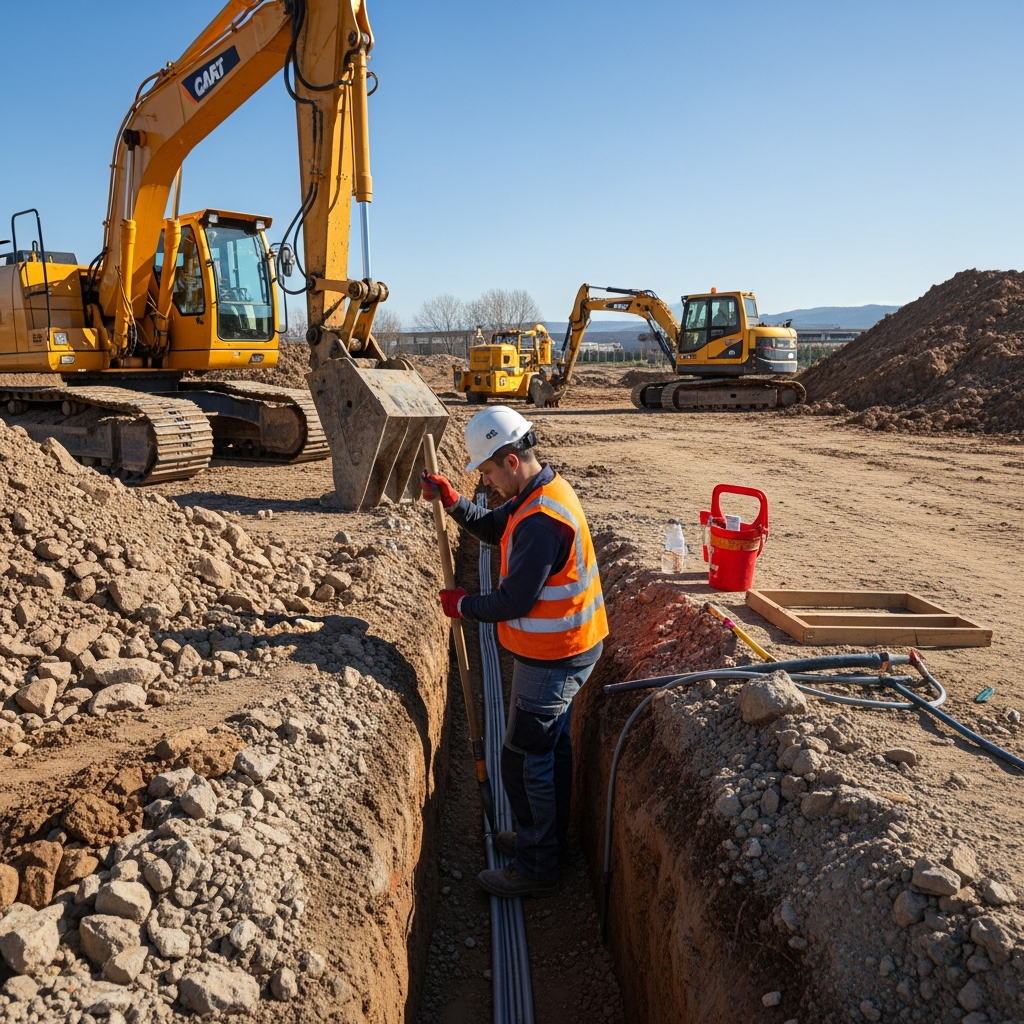
I’ve trenched out plenty of underground utility runs on properties in Sarasota where the original install was done decades ago, undersized for the load the building carries today. Old direct-buried conductors. Conduit that cracked years ago and let moisture sit on the splices. Once water gets into a buried run, you don’t see anything dramatic. You just get weird voltage at the far end of the building, warm outlets, equipment that resets for no reason. The tenant blames the outlet. The next tenant blames the outlet. Nobody wants to dig.
And that’s the part that gets ignored. The underground side is invisible until it isn’t. By the time the outlet is browning or the breaker is humming, the conduit run has usually been compromised for a long time. We’ve pulled feeders out of the ground in Hillsborough County that looked fine on the surface and were basically corroded ribbons six feet down. In a couple of those cases the right call ended up being a full new electrical service installation rather than another patch.
If a property has had multiple tenants complaining about the same spot, the wall is rarely the answer. Check the service entrance. Check where the conduit comes up. Look at the age of the trench. Sometimes you need a new underground run, properly sleeved, properly depth-rated, with pull boxes you can actually access later. That’s not a glamorous fix. It’s a real one. And if the panel inside is also from the original build, that’s often when a commercial panel upgrade gets added to the same scope, because there’s no point feeding a tired panel with fresh copper.
For new buildouts or expansions on neighboring pads, this is where doing commercial underground electrical utility installation the right way the first time saves the owner from chasing ghosts for the next twenty years. Conduit sized for tomorrow’s load. Proper bedding. Documented routes. Not just whatever the GC’s cheapest sub could throw in a ditch.
FAQs
Can a bad underground feed really make a single outlet act up?
Yes. Voltage drop, neutral issues or moisture in a buried splice will often show up first at the furthest run from the panel, which is usually one or two outlets in the back of a suite.
How do you know if the problem is underground and not inside the wall?
A licensed electrician will test voltage under load at the panel and at the affected outlet. If readings shift heavily when other equipment runs, the issue is upstream, often at the service feed or underground conduit.
Does the building have to be torn up to fix it?
Not always. Directional boring lets us run new conduit underground without trenching the whole parking lot. It depends on the route and what’s already in the ground.
Is this common in older Bradenton and Sarasota commercial properties?
More common than people think. A lot of strip centers and small commercial buildings here are running on underground service that hasn’t been touched since the property was built.
How long does a proper underground utility installation last?
Done right, with the correct conduit, depth and materials for Florida soil and water table, you should expect decades of service before anyone needs to look at it again.
steelcityelectricfl.com/Outlet Repair